

Peak Climbing in Nepal in 2026: Best Peaks Near Everest and Annapurna Regions
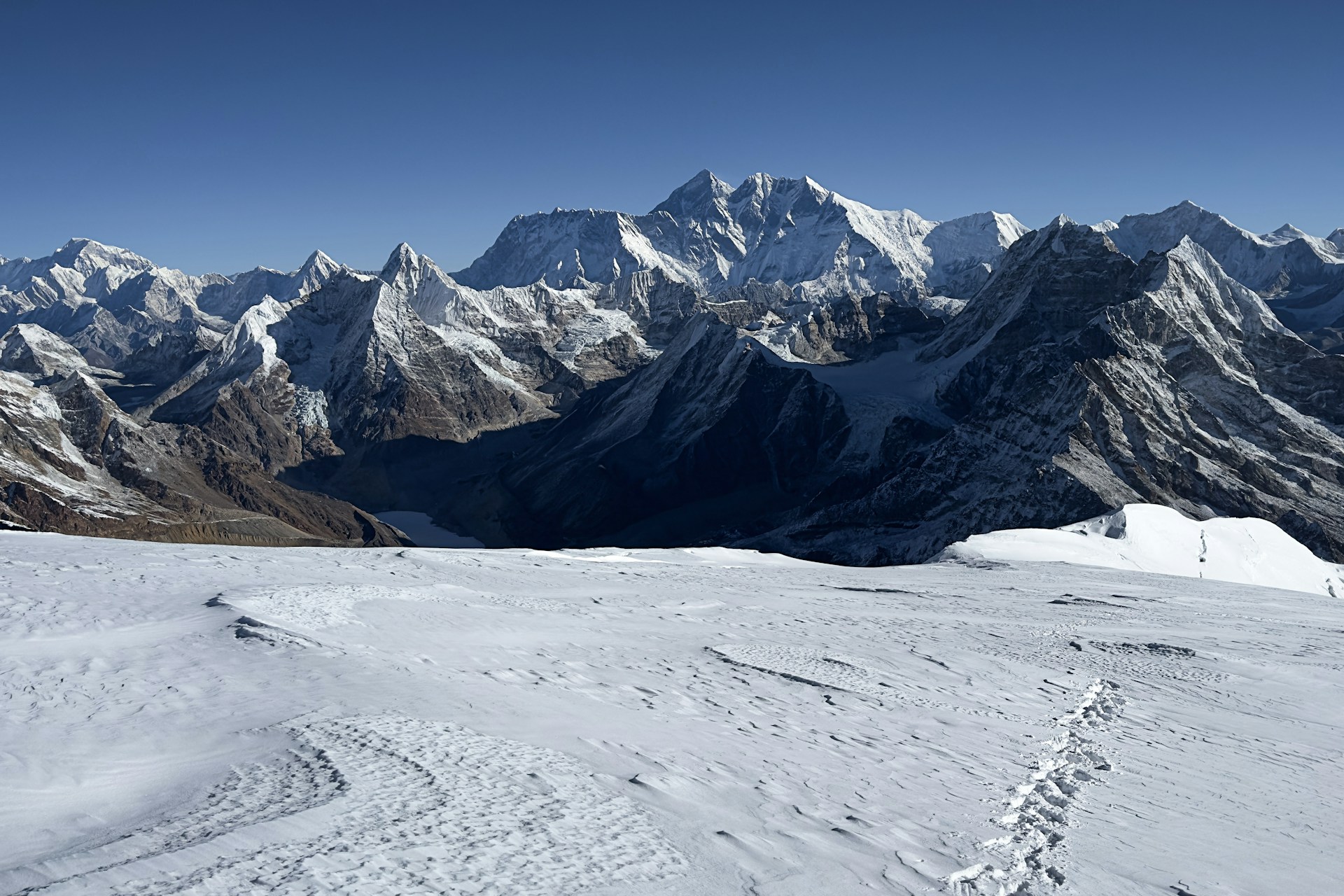
Introduction to Peak Climbing in Nepal
Peak Climbing in Nepal in 2026 is a great way to explore the Himalayas beyond normal trekking trails. It is in between trekking and full mountain climbing, so it is perfect for people who love adventure and want a bigger challenge without putting themselves in too much danger. There are many trekking peaks in Nepal that people with basic climbing skills and good fitness can climb.
Most of the peaks are under 7,000 meters high, and you can get to them by walking through beautiful mountain valleys. On the way up, climbers go through forests, glaciers, and villages. Many popular routes include both trekking and easy climbing sections that use ropes and ice axes. Well-known options include Mera Peak and Island Peak climbing, which are loved for their clear routes and amazing views.
Climbing peaks in Nepal is popular because it offers real mountain experience with lower risk than major expeditions. Climbers learn the basics, have fun at high camps, and stand on snowy peaks with wide views of the Himalayas. Local guides and support teams make the trip safer and more comfortable.
Peak climbing also helps travelers understand mountain life and local culture. If you plan ahead, go at the right time of year, and get the right help, it can definitely be a safe and fun adventure to do. In the next sections, we will explore peak choices, costs, seasons, and preparation tips.
For smooth planning and expert support, Skyline Treks can help turn your peak climbing dream into a safe and memorable journey.
Why Choose Peak Climbing in Nepal
Nepal is one of the best places in the world to climb mountains. It has safe paths, stunning views, and a lot of help from the community.
Below are the main reasons why climbers choose Nepal, explained with simple points and short paragraphs.
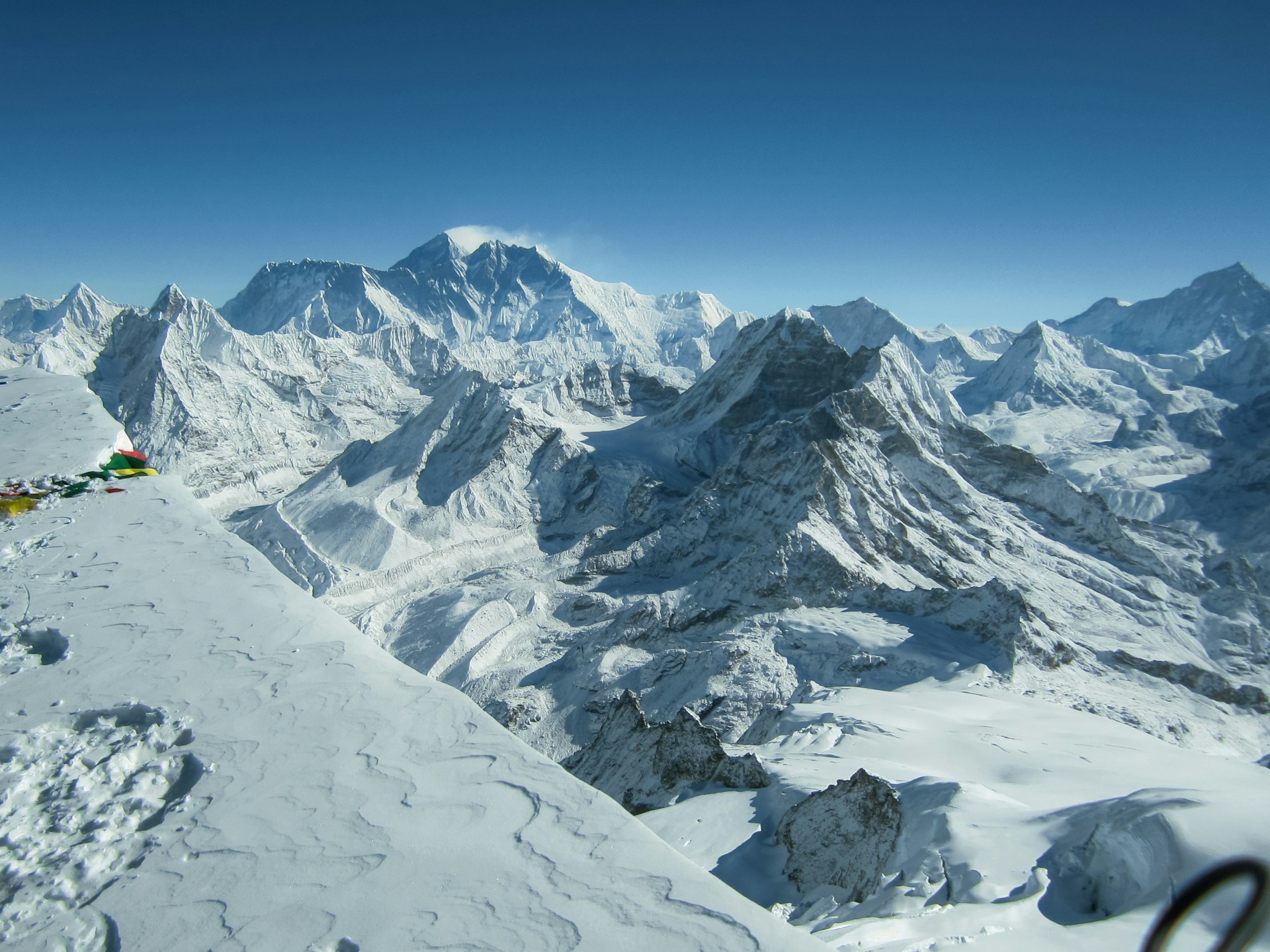
Wide Choice of Peaks:
- Nepal has a lot of trekking peaks that climbers can climb.
- Peaks are good for both new and experienced climbers.
- Climbers can get real mountain experience without taking a lot of risks.
Safe and Well-Managed Routes:
- Everyone knows about and can easily follow climbing routes.
- Permit systems help keep people safe and control crowds.
- Most climbs have days for getting used to the altitude.
Experienced Local Support:
- Nepal has trained mountain guides and support teams.
- Porters help carry things, which makes it easier on the body.
- Guides know about the weather, the trails, and how to help in an emergency.
Beautiful Natural Scenery:
- The routes go through forests, valleys, and glaciers.
- Climbers enjoy wide Himalayan views from the summit.
- Scenes of sunrise and sunset are unforgettable.
Cultural Experience:
- Trails go through old mountain towns.
- Climbers learn about how people live and what they do every day in the mountains.
- A warm welcome makes the trip more fun.
Good Climbing Seasons:
- The weather is stable in the spring and fall.
- When the sky is clear, you can see better and be safer.
With safe peaks, strong support, and rich culture, Nepal offers a complete and rewarding peak climbing experience for adventurers of all levels.
Peak Climbing in the Everest Region
The Everest region is one of the most well-known places in Nepal for climbing peaks. It has safe trekking peaks, strong local support, and stunning views of the mountains.
Below are three popular peaks in this region, explained in simple points for easy reading.
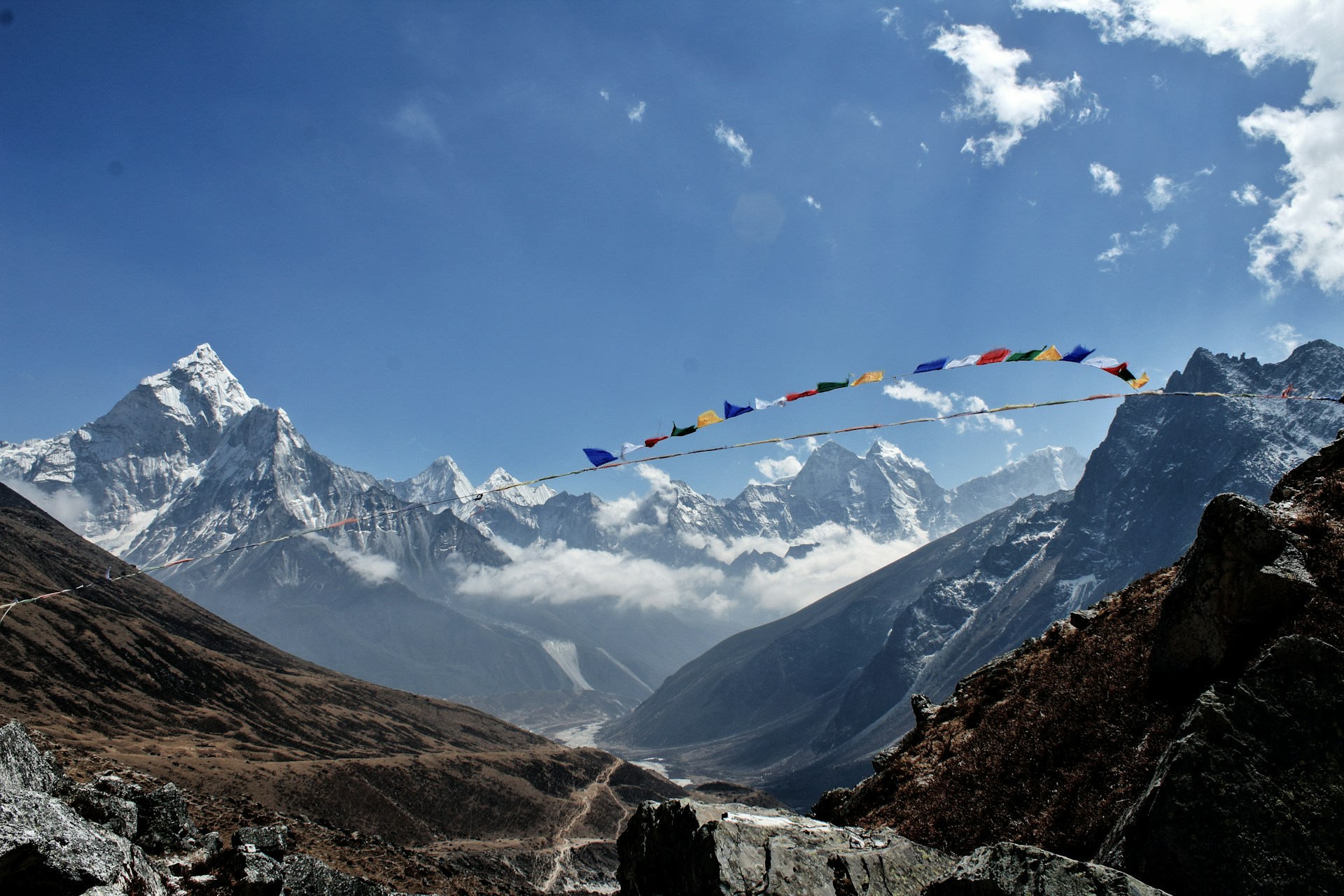
Island Peak (Imja Tse)
One of the most popular trekking peaks in Nepal is Island Peak, which is also known as Imja Tse. It’s a great choice for people who are climbing for the first time.
- The height is about 6,189 meters above sea level.
- In the Khumbu region, not far from Everest Base Camp.
- The climb combines hiking with basic mountaineering skills.
- The last part has snow, ice, and a short ridge at the top.
- Requires use of rope, harness, and ice axe with guide support.
- Offers stunning views of Lhotse, Ama Dablam, and surrounding peaks.
- The route goes through Sherpa villages and beautiful valleys.
Island Peak is popular because it is challenging but achievable with good fitness and training.
Lobuche Peak
Lobuche Peak is harder than Island Peak and is better for climbers who have some experience.
- The height is about 6,119 meters.
- Located near the Khumbu Glacier, close to Everest Base Camp.
- Has two main summits: Lobuche East and Lobuche West.
- Includes parts where you have to climb steep snow and ice.
- Needs to be in good shape and have experience climbing.
- Gives climbers a close-up look at Everest and Nuptse.
- Not as busy as Island Peak, so it’s a quieter place to be..
Lobuche Peak is ideal for climbers looking to improve their technical skills.
Mera Peak
Mera Peak is the highest trekking peak in Nepal and is ideal for strong trekkers.
- The height is around 6,476 meters.
- Located in the remote Hinku Valley region.
- Technically easier, but harder on the body because of the high altitude.
- Long trekking days help with good acclimatization.
- Wide summit offers views of five 8,000-meter peaks.
- Needs basic skills in walking on snow and using ropes.
- Best for climbers who want to go to high places with less technical risk.
Mera Peak is perfect for climbers aiming to experience extreme altitude safely.
Peak Climbing in the Annapurna Region
The Annapurna region is another popular area for peak climbing in Nepal. It is known for wide valleys, big mountain views, and well-developed trekking routes. The peaks here are great for climbers who want both adventure and culture.
Below are three well-known climbing peaks in the Annapurna region, explained in easy points.
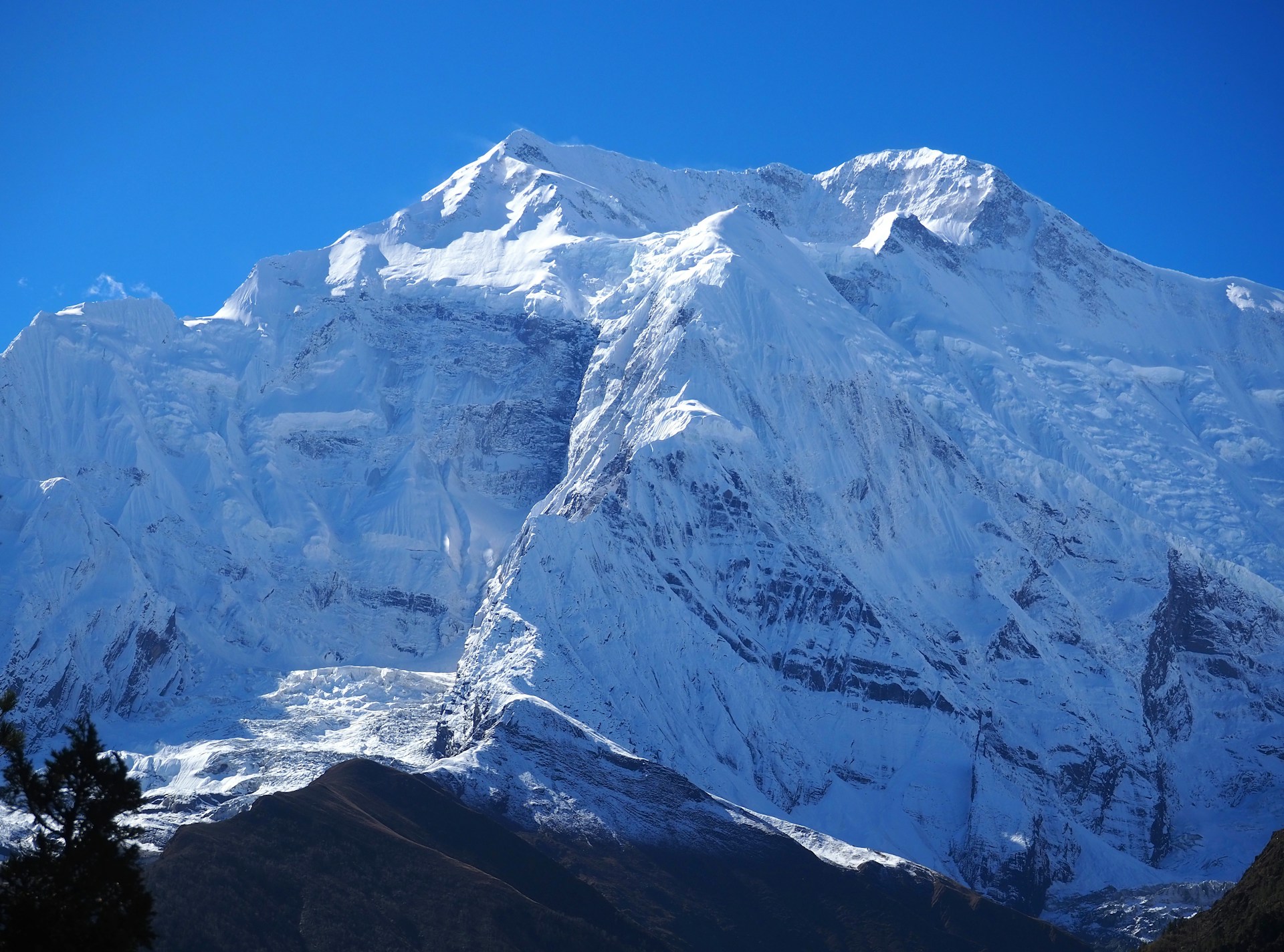
Pisang Peak
Pisang Peak is a classic trekking peak rising above the Annapurna Circuit trail. It offers a mix of trekking and technical climbing.
- The height is about 6,091 meters.
- It is in the Manang area, above the village of Pisang.
- Reached while trekking the Annapurna Circuit route.
- Requires snow and ice climbing near the summit.
- Uses rope, crampons, and ice axe in the final section.
- Offers close views of Annapurna II, III, IV, and Gangapurna.
- Needs to be in good shape and have some climbing experience.
- The best times to climb are in the spring and fall.
Pisang Peak is suitable for climbers looking to step up from easier trekking peaks.
Chulu East & Chulu West Peaks
The Chulu peaks are among the most exciting climbing options in the Annapurna region. They rise high above the Manang Valley.
- The height of Chulu East is about 6,584 meters.
- Chulu West is a little lower but harder.
- Accessed through the Annapurna Circuit trekking route.
- Long approach trek helps with proper acclimatization.
- The last climb includes traveling over glaciers and snow slopes.
- Requires strong fitness and previous climbing practice.
- Offers wide views of Annapurna and Dhaulagiri ranges.
Chulu East suits strong trekkers, while Chulu West is better for experienced climbers.
Tent Peak (Tharpu Chuli)
Tent Peak, also known as Tharpu Chuli, is a beautiful peak inside the Annapurna Sanctuary.
- The height is about 5,663 meters.
- Close to Annapurna Base Camp.
- Short approach trek compared to other peaks.
- Moderate level of difficulty, with some snow and ice.
- Needs basic mountaineering skills and the use of ropes.
- Gives stunning views of Annapurna I, Machhapuchhre, and Hiunchuli.
- Best for climbers with trekking experience wanting their first summit.
Tent Peak is ideal for climbers who want a shorter but rewarding peak climbing adventure.
Physical Fitness and Technical Skills Required
Peak climbing in Nepal requires a mix of physical fitness, endurance, and basic mountaineering skills. Even “easy” trekking peaks require a lot of stamina because climbers spend long hours walking uphill, often at high altitudes.
Physical Fitness Requirements:
- Strong legs and good cardiovascular endurance for long trekking days.
- You should be able to carry a medium-sized backpack for 5 to 7 hours or more every day.
- Experience walking on rocky, uneven, or snowy ground.
- Ability to adapt to high altitudes to lower the risk of getting sick from being at high altitudes.
Technical Skills Requirements:
- Basic knowledge of using crampons, ice axes, and harnesses.
- Understanding how to walk safely on snow, ice, and glaciers.
- Ability to follow climber safety rules and rope techniques.
- Experience with trekking in cold or windy conditions.
While some beginner peaks, like Island Peak or Mera Peak, require only basic technical skills, others, like Lobuche East or Chulu West, need advanced climbing experience.
Proper preparation, training hikes, and acclimatization help climbers succeed.
Best Time for Peak Climbing in Nepal
Choosing the right time is very important for safe and successful peak climbing in Nepal. The weather, temperature, and visibility change with the seasons, and these things have a big impact on climbing condition
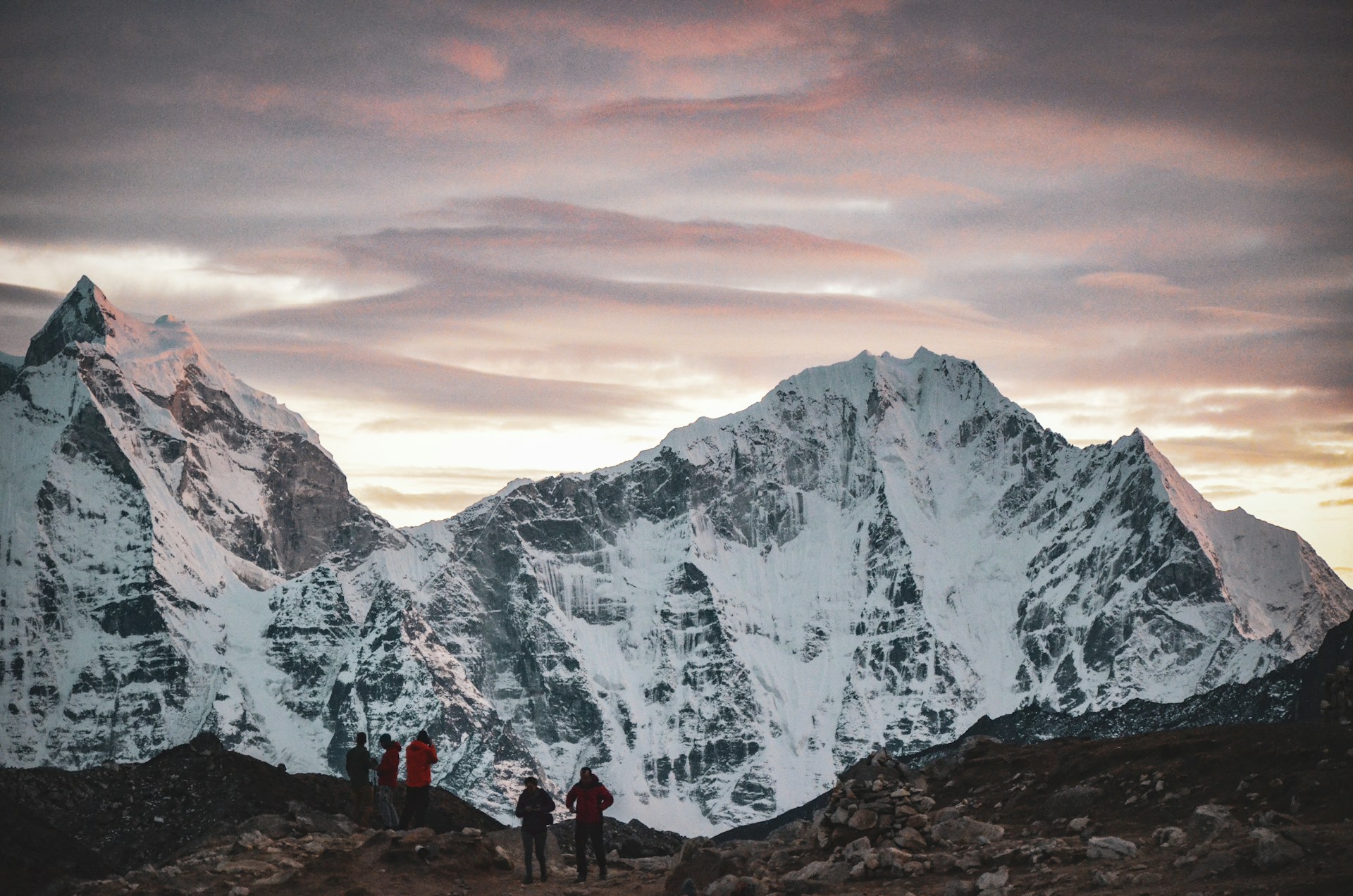
In general, spring and autumn are the best seasons for peak climbing in Nepal.
Spring Season (March to May):
Spring is one of the most popular times for peak climbing in Nepal.
- Weather is stable with warmer daytime temperatures.
- Snow conditions are good for climbing and walking.
- Days are longer, which means there is more time for climbing.
- On clear mornings, you can see the mountains very well.
- Ideal for popular peaks like Island Peak, Mera Peak, and Pisang Peak.
Spring is also a good time for learning basic climbing skills because conditions are less harsh.
Autumn Season (September to November):
Autumn is another excellent season for peak climbing in Nepal.
- Skies are clear after the monsoon rains.
- Trails and glaciers are in good condition.
- Cooler temperatures make long climbing days comfortable.
- Less snow than in the spring, which makes the route safer.
Autumn is perfect for climbers who want clear views and stable weather.
Summer / Monsoon Season (June to August):
This season is less suitable for most peak climbing.
- Heavy rain makes it more likely that landslides will happen and makes it harder to see.
- On higher peaks, the snow can be unstable.
- Only some rain-shadow areas may be possible.
Winter Season (December to February):
Winter climbing is possible but challenging.
- Very cold weather and a lot of snow.
- Days are shorter and roads are icy.
- Best only for experienced climbers on selected peaks.
For most climbers, spring and autumn provide the safest and most enjoyable peak climbing experience in Nepal.
Essential Gear and Equipment for Peak Climbing
Peak climbing in Nepal requires proper gear to stay safe, comfortable, and prepared for high-altitude conditions, snow, and ice. Even trekking peaks need special gear, and higher technical peaks need even more advanced gear.
Clothing:
- Insulated down jacket for cold nights and high camps.
- Layered clothing system: base layer (thermal), mid-layer (fleece), and outer shell (waterproof & windproof).
- Trekking pants and waterproof over-pants for snow and rain.
- Gloves: light liners and insulated mountaineering gloves.
- Hat, balaclava, and neck gaiter for sun and cold protection.
Footwear:
- Mountaineering boots suitable for crampons.
- Warm socks (wool or synthetic) and gaiters to keep snow out.
Climbing Equipment:
- Crampons, ice axe, harness, carabiners, and rope (for glacier or snow routes).
- Helmet for rockfall or icefall protection.
Accessories & Essentials:
- Trekking poles for stability on uneven terrain.
- Headlamp with extra batteries for early starts.
- Sunglasses and sunscreen to protect from intense sun and snow reflection.
- Backpack (35–50L for daily use; 60–70L for base camp expeditions).
Other essentials:
- Water bottles and purification tablets.
- A lightweight sleeping bag that can handle temperatures below zero.
- Personal items include a first aid kit, snacks, trekking permits, and maps.
Choosing the right gear keeps you safe, makes you more comfortable, and makes climbing to the top more fun. You can rent a lot of things in Kathmandu or Lukla, which means you won’t need as much luggage.
Using reliable guides from agencies like Skyline Treks ensures proper gear usage and expert support.
Cost of Peak Climbing in Everest and Annapurna Regions
Peak climbing in Nepal requires proper budgeting because costs include permits, guide services, equipment, accommodation, and travel. The total cost depends on the peak, how long you stay, and whether you hire a guide or join a group.
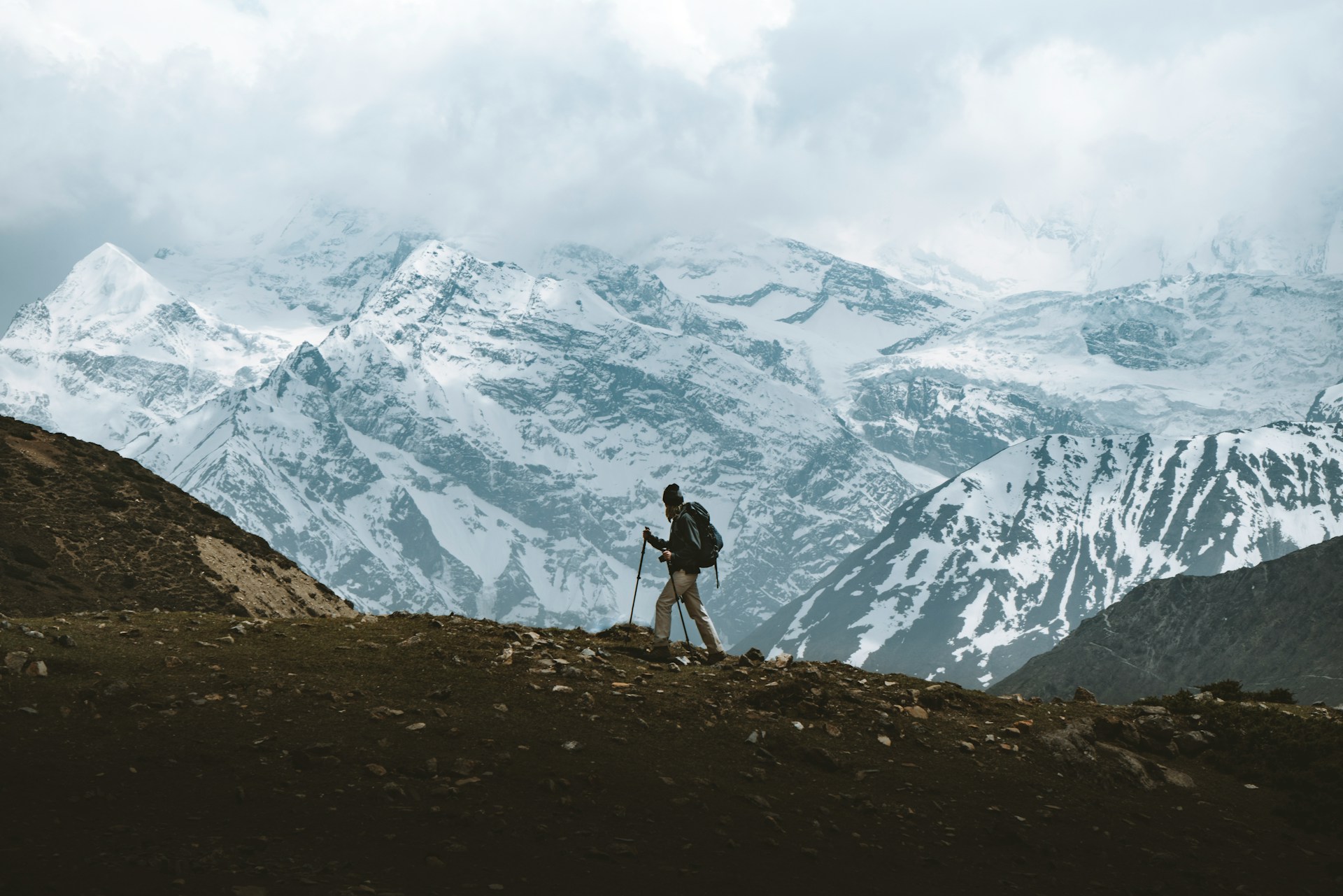
Everest Region (Island, Lobuche, Mera Peak)
- Peak Permit: $125–$350 (spring/autumn), $70–$175 (off-season)
- Sagarmatha National Park: ~$30
- TIMS Card: $10–$20
- Guides/Porters: $30–$70/day (guide), $20–$30/day (porter)
- Accommodation & Food: $10–$25/day in teahouses
- Gear Rental: $50–$150 for crampons, ice axe, harness
Annapurna Region (Pisang, Chulu, Tent Peak)
- Peak Permit: $125–$400 (season dependent)
- ACAP: $30–$35
- TIMS Card: $10–$20
- Guides/Porters: Similar rates as Everest
- Accommodation & Food: $10–$20/day
- Gear Rental: $50–$150 depending on needs
Budget Tips:
- Joining a group lowers the cost of guides and porters.
- It costs less to rent gear than to buy it.
- Costs go up in the spring and fall when many people go climbing.
Typical Total Costs:
- Easy trekking peaks: $1,000–$1,800
- Moderate peaks (Island, Mera, Lobuche): $1,800–$3,000+
- Harder peaks (Chulu East/West): $2,800–$4,000+
Careful planning ensures safety and avoids unexpected expenses. These estimates exclude international flights, insurance, visas, and personal items.
Which Peak Is Best for You? (Beginner vs Experienced Climbers)
Choosing the right peak in Nepal depends on your experience, fitness level, and technical skills. Nepal offers a wide range of trekking peaks suitable for beginners and challenging climbs for experienced mountaineers.
For Beginners:
- Peaks like Island Peak (Imja Tse), Mera Peak, and Pisang Peak are ideal for first-time climbers doing peak climbing in Nepal .
- These peaks are called trekking peaks because they don’t need a lot of technical climbing skills.
- Climbers can practice using crampons, ice axes, and ropes in a controlled environment, making it safer and more manageable.
- Routes are supported with tea houses, lodges, and guides, so logistics are easier for beginners.
- Acclimatization is still important, but the altitude is usually moderate, between 5,000 and 6,500 meters.
For Experienced Climbers:
- Peaks like Lobuche East, Chulu East/West, or higher technical summits demand strong climbing skills, fitness, and prior high-altitude experience.
- These climbs include navigating glaciers, climbing steep ice walls, and using ropes in a technical way.
- Experienced climbers often plan longer expeditions with specialized gear, including tents, ropes, and higher-quality mountaineering boots.
- Planning ahead and being ready for anything are very important because the weather, altitude, and difficulty of the route are less predictable.
Tips for Choosing Peak climbing in Nepal:
- Check your fitness level, experience, and how comfortable you are with heights and snow.
- Consider hiring a licensed guide from a trusted agency like Skyline Treks for support and safety.
- Beginners should start with trekking peaks to build their confidence and get some experience before trying harder climbs.
Selecting the right peak ensures a safe, enjoyable, and rewarding climbing experience in Nepal’s majestic Himalayas.
Safety Tips and Altitude Considerations
Peak climbing in Nepal involves high altitudes, unpredictable weather, and challenging terrain.
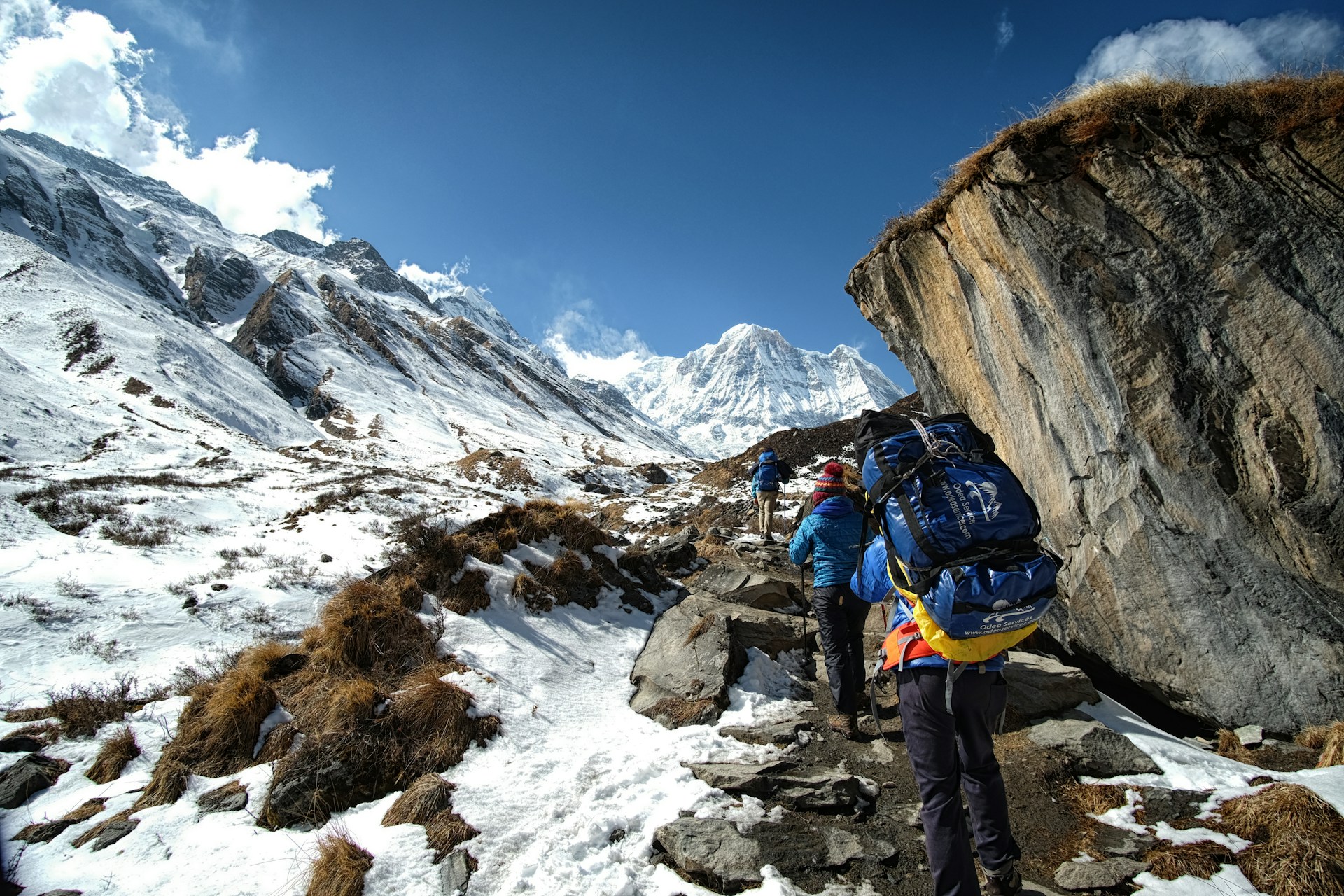
Following safety measures and understanding altitude effects are essential for a successful climb.
Altitude Awareness:
- The highest peaks can be between 5,000 and 6,600 meters high. Going up quickly raises the risk of acute mountain sickness (AMS).
- Days of acclimatization are very important. Plan days off at intermediate camps or villages so your body can get used to it.
- Recognize symptoms: headache, nausea, dizziness, tiredness, or trouble breathing. If your symptoms get worse, go down right away.
Safety Tips:
- Climb with a certified guide: Experienced guides know safe routes, weather changes, and emergency procedures.
- Check weather daily: Check the weather every day because it changes quickly in the Himalayas. Don’t climb when it’s stormy or snowing heavily.
- Use proper equipment: Boots, crampons, harnesses, ice axes, helmets, and ropes improve safety on snow, ice, and rocky terrain.
- Hydrate and eat well: Dehydration makes the effects of high altitude worse. Drink a lot of water and eat meals that give you a lot of energy.
- Follow trekking permits and regulations: NMA or ACAP rules ensure access to safe and managed climbing areas.
- Travel insurance and emergency evacuation: Ensure coverage for high-altitude trekking and helicopter evacuation if needed.
Additional Tips:
- Take your time; don’t rush, especially on the glacier or summit parts.
- Stay in touch with your trekking company and other climbers.
Following these precautions minimizes risks, ensures safe progress, and allows climbers to enjoy panoramic Himalayan views while attempting peaks like Island Peak, Mera Peak, or Pisang Peak.
Proper preparation is key for a rewarding and safe experience of peak climbing in Nepal.
Conclusion – Start Your Adventure of Peak Climbing in Nepal
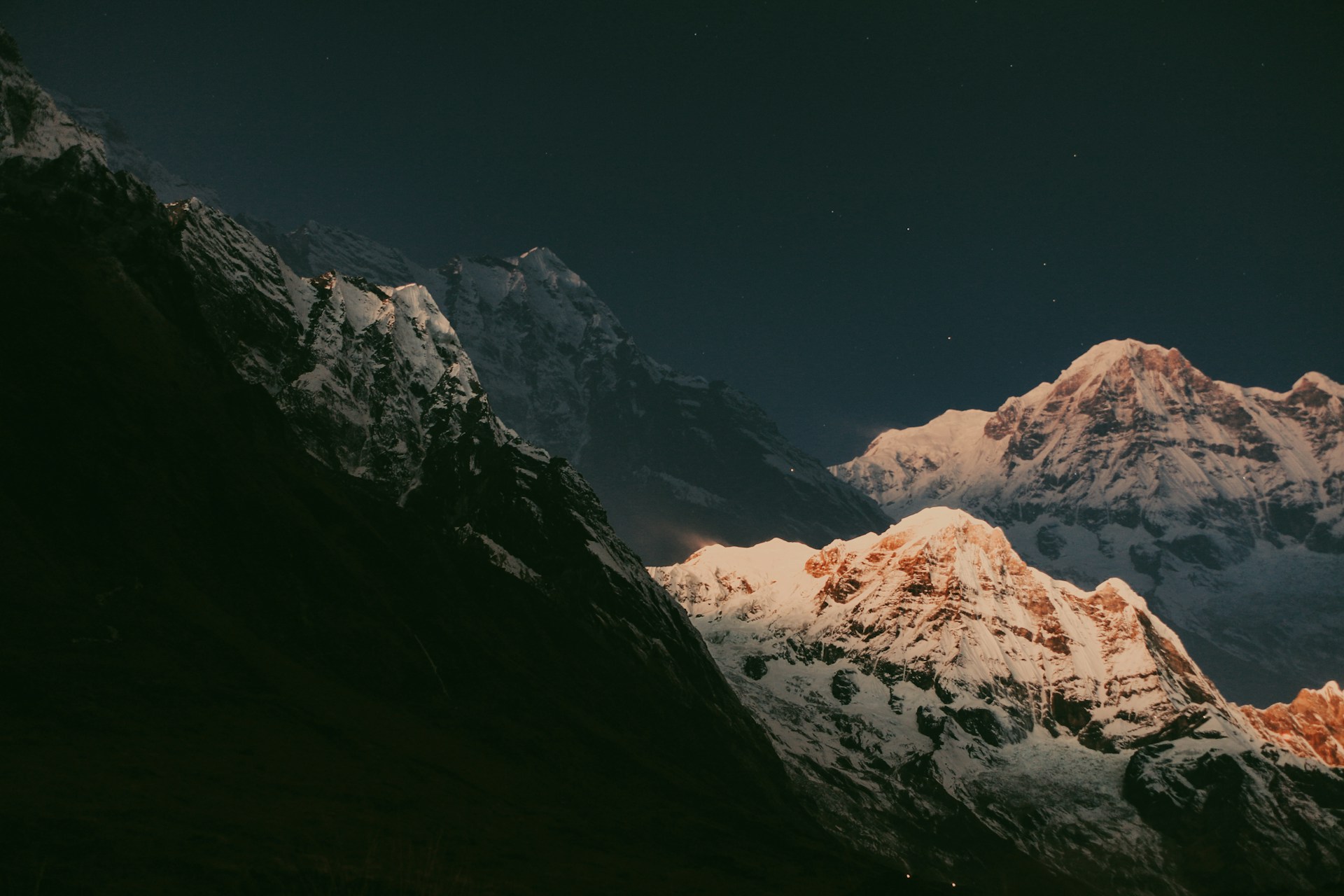
Peak climbing in Nepal offers an unforgettable experience, combining stunning Himalayan scenery, physical challenge, and cultural immersion. Nepal has climbing routes for everyone, from easy ones like Island Peak and Pisang Peak to more difficult ones like Lobuche or Chulu Peaks. The first step to having a safe and fun adventure is to know what your skills, fitness level, and goals are.
Proper preparation, gear, and acclimatization are essential for a successful climb. Climbers can have more fun and be safer by using good gear, hiring certified guides, and following safety rules. Keeping an eye on the weather, the altitude, and your own health will make the climb go smoothly and be memorable. With careful planning and help, even beginners can safely reach the tops of the Himalayas.
Partnering with a trusted trekking and climbing agency like Skyline Treks enhances your experience. Experienced guides handle logistics, provide expert advice, and ensure safety throughout the climb. With the right planning and mindset, peak climbing in Nepal is not only achievable but deeply rewarding.
Whether it’s your first summit or your next challenging adventure, Nepal’s peaks await with breathtaking views and a life-changing journey that every climber dreams of.