 What's Included
 What's Not Included
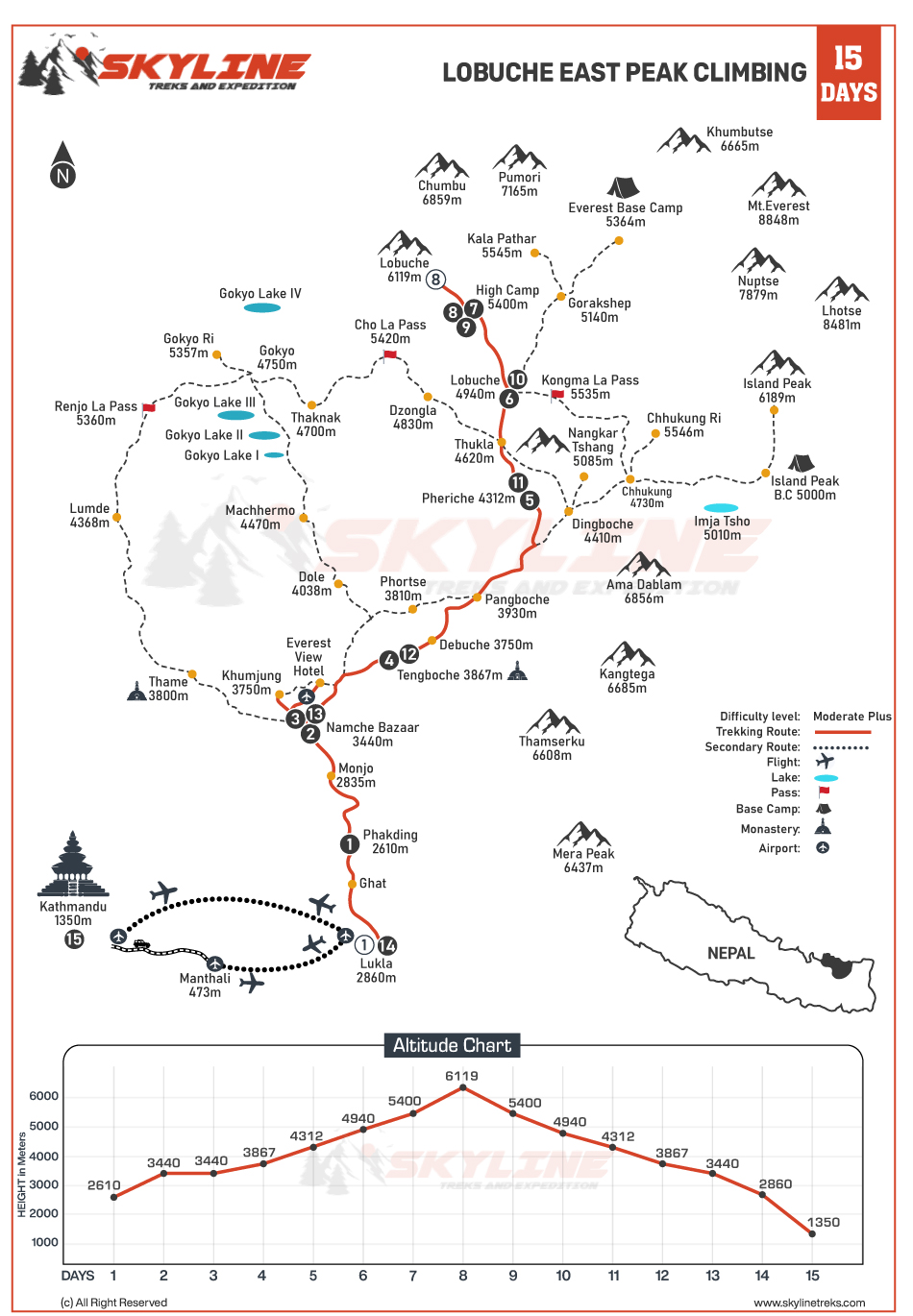 Route Map

Lobuche East is moderately difficult – more technical than Island or Mera Peak, with steep snow/ice slopes (45–50°) on the summit ridge requiring fixed ropes and climbing gear, but achievable for fit trekkers with basic mountaineering training and proper acclimatization.

26Years Experience

Have Questions? Ask Expert+9779851065082
Lobuche East Peak Climbing with EBC Trek – 19 Days
Lobuche East Peak Climbing with EBC Trek – 19 Days

Difficulty
Moderate

Altitude
6119m

Group Size
1-20 pax

Meals
B, L, D

Accomodation
Hotel/Lodge/Tent Camp/Guest house
Season
Autumn and Spring
Trip Overview
Lobuche East Peak Climbing with EBC Trek
Lobuche East Peak Climbing with EBC trek is one of Nepal’s most thrilling trekking and climbing adventures.
It’s a perfect blend of the classic Everest Base Camps journey with the added challenge and reward of summiting a 6,119m Himalayan peak. Many climbers choose Lobuche East as a stepping stone before attempting higher expeditions like Ama Dablam, Island Peak, or even Everest.
Peak Name: Lobuche East (6,119m / 20,075 ft)
Region: Khumbu (Everest Region), Nepal
Trip Style: Trek + Peak Climb (Trekking Peak – classified by NMA)
Difficulty Level: Moderate to challenging (requires basic mountaineering skills)
Best Season: March–May (Spring) & September–November (Autumn)
Duration: 19 days (depending on itinerary)
Trip Highlight
Trek to the legendary Everest Base Camp (5,364m) and hike up Kala Patthar (5,545m) for the best views of Everest.
Cross suspension bridges, Sherpa villages, Buddhist monasteries, and rhododendron/pine forests.
Acclimatize properly with nights in Namche Bazaar, Dingboche, and Lobuche.
Climb Lobuche East Peak with technical sections involving ropes, crampons, and ice axe.
Panoramic summit views of Everest, Lhotse, Nuptse, Ama Dablam, Makalu, Cho Oyu, and Pumori.
Lobuche East Peak Climbing with EBC Trekking itinerary
Itinerary
1
Arrival in Kathmandu (1,350m) – Preparation & briefing
Arrive at Tribhuvan International Airport (TIA)
On this day, trekkers arrive at Tribhuvan International Airport (TIA) and complete simple immigration steps before collecting luggage. A friendly Skyline Treks representative waits at the exit with a placard to welcome families warmly.
The comfortable hotel transfer lets kids and seniors watch Kathmandu’s colorful streets safely. This first day gives families time to rest after long flights from home.
Parents can take children and grandparents on walks around the hotel neighborhood. This day helps all trekkers prepare for their Lobuche East Peak Climbing with Everest Base Camp Trek.
Accomodation: (B)
2
Fly to Lukla (2,860m), commence trek to Phakding (2,610m) – 3 hrs
Your Everest adventure begins with an early morning scenic flight from Kathmandu (or Manthali during peak trekking seasons) to Lukla, the gateway to the Everest region. The flight offers breathtaking aerial views of the Himalayan range, including snow-capped peaks, deep river valleys, and picturesque mountain villages. Landing at the famous Tenzing-Hillary Airport in Lukla is an unforgettable experience, with its short mountain runway surrounded by towering hills.
After meeting your trekking crew and making final preparations, you begin your trek by descending through the vibrant Sherpa town of Lukla. The trail passes colorful prayer flags, ancient mani walls, spinning prayer wheels, and traditional stone-built houses, offering an authentic introduction to Sherpa culture and Buddhist heritage.
The route continues through lush forests of pine and rhododendron, crossing several suspension bridges over the glacial waters of the Dudh Koshi River. Along the way, you’ll pass small villages such as Chheplung, Ghat, and Thado Koshi, where friendly locals warmly greet trekkers. Magnificent views of Kusum Kanguru (6,367m) and surrounding peaks accompany you throughout the walk.
After approximately three hours of easy trekking, you arrive at the peaceful riverside village of Phakding (2,610m). Nestled beside the Dudh Koshi River, Phakding offers comfortable teahouses, cozy lodges, and a relaxing atmosphere—making it the perfect place to spend your first night in the Khumbu region. Enjoy a warm dinner, take in the tranquil mountain surroundings, and prepare for the exciting journey ahead toward Lobuche East Peak Climbing with Everest Base Camp Trek.
Accomodation: (B.L.D)
Travel: Trekking
3
Trek to Namche Bazaar (3,440m) – 6 hrs
After enjoying a hearty breakfast in Phakding, you begin today’s trek toward the vibrant Sherpa town of Namche Bazaar, the gateway to the Everest region. This is one of the most rewarding days of the trek, offering spectacular mountain scenery, charming villages, and the first glimpse of Mount Everest.
The trail follows the Dudh Koshi River, crossing several iconic suspension bridges adorned with colorful prayer flags. You pass through picturesque Sherpa settlements such as Toktok, Benkar, Monjo, and Jorsalle, where you can experience the local Himalayan lifestyle and traditional Buddhist culture.
At Monjo, you enter the UNESCO World Heritage-listed Sagarmatha National Park, where your permits are checked before continuing into one of the world’s most famous mountain conservation areas. The trail then descends to the river before crossing the renowned Hillary Suspension Bridge, one of the highest and most exciting bridges on the Everest trail.
From here, the route becomes steeper as you ascend through beautiful pine and rhododendron forests. Although this section is physically demanding, the effort is well rewarded. On a clear day, you’ll catch your first breathtaking views of Mount Everest (8,848.86m), along with Lhotse (8,516m), Nuptse (7,861m), and the elegant peak of Thamserku (6,623m).
After approximately six hours of trekking, you arrive at Namche Bazaar (3,440m), the bustling commercial and cultural hub of the Khumbu region. Surrounded by towering Himalayan peaks, Namche is home to cozy teahouses, cafés, bakeries, trekking shops, museums, and vibrant local markets. It is also the ideal place to begin acclimatizing before ascending to higher elevations.
Spend the evening exploring the lively streets of Namche, enjoying the mountain atmosphere, and preparing for the next stage of your Everest adventure.
Accomodation: (B.L.D)
Travel: Trekking
4
Acclimatization day in Namche – hike to Everest View Hotel / Khumjung
Today is an essential acclimatization day in Namche Bazaar, allowing your body to gradually adjust to the increasing altitude before continuing higher into the Everest region. Rather than taking a complete rest, you’ll follow the mountaineering principle of “climb high, sleep low,” which helps reduce the risk of altitude sickness while improving your acclimatization.
After breakfast, begin a rewarding uphill hike to the renowned Everest View Hotel (3,880m), one of the highest luxury hotels in the world. The trail winds through pine forests and offers increasingly spectacular panoramic views of the surrounding Himalayan peaks. On a clear day, you’ll enjoy breathtaking vistas of Mount Everest (8,848.86m), Lhotse (8,516m), Nuptse (7,861m), Ama Dablam (6,812m), Thamserku (6,623m), Kangtega (6,782m), and several other magnificent peaks. Relax with a hot drink on the hotel’s terrace while admiring one of the finest mountain panoramas in Nepal.
From Everest View Hotel, continue to the traditional Sherpa village of Khumjung (3,790m), nestled beneath the sacred peak of Khumbila. Khumjung is one of the oldest and most picturesque villages in the Khumbu region, known for its stone houses, potato fields, and rich Sherpa culture. Visit the historic Khumjung Monastery, which is famous for displaying what is believed to be a Yeti scalp, and explore the school established by Sir Edmund Hillary through the Himalayan Trust, a lasting contribution to the local community.
After exploring the village and enjoying lunch, descend gradually back to Namche Bazaar. Spend the remainder of the afternoon relaxing, browsing the local shops, visiting the Sherpa Culture Museum, or enjoying fresh coffee and homemade pastries at one of Namche’s popular cafés.
This acclimatization day not only enhances your body’s ability to adapt to the altitude but also provides an excellent opportunity to experience the unique culture, history, and stunning landscapes of the Khumbu region.
Accomodation: (B.L.D)
Travel: Trekking
5
Trek to Tengboche (3,860m) – visit Tengboche Monastery
After breakfast in Namche Bazaar, begin your trek towards the spiritual heart of the Everest region, the beautiful village of Tengboche. The trail starts with a gentle ascent before following a scenic contour path high above the Dudh Koshi Valley, offering some of the finest panoramic views on the entire Everest Base Camp Trek.
As you walk, you’ll be treated to magnificent vistas of Mount Everest (8,848.86m), Lhotse (8,516m), Nuptse (7,861m), Ama Dablam (6,812m), Thamserku (6,623m), Kangtega (6,782m), and Tawoche (6,501m). The spectacular mountain scenery, combined with the peaceful surroundings, makes this one of the most memorable trekking days.
The trail gradually descends to Phunki Tenga (3,250m), a small riverside settlement where many trekkers stop for lunch. After crossing the Dudh Koshi River, the route becomes a steady uphill climb through dense forests of rhododendron, pine, fir, and juniper. During spring, the rhododendron forests burst into vibrant shades of red, pink, and white, creating a colorful contrast against the snow-covered Himalayan peaks. Wildlife such as Himalayan monals, musk deer, and colorful pheasants may occasionally be spotted along the way.
After several hours of climbing, you reach Tengboche (3,860m), a picturesque village set on a ridge with breathtaking mountain views. Tengboche is home to the famous Tengboche Monastery, the largest and most significant Buddhist monastery in the Khumbu region. Founded in 1916, the monastery is an important spiritual center for the Sherpa community and is surrounded by an awe-inspiring amphitheater of Himalayan giants.
Take time to visit the monastery, observe the beautifully decorated prayer hall, and, if your timing allows, witness the peaceful chanting ceremony performed by resident monks. The tranquil atmosphere, fluttering prayer flags, and spectacular backdrop of Ama Dablam create one of the most iconic and unforgettable scenes in the Himalayas.
Spend the evening relaxing at your teahouse while enjoying the crisp mountain air and unforgettable sunset over the surrounding peaks.
Accomodation: (B.L.D)
Travel: Trekking
6
Trek to Dingboche (4,410m)
After breakfast at Tengboche, begin your journey towards Dingboche, leaving the monastery behind as the trail descends through enchanting forests of birch, rhododendron, fir, and juniper. In spring, the forest is alive with colorful rhododendron blossoms, while the crisp mountain air and spectacular scenery make for an enjoyable morning walk.
Cross the Imja Khola via a suspension bridge before reaching the traditional Sherpa village of Deboche, known for its peaceful nunnery and tranquil surroundings. From here, the trail gradually ascends to Pangboche (3,930m), one of the oldest Sherpa settlements in the Khumbu region. This historic village is famous for its ancient monastery, traditional stone houses, and stunning views of the majestic Ama Dablam (6,812m), often regarded as one of the world’s most beautiful mountains.
Continuing beyond Pangboche, the landscape begins to change as dense forests give way to alpine meadows and open valleys. The trail passes through Shomare and Orsho before entering the broad Imja Valley, where dramatic views of towering Himalayan peaks accompany you throughout the trek. Along the way, enjoy magnificent panoramas of Ama Dablam, Lhotse (8,516m), Nuptse (7,861m), Island Peak (6,189m), Taboche (6,495m), Cholatse (6,440m), and other surrounding summits.
As you gain altitude, you’ll notice the vegetation becoming sparser and the terrain more rugged, reflecting the transition into the high alpine environment. After approximately five to six hours of trekking, you arrive at Dingboche (4,410m), a beautiful Sherpa village situated in the wide Imja Valley. The village is surrounded by stone-walled fields that protect crops such as barley, buckwheat, and potatoes from the strong mountain winds and grazing yaks.
Dingboche offers breathtaking views in every direction and serves as an important acclimatization stop for trekkers and climbers heading toward Everest Base Camp, Lobuche, Island Peak, and other Himalayan expeditions. Spend the evening relaxing at your teahouse, enjoying the peaceful surroundings, and preparing for the higher elevations that lie ahead.
Accomodation: (B.L.D)
Travel: Trekking
7
Acclimatization hike to Nangkartshang Peak (5,083m)
Today is another important acclimatization day, giving your body time to adjust to the higher altitude before continuing toward Everest Base Camp. Following the proven strategy of “climb high, sleep low,” you’ll take a rewarding hike to Nangkartshang Peak (5,083m), one of the finest viewpoints in the Khumbu region.
After an early breakfast, begin the steep ascent along a well-defined trail that climbs the ridge above Dingboche. Although the climb is physically demanding due to the altitude, the breathtaking scenery makes every step worthwhile. As you gain elevation, the panoramic views become increasingly spectacular, revealing a magnificent panorama of some of the world’s highest mountains.
From the summit viewpoint of Nangkartshang Peak, enjoy unobstructed views of Mount Makalu (8,485m), the world’s fifth-highest mountain, along with Lhotse (8,516m), Ama Dablam (6,812m), Island Peak (6,189m), Baruntse (7,129m), Taboche (6,495m), Cholatse (6,440m), Kangtega (6,782m), and numerous snow-covered peaks stretching across the Khumbu Himal. The dramatic glaciers, deep valleys, and rugged alpine landscape create one of the most rewarding viewpoints of the entire trek.
Take time to rest, capture photographs, and enjoy the peaceful mountain environment before descending gradually to Dingboche. The descent is easier and offers another opportunity to appreciate the spectacular Himalayan scenery from different perspectives.
Back in Dingboche, spend the afternoon relaxing at your teahouse, exploring the village, or enjoying a warm drink while taking in the surrounding mountain views. Proper hydration, adequate rest, and a gradual ascent are essential for successful acclimatization, helping prepare you for the higher elevations of Lobuche, Gorak Shep, and Everest Base Camp in the coming days.
This acclimatization hike significantly improves your body’s adaptation to altitude while rewarding you with one of the most impressive panoramic viewpoints on the Everest Base Camp Trek.
Accomodation: (B.L.D)
Travel: Trekking
8
Trek to Lobuche (4,940m)
After breakfast in Dingboche, continue your ascent into the high alpine landscape of the Everest region. Today’s trek takes you above the tree line, where rugged terrain, glacial valleys, and towering Himalayan peaks create a dramatic mountain environment unlike anywhere else in Nepal.
The trail begins with a gradual climb through the wide Imja Valley to Dughla (Thukla) (4,620m), a small settlement where many trekkers stop for lunch or a short rest. Along the way, you’ll enjoy breathtaking views of Ama Dablam (6,812m), Taboche (6,495m), Cholatse (6,440m), Lobuche Peak (6,119m), and the surrounding snow-covered ridges. The landscape becomes increasingly barren, with alpine meadows giving way to rocky moraines and glacial terrain.
After crossing a small stream, the route ascends steeply to the Thukla Pass Memorial (4,830m), one of the most moving landmarks on the Everest Base Camp Trek. Here, numerous stone memorials and prayer flags commemorate climbers and Sherpas who lost their lives while attempting to summit Mount Everest and other Himalayan peaks. The peaceful setting offers a moment for quiet reflection while surrounded by breathtaking mountain scenery.
Beyond the memorial site, the trail follows the lateral moraine of the Khumbu Glacier, offering spectacular views of the glacier’s icy formations and rugged landscape. As you continue, the magnificent peaks of Pumori (7,161m), Nuptse (7,861m), Lingtren (6,749m), Khumbutse (6,665m), and Lobuche East (6,119m) dominate the horizon, while the crisp mountain air reminds you that you are now trekking at nearly 5,000 meters above sea level.
After approximately five to six hours of trekking, you arrive at the small settlement of Lobuche (4,940m), nestled beside the Khumbu Glacier. Surrounded by towering Himalayan giants, Lobuche serves as the final overnight stop before reaching Gorak Shep and Everest Base Camp. Spend the evening resting, staying well-hydrated, and preparing for one of the most exciting days of your Himalayan adventure.
Accomodation: (B.L.D)
Travel: Trekking
9
Trek to Gorak Shep (5,164m) – visit Everest Base Camp (5,364m)
Today is the highlight of your Everest Base Camp Trek as you finally reach the legendary Everest Base Camp, the starting point for climbers attempting to summit the world’s highest mountain. It is a challenging but unforgettable day filled with spectacular scenery, glacial landscapes, and a profound sense of achievement.
After an early breakfast in Lobuche, follow the rocky trail alongside the Khumbu Glacier. The route traverses glacial moraine, undulating terrain, and rugged alpine landscapes, requiring careful footing as you steadily gain altitude. Along the way, enjoy magnificent views of Pumori (7,161m), Nuptse (7,861m), Lingtren (6,749m), Khumbutse (6,665m), and other towering Himalayan peaks.
After approximately two to three hours of trekking, you arrive at Gorak Shep (5,164m), the last permanent settlement on the Everest Base Camp route. After checking into your teahouse and enjoying lunch, continue your adventure with a hike to Everest Base Camp (5,364m).
The trail follows the edge of the Khumbu Glacier, winding across rocky moraines and icy terrain before reaching the iconic Everest Base Camp. Standing at the foot of the mighty Khumbu Icefall, you’ll be surrounded by breathtaking views of towering peaks, colorful expedition tents during the spring climbing season, and the dramatic glacier that serves as the gateway to Mount Everest. Although the summit of Mount Everest itself is not visible from Base Camp, the atmosphere, scenery, and accomplishment of reaching this world-famous destination create an unforgettable experience.
Take time to celebrate your achievement, capture memorable photographs, admire the awe-inspiring Himalayan surroundings, and soak in the unique atmosphere of one of the world’s most iconic trekking destinations.
After enjoying your time at Everest Base Camp, retrace your steps back to Gorak Shep for the night. Due to the high altitude, it is important to walk at a comfortable pace, stay well hydrated, and get plenty of rest in preparation for the early morning hike to Kala Patthar the following day.
Accomodation: (B.L.D)
Travel: Trekking
10
Early morning hike to Kala Patthar (5,545m) – trek back to Lobuche
Rise before dawn for one of the most memorable experiences of the Everest Base Camp Trek—a hike to the summit of Kala Patthar (5,545m), the highest point of the trek and the best viewpoint for Mount Everest. The early morning start allows you to witness the spectacular sunrise as the first golden rays illuminate the towering Himalayan peaks.
The trail climbs steadily over rocky terrain from Gorak Shep, and although the ascent is challenging due to the high altitude and thin air, every step is rewarded with increasingly breathtaking scenery. Upon reaching the summit, you’ll be treated to a magnificent 360-degree panorama of the Everest region. Enjoy unrivaled views of Mount Everest (8,848.86m), Nuptse (7,861m), Lhotse (8,516m), Pumori (7,161m), Lingtren (6,749m), Khumbutse (6,665m), Changtse (7,543m) in Tibet, and countless surrounding snow-covered peaks. Far below, the Khumbu Glacier and the dramatic Khumbu Icefall stretch across the valley, creating one of the most iconic landscapes in the Himalayas.
Take time to admire the stunning scenery, capture unforgettable photographs, and celebrate reaching the highest point of your trek. Kala Patthar offers the closest and most spectacular panoramic views of Mount Everest available without climbing the mountain itself, making it a highlight for photographers and trekkers alike.
After descending carefully to Gorak Shep, enjoy a well-earned breakfast before beginning your return journey. Retrace your steps across the glacial moraine and rugged trails to Lobuche, passing dramatic mountain scenery and the edge of the Khumbu Glacier. The gradual descent makes walking more comfortable while allowing you to fully appreciate the remarkable alpine landscape from a different perspective.
After approximately six to seven hours of hiking and trekking, arrive back at Lobuche (4,940m), where you can relax at your teahouse and reflect on the incredible achievements of the past two days. With the highest elevations now behind you, you’ll enjoy a more restful evening as you prepare for the descent through the Khumbu Valley.
Accomodation: (B.L.D)
Travel: Trekking
11
Trek to Lobuche Base Camp (4,950m)
After breakfast in Lobuche, leave the main Everest Base Camp trekking trail and head toward Lobuche Base Camp, the staging point for your upcoming climb of Lobuche Peak. Although the day’s trek is relatively short, it provides valuable time for acclimatization and preparation before your summit attempt.
The trail gradually ascends over rocky alpine terrain, following the lateral moraine of the Khumbu Glacier. As you gain elevation, the landscape becomes increasingly rugged, with towering peaks, glacial debris, and expansive mountain vistas surrounding you. Along the route, enjoy spectacular views of Lobuche East (6,119m), Lobuche West (6,145m), Nuptse (7,861m), Pumori (7,161m), Ama Dablam (6,812m), Cholatse (6,440m), and Taboche (6,495m).
After approximately three to four hours of trekking, you arrive at Lobuche Base Camp (4,950m), situated on a rocky terrace beneath the impressive slopes of Lobuche Peak. Depending on the climbing season and expedition logistics, accommodation is typically provided in well-equipped expedition tents with comfortable sleeping arrangements and a dining tent where freshly prepared meals are served.
In the afternoon, your experienced climbing guide conducts a comprehensive pre-climb briefing covering the route, weather conditions, safety procedures, and the summit schedule. You will also participate in a practical training session, learning or refreshing essential mountaineering skills such as using crampons, an ice axe, climbing harness, helmet, ascender (jumar), descender, and fixed ropes. This practice session helps build confidence and ensures you are well prepared for the technical sections of the climb.
Spend the remainder of the day organizing your climbing equipment, staying well hydrated, and getting plenty of rest. An early night is essential, as your summit push will begin well before dawn.
Accomodation: (B.L.D)
Travel: Trekking
12
Trek to High Camp (5,400m), climbing training & gear check
After an early breakfast at Lobuche Base Camp, begin your ascent to Lobuche High Camp (5,400m). Today’s journey is relatively short but involves steeper, more rugged terrain as you leave the trekking trail behind and move into a true alpine climbing environment. The route follows rocky slopes, glacial moraines, and exposed ridges, offering breathtaking views of the surrounding Himalayan giants.
As you gain altitude, the scenery becomes increasingly dramatic. Magnificent panoramas of Lobuche East (6,119m), Lobuche West (6,145m), Nuptse (7,861m), Pumori (7,161m), Ama Dablam (6,812m), Cholatse (6,440m), Taboche (6,495m), and the vast Khumbu Glacier accompany you throughout the climb. The crisp mountain air and spectacular alpine setting provide an exciting preview of the summit day ahead.
After approximately three to four hours of climbing, you reach Lobuche High Camp (5,400m), perched on a rocky ledge with stunning views across the Khumbu Valley. High Camp serves as the final staging point before the summit attempt, allowing climbers to rest while maximizing their chances of reaching the summit in the early morning.
Following lunch and a short rest, your experienced climbing guide conducts a detailed climbing orientation and final equipment inspection. Every piece of technical gear is carefully checked to ensure it is in proper working condition and correctly fitted. This includes your mountaineering boots, crampons, climbing harness, helmet, ice axe, ascender (jumar), descender, locking carabiners, safety slings, and headlamp. Proper layering, gloves, and summit clothing are also reviewed to ensure you remain warm and protected in the extreme high-altitude conditions.
You will then participate in a practical climbing training session on nearby rock and snow slopes. Under the supervision of your guide, you will practice walking with crampons, attaching to fixed ropes, using the ascender for steep sections, descending safely with a descender, self-belay techniques, and efficient movement while clipped into safety lines. These exercises help build confidence and ensure all climbers are familiar with the equipment before summit day.
In the evening, enjoy an early dinner while your guide provides a comprehensive briefing on the summit itinerary, weather forecast, expected climbing conditions, turnaround times, and safety procedures. After making final preparations and organizing your summit pack, retire early for a few hours of rest, as the summit push typically begins around midnight or in the early hours of the morning.
Accomodation: (B.L.D)
Travel: Trekking
13
Summit Lobuche East (6,119m) – After breakfast in Pheriche, begin your descent through the beautiful Khumbu Valley toward Namche Bazaar. With the summit climb successfully completed and the highest elevations behind you, today's trek is more relaxed and allows you to fully appreciate the spectacular scenery that may have gone unnoticed during the ascent. The trail gently descends across alpine meadows before reaching Pangboche (3,930m), one of the oldest Sherpa villages in the Everest region. Surrounded by breathtaking Himalayan peaks, Pangboche is renowned for its centuries-old Buddhist monastery and traditional stone-built houses. Continuing onward, you'll pass through the peaceful settlement of Deboche and enjoy magnificent views of Ama Dablam (6,812m), Everest (8,848.86m), Lhotse (8,516m), Nuptse (7,861m), Kangtega (6,782m), and Thamserku (6,623m). From Deboche, the trail climbs briefly back to Tengboche (3,860m), home to the famous Tengboche Monastery, the spiritual center of the Khumbu region. If time permits, you may revisit the monastery or simply enjoy its serene surroundings before continuing your descent through fragrant forests of rhododendron, pine, fir, and juniper. The trail then descends steeply to Phunki Tenga, where you cross the Dudh Koshi River before making a gradual climb back to Kyangjuma. From here, the route follows a scenic contour path with panoramic views of the surrounding peaks before leading back into the lively Sherpa town of Namche Bazaar. After approximately six to seven hours of trekking, arrive in Namche Bazaar (3,440m), where you can celebrate the successful completion of your climbing adventure with a hot shower, freshly brewed coffee, delicious bakery treats, or a visit to one of the town's cozy cafés and restaurants. The comfortable teahouses and vibrant atmosphere make Namche the perfect place to relax after several days at high altitude. Spend the evening sharing stories with your fellow trekkers and climbers while reflecting on the unforgettable achievement of summiting Lobuche East and exploring the spectacular Everest region.
Today is the most exciting and demanding day of your expedition as you attempt to summit Lobuche East (6,119m), one of Nepal’s most popular trekking peaks. The climb requires determination, careful pacing, and teamwork, but the reward is an unforgettable Himalayan summit with breathtaking panoramic views.
Your day begins well before dawn, usually between midnight and 2:00 a.m. After a light breakfast and final equipment check, set off under the glow of your headlamp. The trail initially follows rocky slopes before reaching the snow and ice-covered sections of the mountain. As the terrain becomes steeper, you will put on your crampons, harness, helmet, and other climbing equipment before continuing along fixed ropes installed by your experienced climbing guides.
The upper section of the climb features a combination of snow slopes, exposed ridges, and short technical sections that require the use of an ascender (jumar) and safety rope. Throughout the ascent, your guide will monitor the pace and weather conditions while ensuring safe progress. Although physically demanding due to the high altitude and cold temperatures, the climb is achievable for trekkers with good fitness and proper preparation.
After several hours of steady climbing, you reach the summit of Lobuche East (6,119m). Standing atop the peak is an unforgettable achievement, rewarded with spectacular 360-degree views of the Everest region. From the summit, enjoy breathtaking panoramas of Mount Everest (8,848.86m), Lhotse (8,516m), Nuptse (7,861m), Makalu (8,485m), Ama Dablam (6,812m), Cho Oyu (8,188m), Pumori (7,161m), Baruntse (7,129m), Cholatse (6,440m), Taboche (6,495m), Island Peak (6,189m), and countless other snow-covered Himalayan summits stretching to the horizon.
After celebrating your successful ascent, taking photographs, and enjoying the incredible scenery, begin a careful descent along the same route. Using fixed ropes where necessary, descend safely back to Lobuche High Camp before continuing to Lobuche Base Camp for a well-deserved meal and rest.
Depending on your itinerary, weather conditions, and your energy level, you may either spend the night at Lobuche Base Camp (4,950m) or continue descending to Pheriche (4,240m). Descending to a lower altitude helps speed recovery after the strenuous summit climb and provides a more comfortable night’s rest.
This challenging but immensely rewarding day marks the culmination of your climbing adventure, combining the thrill of mountaineering with some of the finest summit views in the Himalayas.
Accomodation: (B.L.D)
Travel: Climbing
14
Contingency day (for bad weather / extra acclimatization)
Today is reserved as a contingency day to maximize the safety and success of your Lobuche East climbing expedition. High-altitude weather in the Himalayas can change rapidly, with strong winds, snowfall, or poor visibility sometimes making a summit attempt unsafe. Keeping a flexible day in the itinerary provides an important safety margin and significantly increases the likelihood of reaching the summit under favorable conditions.
If the previous day’s summit attempt was postponed due to adverse weather or route conditions, this day will be used for the climb to Lobuche East (6,119m). Your climbing guide will carefully assess the latest weather forecast, snow conditions, and the overall fitness of the group before making a final decision.
If weather conditions remain favorable and the summit has already been completed, the day serves as an additional acclimatization and recovery day at Lobuche Base Camp. You can spend the day resting, staying well hydrated, and enjoying the spectacular alpine surroundings while allowing your body to recover from the effects of high altitude.
For those who wish to remain active, your climbing guide may organize a short acclimatization hike to nearby ridges or glacial viewpoints above Base Camp. These gentle hikes help maintain acclimatization while offering magnificent views of Lobuche East, Lobuche West, Nuptse (7,861m), Pumori (7,161m), Cholatse (6,440m), Taboche (6,495m), and the impressive Khumbu Glacier.
The day also provides an excellent opportunity to review climbing techniques, practice using fixed ropes, crampons, and safety equipment, or reorganize your gear before continuing the expedition. Your guide will monitor each climber’s health and ensure everyone remains well prepared for the next stage of the journey.
Whether used for a delayed summit attempt or simply as a precautionary reserve day, this contingency day reflects responsible expedition planning. Building flexibility into the itinerary allows for safer decision-making in the unpredictable Himalayan environment and greatly enhances the overall success and enjoyment of the climb.
Accomodation: (B.L.D)
Travel: Acclimatization day
15
Trek to Namche Bazaar
After breakfast in Pheriche, begin your descent through the beautiful Khumbu Valley toward Namche Bazaar. With the summit climb successfully completed and the highest elevations behind you, today’s trek is more relaxed and allows you to fully appreciate the spectacular scenery that may have gone unnoticed during the ascent.
The trail gently descends across alpine meadows before reaching Pangboche (3,930m), one of the oldest Sherpa villages in the Everest region. Surrounded by breathtaking Himalayan peaks, Pangboche is renowned for its centuries-old Buddhist monastery and traditional stone-built houses. Continuing onward, you’ll pass through the peaceful settlement of Deboche and enjoy magnificent views of Ama Dablam (6,812m), Everest (8,848.86m), Lhotse (8,516m), Nuptse (7,861m), Kangtega (6,782m), and Thamserku (6,623m).
From Deboche, the trail climbs briefly back to Tengboche (3,860m), home to the famous Tengboche Monastery, the spiritual center of the Khumbu region. If time permits, you may revisit the monastery or simply enjoy its serene surroundings before continuing your descent through fragrant forests of rhododendron, pine, fir, and juniper.
The trail then descends steeply to Phunki Tenga, where you cross the Dudh Koshi River before making a gradual climb back to Kyangjuma. From here, the route follows a scenic contour path with panoramic views of the surrounding peaks before leading back into the lively Sherpa town of Namche Bazaar.
After approximately six to seven hours of trekking, arrive in Namche Bazaar (3,440m), where you can celebrate the successful completion of your climbing adventure with a hot shower, freshly brewed coffee, delicious bakery treats, or a visit to one of the town’s cozy cafés and restaurants. The comfortable teahouses and vibrant atmosphere make Namche the perfect place to relax after several days at high altitude.
Spend the evening sharing stories with your fellow trekkers and climbers while reflecting on the unforgettable achievement of summiting Lobuche East and exploring the spectacular Everest region.
Accomodation: (B.L.D)
Travel: Trekking
16
Trek to Lukla
After a leisurely breakfast in Namche Bazaar, begin the final day of trekking as you descend through the beautiful Khumbu Valley toward Lukla. With the most challenging sections of the expedition behind you, today’s walk is both enjoyable and reflective, offering one last opportunity to soak in the stunning Himalayan landscapes and vibrant Sherpa culture.
Leaving Namche, follow the well-maintained trail that descends through fragrant forests of pine and rhododendron. Along the way, enjoy final views of Mount Everest (8,848.86m), Lhotse (8,516m), Ama Dablam (6,812m), Thamserku (6,623m), and other majestic Himalayan peaks before they gradually disappear behind the surrounding hills.
Cross the famous Hillary Suspension Bridge over the Dudh Koshi River and continue through the UNESCO World Heritage-listed Sagarmatha National Park. After your permits are checked at Monjo, the trail follows the river through picturesque Sherpa villages, including Benkar, Toktok, Phakding, Ghat, and Chheplung. Colorful prayer flags, ancient mani stones, spinning prayer wheels, and traditional stone houses add cultural charm to the journey.
Following lunch in one of the riverside villages, the final stretch involves a gentle but steady uphill climb to Lukla. Though relatively short, this last ascent is a fitting conclusion to your Himalayan adventure. As you arrive in Lukla, you’ll reunite with fellow trekkers and climbers to celebrate the successful completion of your expedition.
Spend your final evening in the Everest region relaxing at a comfortable teahouse. Many groups gather for a farewell dinner with their guides and porters, sharing memories, expressing gratitude, and celebrating the incredible achievement of trekking to Everest Base Camp and summiting Lobuche East.
Accomodation: (B.L.D)
Travel: Trekking
17
Fly back to Kathmandu
After an early breakfast, head to Tenzing-Hillary Airport in Lukla for your scenic flight back to Kathmandu, marking the conclusion of your unforgettable Everest Base Camp and Lobuche East Peak Climbing adventure. Flights usually depart early in the morning when mountain weather conditions are most stable, although occasional delays or schedule changes may occur due to the region’s unpredictable weather.
During the approximately 30 to 35-minute flight, enjoy one last aerial view of the breathtaking Himalayas. As the aircraft soars above deep valleys, terraced hillsides, and snow-capped peaks, you can reflect on the incredible journey through the Khumbu region—from vibrant Sherpa villages and ancient monasteries to Everest Base Camp and the successful summit of Lobuche East (6,119m).
Upon arrival in Kathmandu, our representative will warmly welcome you at the domestic airport and transfer you to your hotel. The remainder of the day is free for relaxation after your high-altitude expedition. You may choose to unwind at your hotel, enjoy a traditional Nepali meal, indulge in a spa treatment, or explore the lively streets of Thamel for souvenir shopping and cultural experiences.
In the evening, you may join a farewell dinner hosted by our team at a traditional Nepali restaurant. This is an excellent opportunity to celebrate the successful completion of your expedition, share your Himalayan experiences, and receive your climbing achievement certificate before departing Nepal.
With lifelong memories, breathtaking photographs, and the satisfaction of standing on the summit of Lobuche East, you conclude one of Nepal’s most rewarding trekking and climbing adventures.
Accomodation: (B)
Travel: Hotel
18
Buffer/extra day in Kathmandu
Buffer/extra day in Kathmandu
Accomodation: (B)
Travel: Hotel
19
Final departure
Final departure
Accomodation: (B)
Include/Exclude
 What's Included
- 3-meals per day prepared by our experienced cook.
- Camping gear (two-person tents, foam mattress, kitchen tent, dining tent and toilet tent).
- Supporting field staff including professional trekking guide, cook, kitchen boy, porters or pack animals as well as their necessary insurance, meals and allowances.
- Domestic airfare (Kathmandu-Lukla-Kathmandu) including airport tax.
- Sagarmatha National Park entry permit fee.
- Khumbu Gaupalika entry permit fees
- Lobuche East Peak Climbing permit and Sherpa climbing guide fees
What's Not Included
- Nepal entry visa fees
- Kathmandu hotel room and all accommodations such as Breakfast, Lunch and Dinner (B, L ,D)
- Personal equipment sleeping bag, Down jacket, waterproof jacket, kit bag etc. (you can rent them in Kathmandu at a cost of US$ 1 per item for day)
- Equipment allowance (Legally each expedition must provide an equipment allowance for all Sherpa guides and porters. This allowance is necessary for brand new equipment (sleeping bag, shoes, crampons, down jacket, raincoat etc.). Because this expedition is not a high altitude expedition we will negotiate with the guides and porters to obtain an acceptable agreement for this allowance. Nevertheless the contribution of each participant will be around US$ 170.00
- Travel / medical insurance and emergency evacuation cost
- Personal expenses such as laundry, telephone calls, alcoholic beverages, bottled drinks (including cold drinks and mineral water), tips etc.
Fixed Departure
Departure Date
Status
Route Map / Alt.
FAQs
How difficult is Lobuche East?
What is the success rate of Lobuche East?
The success rate of Lobuche East is around 70–80%, depending on weather, fitness, acclimatization, and climbing experience.
Can a beginner climb lobuche?
Yes, a beginner can climb Lobuche East with good fitness, proper acclimatization, and basic mountaineering training provided by guides at high camp.
Which is harder, Lobuche or Island Peak?
Lobuche East is generally considered harder than Island Peak because of its steeper, more technical summit ridge.
Price PerPerson
$2880
$2565 All service inclusive
Group Discount
No. of Pax
Price Per Pax
4-8 Person
USD 2375
9-14 Person
USD 2290
We Provide
Package Customization for You
Customize TripPackage Customization for You
Free Cancellation
Best Price Guarantee
Money Back Guarantee
Easy to change date
Multiple Payment Options
Related Packages
 $4190
$4190 ( 5 out of 4 Reviews )
Lobuche west peak climbing, Itinerary and cost, route map, Lobuche peak – 17 Days
17 Days | 16 Nights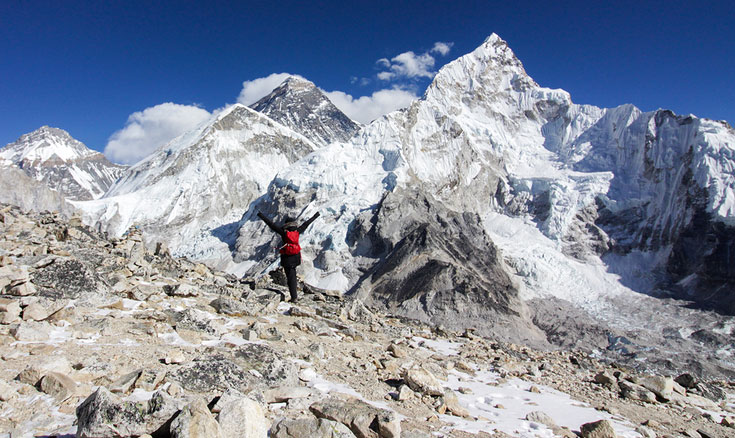 $1990$1495( 5 out of 117 Reviews )