

Everest Base Camp trek by road map, Itinerary & Cost
Everest Base Camp trek by road map, Itinerary & Cost


Trip Overview
Best Season for Everest Base Camp trek by Road
The ideal seasons for the Everest Base Camp by road are spring (March–May) and autumn (September–November). These seasons offer stable weather, clear skies, and excellent mountain visibility — ideal for trekking and jeep/road travel.
The Everest Base Camp by road is typically avoided during the monsoon (June–August), because heavy rain can make unpaved or rough mountain roads muddy and prone to landslides, rendering travel difficult or unsafe. Winter might also work, but the weather gets colder, and at higher altitudes, snow or freezing nights are a problem.
What Makes Everest Base Camp trek by Road Special?
The road‑based version of the EBC trek offers several unique advantages:
- Avoids unpredictable flights to Lukla: You can avoid flight cancellations due to bad weather by taking a jeep or bus instead of flying to Lukla. These cancellations happen often and can mess up your plans.
- Gradual altitude gain and better acclimatization: The ascent is more gradual than a sudden jump by flight because the approach starts at a lower altitude and includes both road travel and trekking. This can help some trekkers avoid getting altitude sickness.
- More immersive cultural and rural experience: The overland route goes through remote villages, the lower Himalayan countryside, forests, and valleys that don’t get as many visitors. Then it joins the classic EBC trail. This gives you a better look at rural Nepal, traditional communities, and the changing terrain as you climb.
- Budget‑ and planning‑friendly: Without the cost (and risk) of flights, this option can be more cost‑effective and less weather‑dependent, which appeals to those on tighter budgets or with less flexibility.
How Difficult is Everest Base Camp trek by Road?
The difficulty of the Everest base camp trek by road trek combines moderate to challenging trekking with logistical demands:
- It keeps the high altitude and physical challenges of the classic trek, ending at Everest Base Camp at about 5,364 m and possibly 5,545 m at viewpoints like Kala Patthar.
- Trekking parts usually require 5 to 7 hours of walking each day, crossing suspension bridges, climbing and descending steep hills, and walking on rocky or icy ground.
- The “road + trek” method still requires a lot of stamina, good trekking fitness, and the ability to handle long days of travel (jeep + trekking).
- You have to walk the last part of the way to EBC (and Kala Patthar) over high-altitude and glacial terrain, so you still need to get used to the altitude and be in good shape.
Thus, while the road‑based route reduces dependence on flights and can aid acclimatization, it remains a moderately challenging to challenging trek overall.
Permits Required for Everest base camp trek by Road
As with the standard Everest region trek, you need:
- Sagarmatha National Park Entry Permit — required to enter the national park area around Everest.
- TIMS Card (Trekkers’ Information Management System) — a mandatory registration for trekkers in this region.
These are arranged by Skyline Treks making sure that trekkers get a smooth and comfortable start.
Safety and Precautions
Because Everest base camp trek by road combines road travel and high‑altitude trekking, safety precautions are particularly important:
- Road conditions: Roads in the mountains and valleys, especially those that aren’t main highways, can be rough, not paved, and prone to landslides or mud after rain. The drive parts might be rough and long, so be ready for bumpy, sometimes slow travel.
- Altitude & acclimatization: Even though the climb is slower than by air, you still have to climb to 5,000 meters or more by trekking. Make sure you plan for proper acclimatization, hydration, rest, and avoid climbing too quickly.
- Weather variability: The weather in the Himalayas can change quickly, especially at higher elevations. It can get cold at night, snow or rain can come out of nowhere, and there can be wind or storms. Bring layers, gear that is waterproof and windproof, and make plans.
- Medical & emergency readiness: It’s a good idea to have a first-aid kit, high-altitude medicine (or talk to a doctor ahead of time), and insurance that covers evacuation if you’re going on a high-altitude trek.
- Road/tour logistics: Services may be limited in remote areas, and delays can happen when transportation breaks down or roads are blocked. Being flexible and having backup plans are very important.
Training and Preparation
To undertake the Everest Base Camp Trek by Road, you should:
- Engage in cardiovascular conditioning (hiking, running, cycling) to build stamina for trekking days.
- Practice multi‑day hiking with a loaded backpack — road‑to‑trek involves extended trekking days after a long drive.
- Strengthen your legs, core, and back so you can climb, descend, and carry gear
- If you can, go on a test hike at a moderate altitude to see how your body reacts to less oxygen and changes in altitude.
- Get ready mentally and logistically: a longer schedule, travel through remote valleys and rural roads, be ready for delays, and have realistic expectations about the facilities.
Because the ascent is more gradual, the Everest base camp trek by road may actually be easier on the body than a sudden high-altitude start (e.g., via Lukla flight), but still demands careful preparation — especially for mid- to high-altitude trekking.
Mountain Views
Despite the different approach, you’ll still experience the spectacular Himalayan landscapes associated with the classic EBC trek:
- You’ll walk through forests, river valleys, and high‑altitude alpine terrain as altitude increases.
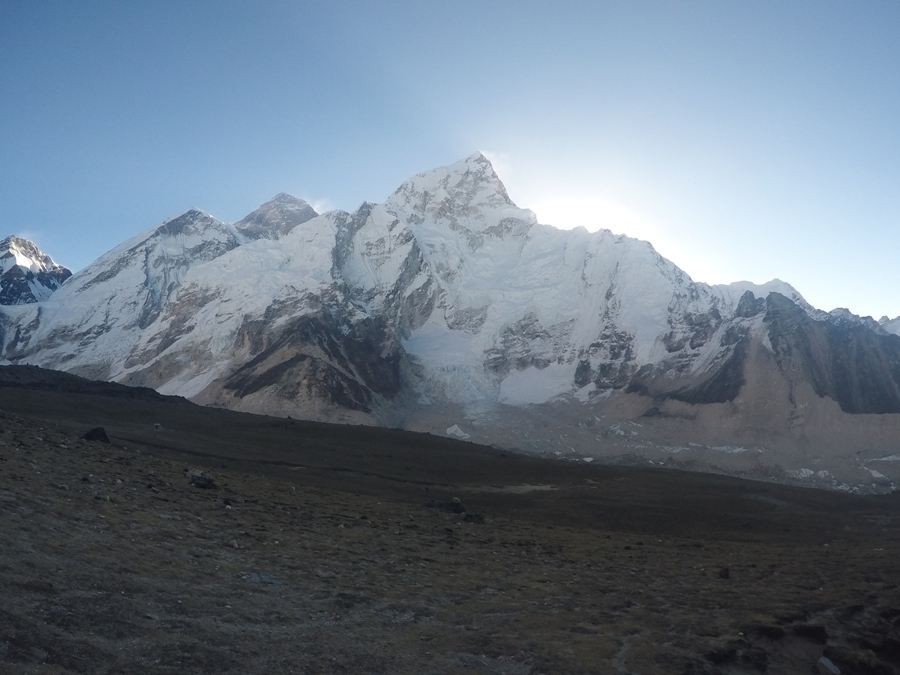
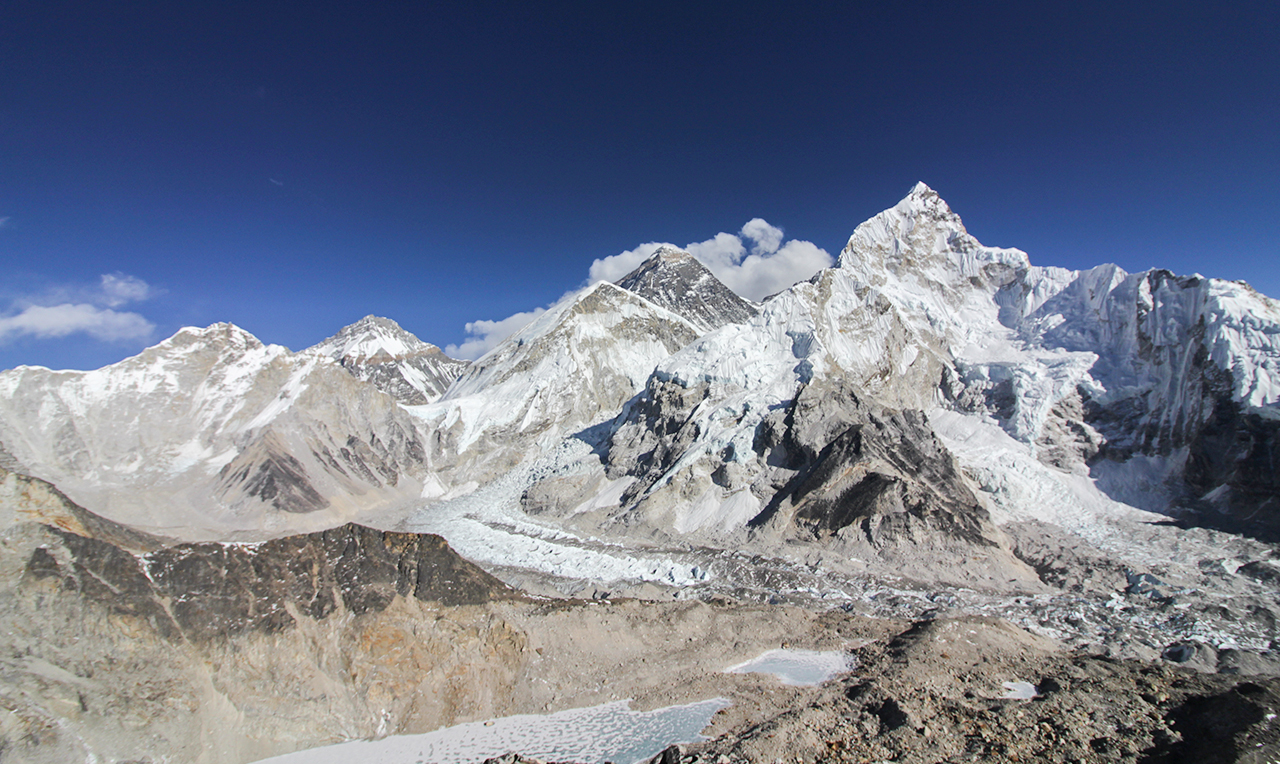
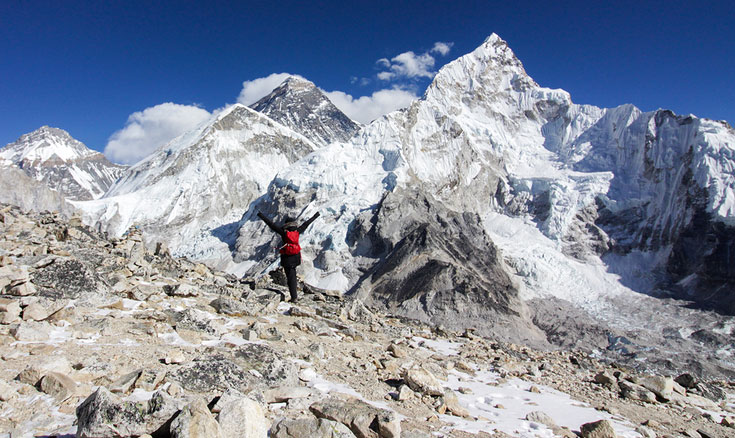
- The last parts of the trek to EBC will give you great views of the Himalayas, including Mount Everest, Lhotse, Nuptse, Ama Dablam, and the Khumbu glaciers.
- The views get more dramatic as you get closer to Base Camp and places like Kala Patthar. You can see glacial moraine, ice falls, snow-covered ridges, and peaks that are more than 8000 meters high.
The absence of a flight doesn’t reduce the beauty — in fact, the land‑based journey can provide diverse terrain transitions, from lower hills and forests to high alpine valleys and snow, giving a fuller sense of Himalayan vertical range.
Altitude Sickness and Prevention
Even with a slower road‑to‑trek approach, altitude sickness (AMS) remains a risk, because you eventually ascend to 5,000+ m. To minimize risk:
- Use gradual ascent, which is easier when you start on land, and take acclimatization days (for example, in important villages or at moderate altitudes) before going higher.
- Instead of pushing too hard after driving days, make sure you drink enough water, eat healthy meals, and get enough sleep.
- Recognize the early signs of AMS, which include headaches, nausea, dizziness, and tiredness, and tell your guide right away.
- Don’t drink alcohol or do a lot of work right after you get to a higher altitude.
- You might want to talk to a doctor about taking preventive medicine like acetazolamide.
What to Expect During Everest Base Camp trek by Road
You should expect a combination of long road/jeep travel + classic Everest‑region trekking during Everest base camp trek by road, as follows:
- A long trip overland from Kathmandu to a lower starting point, usually a village like Salleri or Tham Danda (or something similar), which is much lower than Lukla.
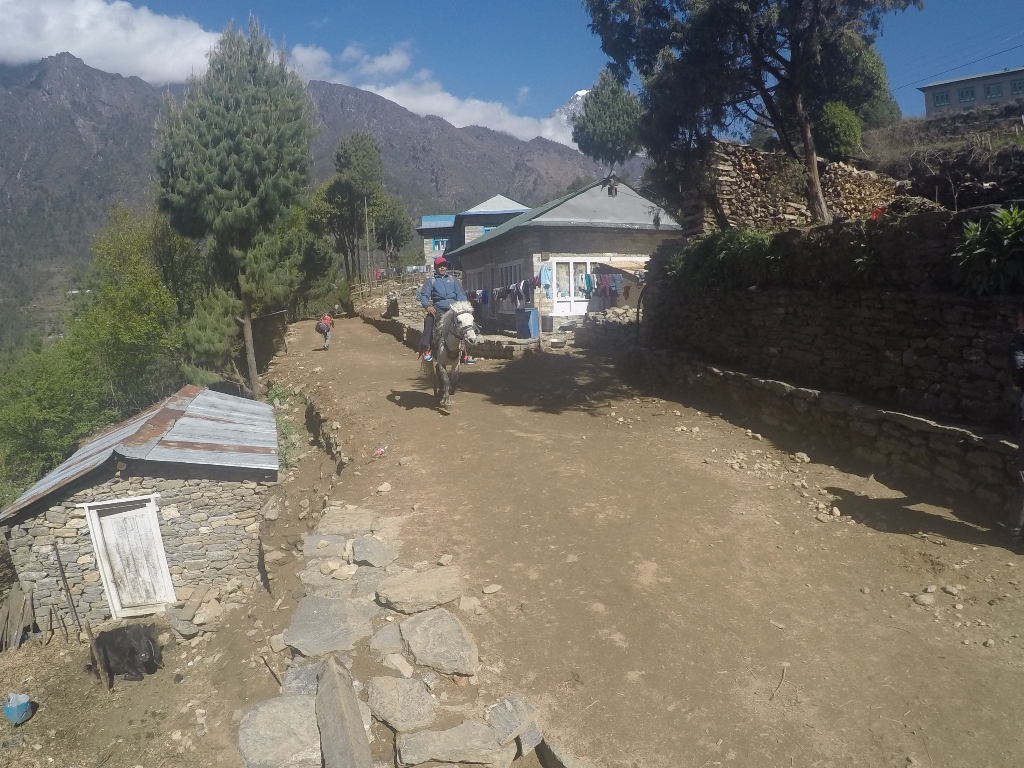
- Then we trekked for several days, going up through forests, river valleys, Sherpa villages, and across suspension bridges until we reached the classic EBC trail.
- You can get into protected areas with permits (like national parks and TIMS), and you can stay in tea houses or lodges along the way.
- There are days of high-altitude trekking that end at EBC (about 5,364 m). You can also hike to lookout points like Kala Patthar. The terrain is alpine, with snow and ice depending on the season.
- Cultural immersion: the remote Solu and Khumbu villages, the rural Nepalese countryside during the road trip, Sherpa settlements, and monasteries.
- A more budget‑friendly and often more reliable schedule (less subject to flight cancellations).
Why Choose Skyline Treks for Everest Base Camp trek by Road
- Because we offer full logistics: overland transport (jeep/bus) from Kathmandu → Salleri/Tham Danda → trekking route, and return.
- Handle details of permits (national park, local municipal entry) and accommodation/ meals.
- Provide guided service with local, experienced licensed Sherpa‑speaking guides and porters (1 porter per 2 trekkers) for support, safety, and load‑carrying.
- It doesn’t rely on flights to Lukla, which are often delayed or canceled in the mountains. Instead, it offers a stable overland option that lowers the risk of these problems.
- A slower rise in altitude, which can be easier on the body for people who are worried about sudden changes in altitude.
If you value reliability, affordability, cultural depth, and a bit more adventure (longer overland drive + trek), using Skyline’s road‑based EBC package is perfect for you..
Things You Should Know
- The “road to EBC” does not mean you drive up to the Base Camp — the final stretch still requires trekking. The jeep/bus gets you only to starting point villages (like Salleri / Tham Danda / Surke / near Lukla), from where trekking begins.
- Roads can be rough, with a lot of unpaved gravel and mud, especially during the monsoon season or after heavy rains. Driving can be slow, uncomfortable, and sometimes dangerous (landslides and roadblocks).
- Everest Base Camp trek by road takes longer than the one that goes by plane. You need more days for trekking and the drive overland because you start from a much lower altitude by jeep.
- Facilities (lodges, shops) along the less‑common overland route may be more basic compared to the usual Lukla‑EBC trail — fewer teahouses, less frequent services.
- Flexibility: Bad weather or road conditions can cause delays, and landslides or bad roads may require you to change your plans. Have some extra days, and be ready for the unknown.
- Altitude still matters — although ascent is slower, final elevation at EBC / Kala Patthar remains the same, so proper acclimatization and fitness are essential.
Is Everest Base Camp trek by Road for Me?
Everest base camp trek by road suits you if:
- You want to avoid the uncertainty of flights (delays, cancellations) — especially if you’re sensitive to weather or have a tight schedule.
- You enjoy long overland travel, rural Nepal scenery, varied terrain, and a more immersive route than the standard aerial‑to‑trek route.
- You have time because the road trek takes longer than the Lukla flight-based trek.
- You are in good shape, used to trekking for several days at high altitudes, and ready for rough roads and a little adventure.
If you prefer quick access, minimized travel time, or dislike long drives on rough mountain roads — then the standard flight‑to‑Lukla route might still be more convenient.
Meals & Accommodation
Lodging: When you start trekking, you usually stay in tea houses or lodges. When you’re driving on the road, you stay in guesthouses or lodges in villages.
Meals: On trekking days, breakfast, lunch, and dinner (B/L/D) are usually served. There is a full board (meals and a place to stay) during the trek.
In less busy or remote areas (less common trailheads), services may be more basic. You might have to deal with simpler rooms, fewer amenities, and maybe even limited hot water or heating, which is common in off-the-beaten-path trekking areas.
Why Choose Everest Base Camp trek by Road
Choosing the road-based EBC trek offers several distinct advantages that differentiate it from the standard flight-to-Lukla route:
- Flight-independent access: You don’t have to worry about the uncertainty and frequent cancellations that come with mountain flights to Lukla, which makes your trip more predictable and less stressful.
- Gradual altitude gain: Starting from lower elevation via road travel allows for more gradual acclimatization, reducing the risk of altitude sickness for some trekkers.
- Immersive cultural experience: The overland route goes through remote valleys, forests, and rural villages, giving you a better understanding of Nepali life, Sherpa culture, and the Himalayan landscapes.
- Cost-effective and flexible: Road transport can be more affordable than flights and provides flexibility in planning, especially for larger groups or those on a tighter budget.
- Adventure and scenic journey: The mix of jeep/bus travel and hiking is a one-of-a-kind adventure that takes you through subtropical valleys and alpine terrain before you reach the high Himalayas.
- Reliable logistics with professional guidance: Skyline Treks takes care of all your transportation, permits, meals, lodging, and guiding needs, making sure that your trip goes smoothly, safely, and in an organized way.
- Unique experience of trekking through off-the-beaten-path routes.
This trek is ideal for travelers who want a combination of adventure, culture, and scenic exploration, without relying on weather-dependent flights, and who are prepared for longer travel times and high-altitude trekking..
Packing List, Gears, and Equipments
Because this trek involves a combination of overland travel, trekking and high‑altitude hiking, your packing list should be comprehensive:
- Clothing: Thermal base layers, fleece jacket, insulated down jacket, waterproof/windproof outer shell, trekking pants, warm hat, gloves, sun hat, sunglasses, buff or scarf.
- Footwear: Well‑broken‑in trekking boots, extra socks, sandals or camp shoes for lodges.
- Gear: Daypack (30–50 L), trekking poles, headlamp (with spare batteries), water bottles/hydration system, water purification tablets, rain cover.
- Altitude and cold‑weather gear: Warm sleeping bag (if required), warm liner, thermal underwear, down layers.
- Safety/Health: First-aid kit, blister care, altitude sickness medication (if prescribed), sunscreen, lip balm, basic toiletries.
- Documents: Passport, necessary permits (national park, TIMS), travel insurance details (covering high‑altitude trekking & emergency evacuation), personal ID, cash.
Optional but useful: Power bank, compression dry bags, quick‑dry clothes, camera, trekking map/guide, reusable bowl/spoon (tea‑house meals), trekking gaiters.
Itinerary
Drive from Kathmandu to Salleri/Tham Danda (Approx. 8-10 hours)
- Private Jeep or shared bus to Salleri (2390m) or Tham Danda.
- Upon arrival, check into a local lodge or guesthouse.
- Overnight in Salleri or Tham Danda before moving on to the next part of the trek.
Trek from Salleri/Tham Danda to Paiya (2800m) – 6-7 hours
- Gradual ascent through forests and villages.
- Keep going until we get to Paiya (also called Chutok), a small town with a few tea shops.
- Rest and prepare for the next day’s trek upon arrival in Paiya.
Trek from Paiya to Phakding (2610m) – 6-7 hours
- Cross Surke village and join the main EBC trail near Lukla.
- Walk through charming hamlets, suspension bridges, prayer wheels, and mani walls common along the EBC route.
- Continue on a gentle, scenic trail along Dudh Koshi river until we reach Phakding, a popular overnight stop with several lodges and teahouses.
Trek from Phakding to Namche Bazaar (3440m) – 6-7 hours
- Cross Hillary Suspension Bridge.
- Walk a short distance to reach to the Sagarmatha National Park entrance.
- Reach Top Danda, a small viewpoint where you get your first clear glimpse of Mt. Everest on a good weather day.
Acclimatization Day in Namche Bazaar
- Short hike to Everest View Hotel or Khumjung village.
- Spend time visiting local museums, monasteries, and cultural sites.
- Visit the nearby Sherpa villages to learn about their way of life, history, and mountain culture.
Trek from Namche Bazaar to Tengboche (3860m) – 5-6 hours
- Visit Tengboche Monastery, the largest in the region.
- Breathtaking views of Ama Dablam, Everest, and Lhotse to witness.
Trek from Tengboche to Dingboche (4410m) – 5-6 hours
- Continue on the trail and go past Pangboche village, which is one of the oldest Sherpa settlements in the area.
- Hike through alpine landscapes with open spaces, few plants, and views of more and more peaks around you.
Acclimatization Day in Dingboche
- Hike to Nagarjun Hill (5100m) for better acclimatization.
Trek from Dingboche to Lobuche (4910m) – 5-6 hours
- Pass Thukla Pass, a memorial site for climbers.
- Trek along the trail which offers stunning views of Pumori, Nuptse, and Mt. Everest
Trek from Lobuche to Gorak Shep (5140m) & Everest Base Camp (5364m) – 7-8 hours
- Trek to Everest Base Camp (EBC), following the classic route through rocky paths and glacial moraine.
- Spend time exploring the area, taking photos, and soaking in views of Khumbu Icefall and surrounding peaks.
- Overnight stay at Gorak Shep.
Hike to Kala Patthar (5545m) & Trek to Pheriche (4240m) – 7-8 hours
- Breathtaking sunrise view of Mt. Everest from Kala Patthar.
- After soaking in the scenery, descend to Pheriche, passing through alpine terrain and small villages.
- Overnight stay in Pheriche to continue acclimatization and rest.
Trek from Pheriche to Namche Bazaar – 6-7 hours
- Descend through Pangboche and Tengboche.
Trek from Namche Bazaar to Lukla – 6-7 hours
- Final trekking day in the Khumbu region.
- Enjoy views of surrounding peaks, terraced fields, and local settlements along the way.
Drive from Lukla/Tham Danda to Kathmandu (8-10 hours)
Return journey by private jeep or shared bus, retracing the scenic route through hills, villages, and terraced fields.
Relax and enjoy the landscapes along the way after days of trekking.
Include/Exclude
 What's Included
 What's Included
- Domestic airfares from Lukla to Kathmandu (including departure charges)
- Transport by Jeep/Bus (Kathmandu-Salleri-Lukla-Kathmandu)
- Sagarmatha National Park entry permit fee
- Khumbu Gaunpalika entry permit fee
- Accommodation and three meals a day (Breakfast, Lunch and Dinner) in Lodge (Tea House) while on the Everest Base Camp trek by road
- Trekking route map to Everest Base Camp and trip certification
- Professionally escorted hike to Everest base camp by licensed holder local Sherpa English speaking local trekking guides with one trekking porter for every two persons.
- Accommodation, food, wages, equipment and insurance to staffs
- Safety and first aid kit
- A complete tour in accordance with Everest Base Camp Trekking itineraries on full board
- All land travels as part of the 13-days Everest Base Camp trekking schedule in our private vehicle
What's Not Included
 What's Not Included
- Kathmandu Hotel room and all accommodation such as Breakfast, Lunch and Dinner, alcoholic drinks and snacks not mentioned in the above itinerary
- Travel insurance and emergency medical evacuation
- International air ticket
- Personal expenditures and trekking equipment of your own
- Laundry, hot showers, bar bills, internet charges etc.
- Tips for the porter, driver, and trekking guide. (Tipping is practical)
Fixed Departure
Reviews
Reliable Route When Lukla Skies Are UnpredictableI’d heard many stories about flights to Lukla getting cancelled — so I chose the road option for peace of mind. Skyline Treks’ itinerary from Kathmandu to Salleri/Tham Danda to trek to EBC was well‑organized and felt safer. The jeep rides were long, sometimes bumpy, especially beyond Salleri, but guides were experienced and logistics smooth. The reward, Everest Base Camp and panoramic Himalayan views — made the effort absolutely worthwhile. I strongly recommend this route if you want reliability over uncertain flights.
 Sara Kim - South Korea
Reliable Route When Lukla Skies Are UnpredictableI’d heard many stories about flights to Lukla getting cancelled — so I chose the road option for peace of mind. Skyline Treks’ itinerary from Kathmandu to Salleri/Tham Danda to trek to EBC was well‑organized and felt safer. The jeep rides were long, sometimes bumpy, especially beyond Salleri, but guides were experienced and logistics smooth. The reward, Everest Base Camp and panoramic Himalayan views — made the effort absolutely worthwhile. I strongly recommend this route if you want reliability over uncertain flights.
Sara Kim - South KoreaSlow Start, Big Mountains — Perfect AcclimatizationWhat I loved most about the road‑to‑EBC route was the gradual rise in altitude. Starting from near‑sea‑level Kathmandu, driving up to around 2,400 m, then trekking slowly upward gave my body time to adjust. By the time we entered the glacier‑zone, I felt strong and prepared. The route via 4×4 and footpath through remote valleys, old villages and ridges was stunning. The sunrise over Everest from Kala Patthar felt even more rewarding knowing how far we’d come.
Anna Petrova - RussiaSlow Start, Big Mountains — Perfect AcclimatizationWhat I loved most about the road‑to‑EBC route was the gradual rise in altitude. Starting from near‑sea‑level Kathmandu, driving up to around 2,400 m, then trekking slowly upward gave my body time to adjust. By the time we entered the glacier‑zone, I felt strong and prepared. The route via 4×4 and footpath through remote valleys, old villages and ridges was stunning. The sunrise over Everest from Kala Patthar felt even more rewarding knowing how far we’d come.
Anna Petrova - RussiaOverland Road to the Roof of the WorldI wanted to skip the Lukla flight — and the Everest Base Camp trek by road with Skyline Treks delivered even better than expected. The jeep ride from Kathmandu to Salleri/Tham Danda was long but scenic, and starting the trek from that lower altitude helped me acclimatize gently. The trail along Dudh Koshi, through Sherpa villages, dense forests, suspension bridges and climbing gradually was beautiful and felt authentic. Reaching Gorak Shep and then Everest Base Camp after walking those extra valley miles made the achievement feel more earned. I’d choose this route again for sure
Olivia Harper - AustraliaOverland Road to the Roof of the WorldI wanted to skip the Lukla flight — and the Everest Base Camp trek by road with Skyline Treks delivered even better than expected. The jeep ride from Kathmandu to Salleri/Tham Danda was long but scenic, and starting the trek from that lower altitude helped me acclimatize gently. The trail along Dudh Koshi, through Sherpa villages, dense forests, suspension bridges and climbing gradually was beautiful and felt authentic. Reaching Gorak Shep and then Everest Base Camp after walking those extra valley miles made the achievement feel more earned. I’d choose this route again for sure
Olivia Harper - AustraliaFAQs
Can I go to Everest Base Camp by car?
Can I go to Everest Base Camp by car?
How close to Everest can you drive?
How close to Everest can you drive?
How long does it take to trek to Everest?
How long does it take to trek to Everest?
How to reach Everest Base Camp from Kathmandu by road?
How to reach Everest Base Camp from Kathmandu by road?
Package Customization for You
Related Packages
 $1990$1495( 5 out of 117 Reviews )