
Mera Peak and Island Peak Climbing – 23 Days
Mera Peak and Island Peak Climbing – 23 Days


Trip Overview
Mera and Island Peak Climbing Highlights
- Break out from Kathmandu to Lukla (40 mins) by air flight.
- These peaks are the precedent of natural purity and natural peril.
- Everest,Lhotse,Kanchenjunga,Makalu and Cho Oyu above 8000 m can be watch and ward.
- A bit of Technic of climbing and spunky mountaineers can hold the triumph.
- Challenging peak climbing so relevant for adventurous seekers.
- Most essential gears and using knowledge is predominant.
- Sherpa guide who is accustomed with every nooks and carnies will handle the routes.
- March-May and September- December is far more well-suited months to start.
Venture into the heart of the Himalayas with Skyline Treks & Expedition’s Mera Peak and Island Peak Climbing, an exhilarating journey that combines the ascent of two iconic trekking peaks: Mera Peak (6,476m), Nepal’s highest trekking peak, and Island Peak (Imja Tse, 6,189m).
This 21-day adventure begins with a thrilling flight to Lukla (2,715m) and takes you through the remote Hinku Valley to Mera Peak, followed by a challenging traverse over the Amphu Laptsa (5,845m) to reach Island Peak in the Khumbu Valley. With stunning views of Mount Everest (8,848m), Lhotse, Makalu, Cho Oyu, and Ama Dablam, this expedition is perfect for fit adventurers seeking a blend of high-altitude trekking, technical climbing, and cultural discovery in the serene landscapes of Nepal’s Everest region.
The journey to Mera Peak offers an off-the-beaten-path experience through the tranquil Makalu Barun National Park, where you’ll trek past lush forests, remote Sherpa villages, and glistening glaciers. Mera Peak, first climbed in 1953 by Col. Jimmy Roberts and Sen Tenzing, is a moderately challenging climb requiring basic mountaineering skills like using crampons and ice axes, with a rewarding summit view of five of the world’s highest peaks.
After summiting, you’ll cross the technical Amphu Lapcha Pass, a highlight for thrill-seekers, before descending into the vibrant Khumbu Valley to reach Island Peak. Named by Eric Shipton’s 1953 expedition for its island-like appearance in a sea of ice, Island Peak involves steeper ice slopes and fixed ropes, offering a more technical climb with breathtaking vistas of Ama Dablam and Nuptse.
Skyline Treks & Expedition, with over 25 years of experience, ensures a safe and unforgettable adventure. Our expert Sherpa guides, many with multiple summit successes, provide pre-climb training at Mera and Island Peak base camps (5,300m and 5,087m, respectively), teaching skills like rope fixing and ice climbing to boost your confidence. The itinerary includes acclimatization days at Thuli Kharka (4,160m) and Khare (5,099m) to prevent altitude sickness, crucial at altitudes exceeding 6,000m where oxygen levels are low. With only about 300 groups attempting these peaks annually, you’ll experience the solitude and grandeur of the Himalayas, supported by cozy teahouse and tented camp accommodations, hearty meals, and all necessary permits.
This expedition is a test of physical and mental endurance, covering approximately 150 km over 21 days, with daily treks of 5-8 hours and summit days lasting up to 12 hours. The best seasons are spring (March-May) and autumn (September-December), offering clear skies and daytime temperatures from 0°C to 15°C. You’ll immerse yourself in Sherpa culture, passing through villages like Kothe and Dingboche, and explore the biodiversity of Sagarmatha and Makalu Barun National Parks, home to rare species like red pandas and Himalayan thar. Whether you’re a beginner with basic climbing skills or an experienced mountaineer, Skyline’s meticulous planning ensures a high success rate for this bucket-list adventure.
From the serene trails of the Hinku Valley to the adrenaline-pumping summit of Island Peak, this journey with Skyline Treks offers a perfect blend of challenge and beauty. You’ll traverse rugged landscapes, cross high-altitude passes, and stand atop two legendary peaks, all while soaking in the rich traditions of the Sherpa people. With glowing reviews praising Skyline’s professional guides and seamless logistics, this expedition is crafted to deliver a transformative experience. The package covers flights, permits, and equipment, letting you focus on conquering the Himalayas and creating memories that will inspire you for years to come.
Mera peak and island peak climbing difficulty
Climbing Mera Peak and Island Peak in Nepal are both challenging endeavors, but they vary in difficulty, technical requirements, and overall experience. Here’s a comparison to help you understand the challenges of each:
Mera Peak (6,476 meters / 21,247 feet)
- Difficulty: Moderate to challenging.
- Technical Difficulty: Mera Peak is considered a trekking peak, so it’s less technically demanding compared to other high-altitude climbs. However, it requires a good understanding of mountaineering techniques, including the use of crampons, ice axes, and ropes.
- Route: The route to Mera Peak is long and involves crossing glaciers. The ascent itself is straightforward, but the final push to the summit involves a steep climb, where climbers need to be roped up.
- Physical Fitness: High level of physical fitness is essential due to the prolonged periods of walking and the altitude. Acclimatization is crucial as altitude sickness is a risk.
- Altitude: The high altitude makes this climb physically demanding. The oxygen levels are significantly lower, so proper acclimatization is key.
- Duration: Typically, the expedition lasts around 18-21 days, including acclimatization periods.
Island Peak (Imja Tse) (6,189 meters / 20,305 feet)
- Difficulty: Challenging.
- Technical Difficulty: Island Peak is slightly more technical than Mera Peak. The climb includes steep snow and ice slopes, and the use of fixed ropes is necessary, especially on the final headwall before the summit. Experience with climbing equipment is required.
- Route: The route involves crossing a glacier, and the final ascent includes a steep ice headwall and a narrow summit ridge, which requires good technical skills and confidence in mountaineering techniques.
- Physical Fitness: Like Mera Peak, Island Peak requires excellent physical fitness. The climb is physically demanding due to the steepness and technical challenges near the summit.
- Altitude: Altitude is a significant factor, though it is slightly lower than Mera Peak. Acclimatization is still crucial.
- Duration: The climb typically takes around 17-19 days, including acclimatization.
Comparison
- Technicality: Island Peak is more technical than Mera Peak, especially in the final sections.
- Physical Demand: Both peaks require strong physical fitness, but Island Peak’s technical sections may be more physically taxing.
- Altitude: Mera Peak Trek is higher, so it presents more challenges related to altitude.
Conclusion
- Mera Peak might be more suitable for trekkers who are looking for a high-altitude adventure with moderate technical challenges.
- Island Peak is ideal for those seeking a more technically demanding climb, with a thrilling final ascent.
Both peaks offer incredible experiences, with stunning views of the Himalayas. Your Mountain climbing holidays choice should be based on your experience level, physical fitness, and desire for technical climbing challenges.
Best Season for Mera Peak and Island Peak Climbing
The best season for Mera Peak and Island Peak Climbing in Nepal is during spring (March–May) and autumn (September–November). The weather is more consistent, the temperatures are mild, and the skies are usually clearer throughout these months. This makes for great mountain views and safer climbing conditions.
Spring provides blooming rhododendron forests in the lower regions and stable snow conditions at higher elevations, while autumn offers crisp air and spectacular visibility of Himalayan peaks. Winter can be extremely cold with significant snowfall, which makes climbing more challenging and may increase avalanche risk.
The monsoon period (June–August) brings heavy rain and unstable slopes, which is not ideal for technical climbing. For a successful combined Mera & Island Peak expedition, planning during spring or autumn is recommended.
What Makes Mera and Island Peak Climbing Special?
- Mera Peak (6,476 m) and Island Peak (6,189 m) are two of Nepal’s most popular and rewarding climbing objectives for mountaineers seeking high‑altitude challenges without technical rock climbing.
- Combining both summits gives you a one-of-a-kind Himalayan journey. You start with a beautiful trip through the Everest region to Everest Base Camp (EBC) and Kala Patthar, and then you climb two iconic Himalayan peaks with technical ice and snow climbing.
- Mera Peak is known for its highest trekking peak status and panoramic summit views that include Mount Everest, Lhotse, Makalu, Cho Oyu, and Kangchenjunga,
- Island Peak (also known as Imja Tse) presents an exciting mountaineering challenge with ladders, fixed ropes, and steep ice slopes above Chhukung.
- Climbing both peaks on a single itinerary provides an unforgettable mix of trekking, cultural exposure, and summit achievement.
Permits Required for Mera and Island Peak Climbing
Climbing both Mera Peak and Island Peak requires several permits from the Nepal Government:
- Mera Peak Climbing Permit
- Sagarmatha National Park Permit (for the Everest region)
- Island Peak Climbing Permit
- TIMS (Trekkers’ Information Management System) Card
These permits are usually arranged by the expedition company on your behalf. The Sagarmatha National Park Permit is essential for trekking in the Everest region, while separate peak permits are required specifically for climbing Mera and Island peaks.
Safety and Precautions
Safety is a priority for any high‑altitude climbing trip. On a combined Mera & Island Peak Climbing expedition, essential safety and precautionary measures include:
- Climbing with experienced, certified guides trained in high‑altitude rescue and rope techniques
- Having the right mountaineering gear with you, such crampons, a harness, an ice axe, and helmets
- Checking the weather every day before going to the summit
- Following acclimatization schedules to lower the risk of high altitudes
- Using fixed ropes and ladders safely on technical sections
- Having travel insurance covering high‑altitude climbing and emergency evacuation
Guides ensure that climbing techniques, safety protocols, and gear use are well understood before attempting steep snow and ice segments on both peaks.
Training and Preparation
Successful Mera and Island Peak climbing requires advanced physical preparation:
- Running, biking, and climbing stairs are all good ways to train your heart.
- Long walks with a heavy backpack
- Strength training for the legs and core
- Specific mountaineering training (using crampons, ice axe, fixed ropes)
- Acclimatization hikes on hills or mountains before the expedition
Training should begin at least 6–8 weeks before departure to build stamina, strength, and confidence for the long climbs and high‑altitude conditions that both peaks present.
Mountain Views
One of the most rewarding aspects of the Mera and Island Peak Climbing itinerary is the breathtaking Himalayan scenery. Climbers will enjoy:
- Panoramic vistas of Mount Everest
- Views of Mount Everest from all sides
- Views of Lhotse, Makalu, Cho Oyu, Thamserku, Kangtega, Ama Dablam, and other tall mountains
- Deep valleys, glacier moraines, and tall mountain ranges
From both summit viewpoints and high camps, the Himalayas unfold in wide panoramas unmatched by most trekking‑only journeys, making every step of the climb visually stunning.
Altitude Sickness and Prevention
Because both Mera and Island Peak climbs reach altitudes above 6,000 m, altitude sickness remains a significant risk. To prevent Acute Mountain Sickness (AMS):
- Gradually acclimatize with planned rest days
- Drink a lot of water (at least 3 to 4 liters every day).
- Stay away from booze and large meals at high camps.
- If your symptoms get worse (headache, nausea, dizziness), get down right away.
- Consider physician‑approved medication like acetazolamide (Diamox)
Proper pacing, nutrition, and hydration are key to minimizing altitude risks and allowing your body to adapt safely to thin air.
What to Expect During Mera Peak and Island Peak Climbing
Expect a multi‑phase Himalayan adventure that combines scenic trekking with technical climbing segments. The journey typically includes:
- Trekking through the Everest region along the valleys of the Dudh Koshi river
- Cultural stops at Sherpa communities including Namche Bazaar, Tengboche, and Pheriche
- Acclimatization hikes around Everest Base Camp and Kala Patthar
- High‑altitude glacier travel toward Mera Peak Base Camp
- Summit attempts using fixed ropes and climbing gear
- Descent and recovery before heading toward Island Peak
- A second summit push with technical ice and snow sections
You will experience breathtaking landscapes, rugged terrain, cultural richness, and the thrill of reaching two Himalayan summits.
Why Choose Skyline Treks for Mera and Island Peak Expedition
Skyline Treks and Expedition offers professional planning, experienced climbing guides, and strong logistical support for combined peak expeditions. The team handles all permits, transportation, accommodation, gear logistics, and safety planning so you can focus on enjoying your adventure.
With local expertise, certified guide staff, and personalized attention, Skyline Treks ensures you get a smooth, organized, and memorable Mera & Island Peak climbing experience.
Things You Should Know
Before joining a combined Mera Peak and Island Peak climbing expedition:
- Technical sections require proper mountaineering equipment
- Weather conditions can change rapidly at high altitude
- Summit windows rely on reliable weather forecasts.
- Getting used to the climate and being physically active are really important.
- In rural places, the facilities at local teahouses are different.
Advance preparation and flexibility in planning help you adapt to challenges along both climbing routes.
Is Mera and Island Peak Climbing for Me?
Mera Peak and Island Peak climbing expedition is ideal for trekkers who want to go beyond trekking and experience high‑altitude Himalayan climbing without the extreme technical demands of 8,000 m peaks. It works for physically fit people who have some experience trekking and basic mountaineering training.
If you enjoy challenging climbs, spectacular mountain scenery, and cultural immersion in the Everest region, this climb is an excellent fit. It may be less suitable for travelers seeking purely leisurely travel without physical exertion.
Meals & Accommodation
Accommodation during the Mera & Island Peak Climbing journey includes:
- Hotels or guesthouses in Kathmandu before/after the trip
- Teahouse lodges on the Everest Trek approach
- Tented camping at high camps for both peaks
Meals are typically a mix of Nepali and international options, such as dal bhat, soups, noodles, pasta, potatoes, and energy snacks. Higher camps focus on lightweight, high‑energy meals appropriate for high‑altitude climbers.
Plan Your Mera and Island Peak Climbing
To plan this expedition:
- Choose spring or autumn seasons for best views and weather
- Book permits and guide support through a trusted operator
- Begin physical and technical training 6–8 weeks ahead
- Pack high‑altitude climbing gear and clothing
- Allow buffer days for weather or unexpected delays
A typical combined expedition lasts about 20-25 days, depending on pace, acclimatization needs, and summit attempts for both peaks.
Highlights of Mera Peak and Island Peak Climbing Nepal
- Summit Mera Peak (6,476 m) — Nepal’s highest trekking peak
- Summit Island Peak (6,189 m) with technical sections
- Trek through the Everest region with rich Sherpa culture
- Himalayan panoramas including Everest, Lhotse, Makalu, Cho Oyu
- Acclimatization hikes around Everest Base Camp and Kala Patthar
- Perfect blend of trekking, culture, and mountaineering adventure
Why Choose Mera Peak and Island Peak Climbing
Choosing to climb both Mera and Island Peak in one itinerary offers an unmatched Himalayan adventure that combines iconic Everest region trekking with real summit experiences. You gain not only stunning mountain views and cultural richness but also the satisfaction of summiting two Himalayan giants using mountaineering skills — all organized with expert support and safety planning.
Packing List, Gears, and Equipments
Clothing
- Thermal base layers
- Insulated down jacket
- Waterproof windproof outer layers
- Trekking pants and mountaineering pants
- Warm gloves, hat, and neck gaiter
Footwear
- Sturdy trekking boots for approach trek
- Mountaineering boots (rigid sole) for high camps
- Crampon‑compatible boots
Climbing Gear
- Crampons and ice axe (often provided by operator)
- Climbing harness and carabiners
- Helmet
- Ascender / rappel device (if required)
Camping & Personal Items
- Tented camping gear (sleeping bag rated for cold temps)
- Headlamp with spare batteries
- Trekking poles
- Water bottles & purification
Safety & Health
- First‑aid kit and altitude meds
- Sunscreen & sunglasses (high UV protection)
- Snacks and energy bars
- Cash in Nepali rupees (ATMs limited in Everest region).
Mera peak and Island peak climbing cost for 2026 and 2027
The cost for the Mera Peak and Island Peak Climbing varies depending on the number of people in the group. Here’s a breakdown:
| Number of Pax | Cost per Person (USD) |
|---|---|
| 1 | $5095 |
| 2 | $5000 |
| 3 to 6 | $4900 |
| 7 to 10 | $4800 |
| 11+ | $4700 |
For optimal trekking conditions, plan your expedition between March to May and September to December, when the weather is favorable, and the trails are at their best. Embark on the Mera peak and Island Peak Climbing adventure, where every step leads to new heights and unforgettable experiences in the heart of the Himalayas.
Mera Peak and Island peak climbing itinerary
Day 01: 40 minutes Flight from Kathmandu to Lukla (2,715m) and overnight Lodge. (B.L.D)
Day 02: Commence trek to Chutok- (2800m) (5-6 hr).(B.L.D)
Day 03: Trek to Pangkongma – (2950m) (5-6 hr). (B.L.D)
Day 04: Trek to Kurke – (3800m) (5-6 hr). (B.L.D)
Day 05: Trek to Thuli Kharka- (4160m) (2-3 hr) and acclimatization day. (B.L.D)
Day 06: Trek to Kothe, (3691m) Lodge (B.L.D)
Day 07: Trek to Thagnak, (4358m) Lodge (B.L.D)
Day 08: Trek to Khare, (5099m) Lodge (B.L.D)
Day 09: Rest day for acclimatization (Lodge) (B.L.D)
Day 10: Trek to Mera La (5399m) to High Camp (5800m) Tent Camp (B.L.D)
Day 11: High Camp to Summit MERA PEAK (6461m) and returned to High Camp (Tent Camp) (B.L.D)
Day 12: Trek to Panch Pokhari, (5863m) Tent Camp (B.L.D)
Day 13: Trek to Seto Pokhari, Tent Camp (B.L.D)
Day 14: Trek to Golo Pokhari (Hongu Pokhari) (5950m) Cross Amphu laptsa pass trek to Amphu laptsa Phedi (5260m) Tent Camp (B.L.D)
Day 15: Trek to Island Peak Base Camp Tent Camp (B.L.D)
Day 16: Trek to Island Peak High Camp Tent Camp (B.L.D)
Day 17: Acclimatization day incase of due to bad weather. Overnight Tent Camp. (B,L,D)
Day 18: Summit the Island Peak (6,189m / 21,210 ft). Return back to Base Camp. Overnight Tent Camp. (B,L,D)
Day 19: Trek Island Peak Base Camp to Dingboche (4,410m) (5 hrs). Overnight Lodge. (B,L,D)
Day 20: Trek Dingboche to Tengboche (3,860m) (4 hrs). Overnight Lodge. (B,L,D)
Day 21: Trek Tengboche to Namche (3,440m) (3 hrs). Overnight Lodge. (B,L,D)
Day 22: Trek Namche to Lukla (2,840m) (5-6 hrs). Overnight Lodge. (B,L,D)
Day 23: Flight from Lukla (2,840m) – Kathmandu (1,310m).
Itinerary
Flight from Kathmandu to Lukla
Your adventure for the Mera Peak and Island Peak Climbing begins with an exciting 40-minute scenic mountain flight from Kathmandu to Lukla, one of the most famous high-altitude airstrips in the world. The flight offers breathtaking aerial views of the Himalayan range, including snow-capped peaks, deep valleys, and terraced hillsides, setting the tone for your expedition.
Upon arrival in Lukla, you will meet your trekking crew and begin preparing for the journey ahead. The day is rather easy, so you have time to get used to the high altitude, organize your gear, and tour the small mountain village that is the primary entry to the Everest region.
You will spend the night in a cozy lodge in Lukla, where you will eat warm meals and recuperate before starting the trekking part of your climbing adventure the next day.
Commence trek to Chutok
On Day 2, your trekking journey officially begins as you leave Lukla and head toward Chutok, following a quieter trail compared to the classic Everest Base Camp route. The trail goes up slowly through thick pine and rhododendron forests, crossing small streams and traditional Sherpa villages along the route.
The trail offers a peaceful trekking experience with fewer crowds, allowing you to fully enjoy the natural beauty of the region.You might be able to see distant Himalayan peaks and experience the amazing biodiversity of the Everest region as you travel over undulating hills and wooded roads.
After 5–6 hours of trekking, you arrive at Chutok, a small and tranquil settlement. Here, you will stay overnight in a local lodge, enjoying warm meals and resting as your body continues to adapt to the increasing altitude, preparing for the more remote sections of the trek ahead.
Trek to Pangkongma
On Day 3, the trek continues deeper into the quieter trails of the Hinku Valley region as you make your way toward Pangkongma, a traditional settlement surrounded by lush hills and forested ridges. The path goes up slowly through rhododendron and pine forests, with small yak grazing areas and scattered Sherpa residences along the way.
This section of the trek is peaceful and less commercialized, offering an authentic Himalayan experience away from the busier Everest Base Camp trail. As you gain elevation, the environment will slowly open up, giving you fresh mountain air, beautiful vistas, and views of distant snow-capped peaks.
After 5–6 hours of trekking, you arrive at Pangkongma, where you will spend the night in a local lodge. This peaceful halt gives you time to rest, eat hot meals, and get used to the higher parts of the Mera Peak trek.
Trek to Kurke
On Day 4, the trail becomes noticeably steeper as you ascend toward Kurke, entering higher alpine terrain on the Mera Peak route. The trek gradually shifts from forested paths to more open landscapes, with expanding views of surrounding hills, ridgelines, and distant Himalayan peaks. . As you go up in altitude, the air is cooler and thinner. This means that you need to stay hydrated and keep a steady pace all day.
The path goes through quiet highland pastures and remote yak grazing areas, giving you a raw and peaceful Himalayan feel far from crowded trekking routes. The higher you go, the less plants there are, and the view opens up to broad valleys and rough mountain ranges.
After 5–6 hours of trekking, you reach Kurke (3,800 m), a high-altitude stop where you will stay overnight in a lodge. This is an important acclimatization stage, allowing your body to adjust before heading further into the high Himalayan zone of the expedition.
Trek to Thuli Kharka
On Day 5, the trek continues with a shorter but significant ascent toward Thuli Kharka, a key high-altitude stop on the Mera Peak route. The trail slowly rises across open alpine land, giving you wide vistas of nearby ridges and distant snow-covered peaks. As you go higher, the ground becomes more rough and open, giving you a real sense of nearing the high Himalayas.
The short walking duration of 2–3 hours is intentionally planned to support proper acclimatization, allowing your body to adjust to the thinning air at higher elevation. Upon reaching Thuli Kharka, you will have the rest of the day for rest, hydration, and light exploration around the area.
This acclimatization stop is crucial for reducing the risk of altitude sickness before moving deeper into more challenging sections of the expedition. You will stay overnight in a lodge, enjoying warm meals and recovery time in a peaceful high-mountain setting.
Trek to Kothe
On Day 6, you begin a scenic descent from Thuli Kharka toward Kothe, re-entering the beautiful Hinku Valley landscape. The trail initially follows a ridgeline with outstanding views of the surrounding Himalayan terrain before gradually dropping into forested sections filled with rhododendron, pine, and juniper trees.
As you lose altitude, the air becomes richer and warmer, and the environment feels noticeably greener compared to the alpine zones above. The route is peaceful and offers a mix of gentle descents, forest paths, and occasional open valleys with views of distant snow peaks.
After several hours of trekking, you arrive in Kothe, a well-known settlement along the Mera Peak route. You will spend the night at a lodge here, where you will have warm meals and a good night’s sleep. This stay at a lower altitude is great for recovering from hiking at a higher altitude and getting ready for the deeper approach to Mera Base Camp in the next several days.
Trek to Thagnak
On Day 7, the trek continues deeper into the high Himalayas as you ascend from Kothe toward Thagnak, entering a more rugged and glacial section of the Mera Peak route. The trail slowly goes up next to the Hinku Valley, going over steep trails, over rivers, and across open alpine land with stunning mountain views all around.
As you gain altitude, the vegetation becomes sparse and the landscape transitions into a more barren, high-mountain environment. Along the way, you may enjoy stunning views of surrounding peaks and glacial valleys, giving a true sense of entering the expedition zone.
The air becomes noticeably thinner, so a steady pace and proper hydration are essential.
After several hours of trekking, you reach Thagnak (4,358 m), a key acclimatization stop before heading toward Mera Peak Base Camp. You will stay overnight in a lodge, resting, eating warm meals, and preparing for the higher and more challenging sections ahead.
Trek to Khare
On Day 8, you make a significant ascent from Thagnak to Khare, one of the most important staging points for Mera Peak climbing. The trail climbs steadily through a dramatic alpine environment, gradually leaving behind the valley floor and entering a rugged high-altitude zone dominated by glaciers, moraines, and rocky terrain.
As you approach higher elevations, the landscape becomes increasingly stark yet incredibly scenic, with panoramic views of surrounding Himalayan peaks and glacier-fed valleys. The air is noticeably thinner at this altitude, so a slow and steady pace is essential to maintain energy and support proper acclimatization.
After several hours of trekking, you arrive in Khare (5,099 m), the final major settlement before Mera Peak Base Camp. You will spend the night in a lodge here, where climbers normally make final preparations, go over climbing skills, and recover before moving on to the more challenging and higher parts of the expedition.
Rest day for acclimatization
Day 9 is an essential acclimatization and preparation day in Khare, designed to help your body adapt to the high altitude before moving toward Mera Peak Base Camp and higher climbing zones. Spending an extra night at this elevation significantly reduces the risk of altitude sickness and improves your overall climbing performance.
During the day, you will have time for rest, hydration, and short acclimatization hikes around Khare to support proper adjustment to thinner air. This is also an important training opportunity where guides may introduce or revise basic climbing techniques, including the use of crampons, harnesses, ice axes, and rope systems required for Mera Peak.
The glaciers and towering Himalayan peaks that surround Khare make it a stunning and inspirational spot to relax. You will spend the night in a lodge, getting ready both physically and psychologically for the climb to Mera Peak Base Camp and higher alpine camps.
Trek to Mera La (5399m) to High Camp
On Day 10, the expedition moves into the true high-altitude climbing phase as you leave Khare and ascend toward Mera La, a glacial pass that serves as a gateway to the upper slopes of Mera Peak. The track gets increasingly difficult as it goes across rocky moraines and glacier terrain, where you need to be careful with your balance and keep a steady pace.
From Mera La, the route continues upward toward High Camp (5,800 m), where the environment becomes increasingly exposed, cold, and windy. The ascent requires focus and endurance as you move through snow and ice-covered sections, guided by experienced climbing staff using ropes and safety techniques where needed.
Upon reaching High Camp, you will settle into a tented camp, where meals and rest are provided in high-altitude expedition conditions. This is a critical staging point for the upcoming summit push, offering final preparation, gear checks, and rest before the early morning ascent toward Mera Peak summit.
High Camp to Summit MERA PEAK (6461m) and returned to High Camp
Day 11 is the most important and challenging day of the expedition, as you attempt the summit of Mera Peak (6,461 m), one of the highest trekking peaks in Nepal. The climb begins very early in the morning, usually before sunrise, to take advantage of stable weather and firm snow conditions. Equipped with climbing gear such as crampons, ice axe, harness, and ropes, you will ascend gradually across glacier terrain under the guidance of experienced climbing leaders.
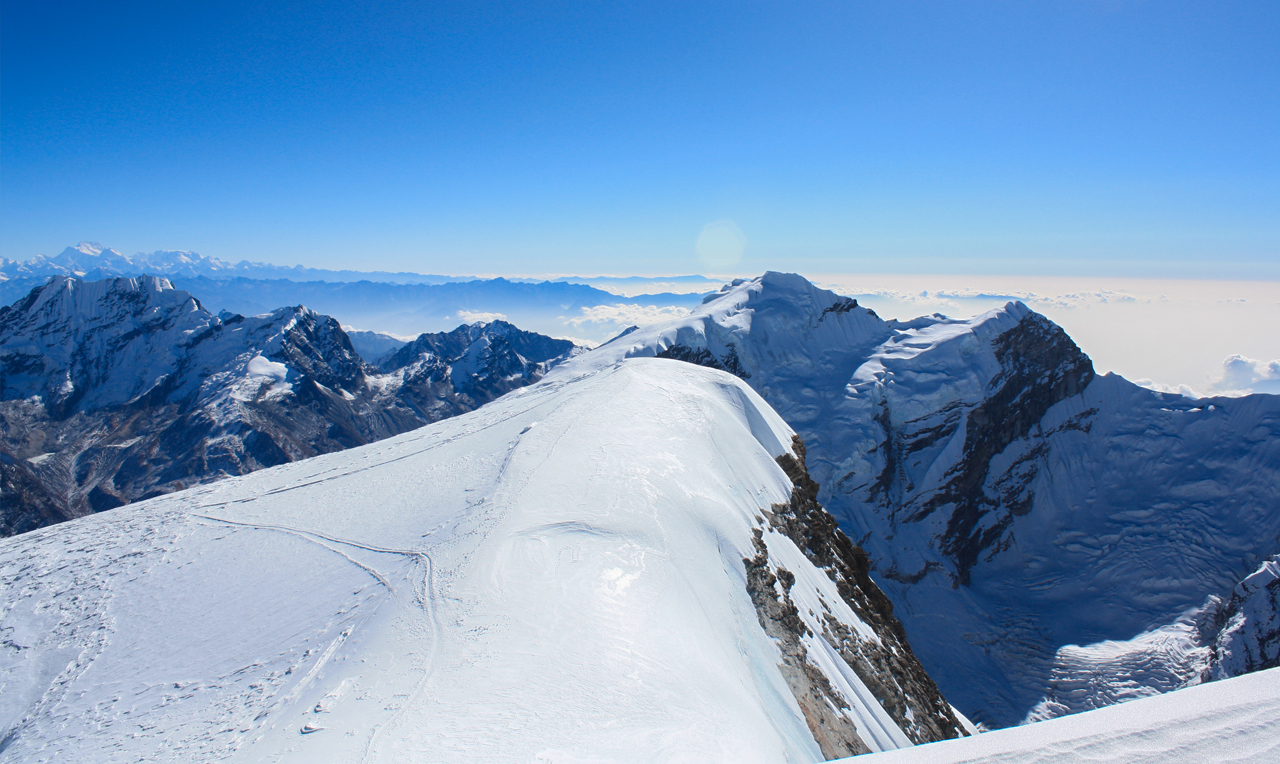
The route involves a long, steady climb over snow slopes and glacial sections, requiring endurance, focus, and proper pacing due to the extreme altitude and thin air. As you approach the summit, the effort is rewarded with one of the most breathtaking panoramic views in the Himalayas. From the top, you can see Mount Everest, Lhotse, Makalu, Cho Oyu, and other towering peaks stretching across the horizon.
After taking pictures and celebrating at the top for a while, you cautiously make your way back down to High Camp, where you will spend the night in a tented camp to rest and recover from your successful summit attempt.
Trek to Panch Pokhari
On Day 12, you continue your high-altitude journey after the successful Mera Peak summit, moving through remote glacial terrain toward Panch Pokhari. The trail descends gradually from High Camp and traverses icy ridges, moraine fields, and snow-covered sections, offering a dramatic Himalayan landscape throughout the day.
As you move deeper into this isolated alpine environment, the air becomes colder and thinner, and progress is slow and steady due to the challenging altitude conditions. The surrounding views of glaciers and distant Himalayan peaks make this section both demanding and visually stunning. Proper hydration and pacing are essential to maintain energy and safety at this elevation.
After several hours of trekking, you reach the Panch Pokhari area (5,863 m), where you set up a tented camp for the night. Here, you will rest and recover in a high-altitude expedition setting, preparing for the descent phase of the journey ahead.
Trek to Seto Pokhari
On Day 13, the journey continues through remote and rugged high-altitude terrain as you trek from Panch Pokhari toward Seto Pokhari, a stunning glacial lake nestled in the upper Himalayan region. The track goes through steep roads, glacier portions, and snow-covered areas, giving you a real wilderness experience far away from busy hiking routes.
As you move across this isolated alpine landscape, you are surrounded by dramatic views of glaciers, icy ridges, and distant snow-capped peaks. The environment remains harsh and exposed, with cold temperatures and thin air requiring a steady pace, proper hydration, and careful footing throughout the trek.
After several hours of trekking, you arrive at Seto Pokhari, where you will set up a tented camp beside this beautiful high-altitude lake. This beautiful and serene place in the middle of the Himalayas offers a one-of-a-kind overnight experience that lets you recuperate and get ready for the next day of the excursion.
Trek to Golo Pokhari (Hongu Pokhari) (5950m) Cross Amphu laptsa pass trek to Amphu laptsa Phedi
Day 14 is one of the most challenging and technical days of the entire expedition as you cross the demanding Amphu Laptsa Pass, linking the remote Hongu Valley with the Everest region. The day begins with a gradual ascent from Seto Pokhari toward Golo Pokhari (Hongu Pokhari), traversing rugged glacial terrain and high alpine slopes.
From here, the climb becomes steeper and more technical as you approach Amphu Laptsa Pass (5,845 m). Because of the icy slopes and steep climbs, this part of the climb often needs fixed ropes, crampons, and cautious direction from experienced climbing guides. When you get to the top, you may see amazing views of the surrounding Himalayan peaks and glaciers.
After crossing the pass, you descend cautiously toward Amphu Laptsa Phedi (5,260 m), where you will set up a tented camp. This is a physically demanding day requiring endurance, focus, and teamwork, but it is also one of the most rewarding highlights of the expedition.
Trek to Island Peak Base Camp
On Day 15, you continue your expedition into the Everest region, heading toward Island Peak Base Camp, the starting point for your next summit challenge. The trail gradually descends from Amphu Laptsa Phedi and then follows rugged glacial terrain, moraine paths, and alpine valleys toward the Imja Valley.
As you move along this remote route, the landscape opens up to dramatic Himalayan scenery, with towering peaks and glaciers surrounding you. The journey is physically demanding due to the altitude and terrain, but the excitement builds as you approach the base of Island Peak (Imja Tse). Along the way, you may pass through high alpine areas near Chhukung Valley, known for its stunning mountain vistas.
After several hours of trekking, you arrive at Island Peak Base Camp, where a tented camp is set up for the night. Here, you will rest, prepare your climbing gear, and receive final instructions from your guides in preparation for the upcoming Island Peak summit attempt.
Trek to Island Peak High Camp
On Day 16, you move higher up the mountain as you trek from Island Peak Base Camp to High Camp, a crucial staging point for the summit push. The trail becomes more technical and steep as you ascend through rocky paths, glacial moraines, and exposed alpine terrain. This section requires careful footing and the use of basic climbing techniques as you approach higher elevations.
As you go up in altitude, the air gets thinner and the winds are stronger, making the climate colder and harder to deal with. But the vistas are amazing, with close-up views of the nearby Himalayan peaks and glaciers. The climb to High Camp isn’t very long, but it’s hard on the body because of the high altitude and rough ground.
Upon reaching High Camp, you will settle into a tented camp, where final preparations are made for the summit attempt. Guides will check your climbing gear and brief you on the route ahead, ensuring you are fully ready for the early morning ascent to Island Peak summit.
Acclimatization day incase of due to bad weather
Day 17 is reserved as a flexible acclimatization and contingency day, mainly to ensure safety and increase the chances of a successful Island Peak summit. This extra day is especially important in case of unfavorable weather conditions, such as strong winds, snowfall, or poor visibility, which are common at high altitudes.
If the weather remains stable and the summit attempt has already been completed, this day can be used for additional rest and recovery after the physically demanding climb. Otherwise, it gives climbers a chance to push back the summit, making sure they have the finest possible circumstances for a safe climb.
Spending this extra day at high altitude also helps with proper acclimatization, allowing your body to adapt further to the thin air. You will stay overnight in a tented camp at High Camp, maintaining readiness, conserving energy, and preparing for the next phase of the expedition.
Summit the Island Peak (6,189m / 21,210 ft). Return back to Base Camp
Day 18 marks the final summit challenge of your expedition as you attempt the ascent of Island Peak (Imja Tse). The climb begins very early in the morning, often before dawn, to ensure stable weather and firm snow conditions. With all the climbing gear you need—crampons, a harness, an ice axe, and fixed ropes—you climb rocky ridges, glacier terrain, and steep ice slopes with the help of expert climbing leaders.
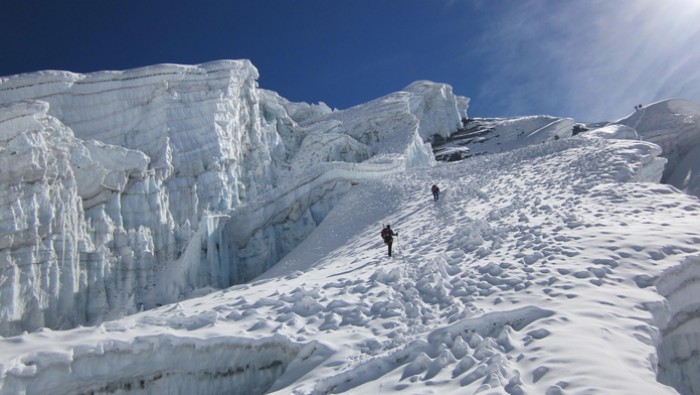
The route includes technical sections such as fixed rope climbs and ladder crossings over crevasses, requiring focus, strength, and confidence. As you reach the summit, you are rewarded with spectacular panoramic views of towering Himalayan peaks, including Mount Everest, Lhotse, Nuptse, and Ama Dablam.
After celebrating your achievement at the summit, you descend carefully back to Island Peak Base Camp, where you will stay overnight in a tented camp. This marks the successful completion of both major climbing objectives of the expedition.
Trek Island Peak Base Camp to Dingboche
On Day 19, you begin the descent phase of your journey, trekking from Island Peak Base Camp down toward the beautiful village of Dingboche. This day is a lot simpler than the last one because you’re going back down to lower altitudes and more comfortable conditions.
The trail descends through the Imja Valley, passing alpine terrain, glacial moraines, and open landscapes with stunning views of surrounding Himalayan peaks. As you approach Dingboche, the environment becomes more welcoming, with scattered stone houses, cultivated fields, and signs of village life reappearing after days in remote high-altitude camps.
After approximately 5 hours of trekking, you arrive in Dingboche, a well-known Sherpa settlement in the Everest region. You will stay overnight in a comfortable lodge, enjoying warm meals, rest, and recovery as you continue your return journey.
Trek Dingboche to Tengboche
On Day 20, you continue your descent through the Everest region, trekking from Dingboche to the serene village of Tengboche. The trail begins with a gentle descent through open alpine landscapes, offering beautiful views of surrounding peaks, before gradually entering forested sections filled with rhododendron and pine trees.
As you walk along the well-established trail, you’ll cross suspension bridges and pass through small settlements, enjoying a more comfortable altitude compared to previous days. The route provides scenic views of iconic peaks such as Ama Dablam, making the trek both relaxing and visually rewarding.
After approximately 4 hours of trekking, you reach Tengboche, home to the famous Tengboche Monastery, the largest monastery in the Everest region. You will stay overnight in a lodge, where you can explore the peaceful surroundings, visit the monastery, and enjoy warm meals while reflecting on your incredible Himalayan journey.
Trek Tengboche to Namche
On Day 21, you continue descending through the scenic Everest region, trekking from Tengboche to the vibrant Sherpa town of Namche Bazaar. The trail begins with a gentle descent through lush rhododendron and pine forests, followed by crossing suspension bridges over the Dudh Koshi River.
As you move lower in altitude, the air becomes richer, making the trek feel easier and more comfortable after the high-altitude climbing days. Along the way, you can enjoy final views of the Himalayan peaks and revisit familiar villages and landscapes you passed earlier in the journey.
After approximately 3 hours of trekking, you arrive at Namche Bazaar, the bustling heart of the Everest region. Here, you will stay overnight in a comfortable lodge, where you can relax, enjoy good food, explore cafes, shops, and celebrate the successful completion of your climbing adventure.
Trek Namche to Lukla
On Day 22, you complete the final trekking section of your expedition as you descend from Namche Bazaar back to Lukla. The trail follows a familiar route along the Dudh Koshi River, passing through beautiful Sherpa villages, dense pine forests, and crossing several suspension bridges.
The descent includes both gradual downhill sections and a few short uphill climbs, making it a moderately long but manageable day of trekking. As you walk, you can reflect on the incredible journey—from trekking through remote valleys to successfully summiting both Mera Peak and Island Peak.
After 5–6 hours of trekking, you arrive in Lukla, where you will stay overnight in a comfortable lodge. This is a perfect time to relax, celebrate your achievement with your team, and prepare for your return flight to Kathmandu the following day.
Flight from Lukla - Kathmandu
On Day 23, your incredible Mera Peak and Island Peak Climbing expedition comes to an end as you take an early morning scenic flight from Lukla back to Kathmandu. This short yet unforgettable flight offers one last opportunity to enjoy breathtaking aerial views of the Everest region, including deep valleys, winding rivers, and snow-covered Himalayan peaks fading into the distance.
Upon arrival in Kathmandu, you will be transferred to your hotel, where you can finally relax after your long trekking and climbing journey. The rest of the day is free for rest, celebration, shopping, or sightseeing in the vibrant capital city of Nepal.
This marks the successful completion of a challenging and rewarding Himalayan expedition, combining high-altitude trekking, technical climbing, and unforgettable mountain experiences in the Everest region.
We hope you treasured your challenging yet unforgettable and rewarding journey of Mera Peak and Island Peak Climbing, experiencing the awe-inspiring Himalayan landscapes, rich local culture, and stunning views and traditions along the way.
We look forward to guiding you on your next adventure in Nepal with us Skyline Treks.
Include/Exclude
 What's Included
 What's Included
- International/Domestic Airport pick up and drop off by our private vehicle
- Kathmandu hotels on twin sharing room including breakfast
- 3-meals per day prepared by our experienced cook.
- Camping gear (two-person tents, foam mattress, kitchen tent, dining tent and toilet tent).
- Supporting field staff including professional trekking guide, cook, kitchen boy, porters or pack animals as well as their necessary insurance, meals and allowances.
- Domestic airfare (Kathmandu-Lukla-Kathmandu) including airport tax.
- Sagarmatha National Park entrance permit fees.
- Khumbu Gaupalika entry permit fees
- Mera Peak and Island Peak Climbing permit and Sherpa climbing guide fees
What's Not Included
 What's Not Included
- Nepal entry visa fees
- Kathmandu hotel room and all accommodation such as Breakfast, Lunch and Dinner (B, L ,D)
- Personal equipment sleeping bag, Down jacket, waterproof jacket, kit bag etc. (you can rent them in Kathmandu at a cost of US$ 1 per item for day)
- Equipment allowance (Legally each expedition must provide an equipment allowance for all Sherpa guides and porters. This allowance is necessary for brand new equipment (sleeping bag, shoes, crampons, down jacket, raincoat etc.). Because this expedition is not a high altitude expedition we will negotiate with the guides and porters to obtain an acceptable agreement for this allowance. Nevertheless the contribution of each participant will be around US$ 170.00
- Travel / medical insurance and emergency evacuation cost
- Personal expenses such as laundry, telephone calls, alcoholic beverages, bottled drinks (including cold drinks and mineral water), tips etc.
Fixed Departure
Reviews
Mera Peak And Island Peak Climbing
Combining Mera and Island Peaks was one of the best experiences of my life. The support from the team was fantastic, from the acclimatization process to the actual summit attempts. It was challenging, but their expertise made a huge difference.
 John D. - United States
Mera Peak And Island Peak Climbing
Combining Mera and Island Peaks was one of the best experiences of my life. The support from the team was fantastic, from the acclimatization process to the actual summit attempts. It was challenging, but their expertise made a huge difference.
John D. - United StatesMera Peak And Island Peak Climbing
The Mera Peak And Island Peak Climbing was physically demanding but incredibly rewarding. Reaching the peaks felt like a huge accomplishment. The guides were extremely knowledgeable, and I felt safe and well-prepared throughout the journey.
Mark R. - United StatesMera Peak And Island Peak Climbing
The Mera Peak And Island Peak Climbing was physically demanding but incredibly rewarding. Reaching the peaks felt like a huge accomplishment. The guides were extremely knowledgeable, and I felt safe and well-prepared throughout the journey.
Mark R. - United StatesMera Peak And Island Peak Climbing
Mera Peak And Island Peak Climbing as someone who’s done a few high-altitude treks, this experience was exceptional. The combination of Mera and Island Peaks allowed us to see diverse terrains and test our limits. The team was patient and encouraging, making it a memorable and successful climb.
Sarah H. - United StatesMera Peak And Island Peak Climbing
Mera Peak And Island Peak Climbing as someone who’s done a few high-altitude treks, this experience was exceptional. The combination of Mera and Island Peaks allowed us to see diverse terrains and test our limits. The team was patient and encouraging, making it a memorable and successful climb.
Sarah H. - United StatesMera peak and Island peak climbing
Summit day was the highlight of the trip. Starting early in the cold and dark, and then watching the sunrise over the Himalayas as we climbed was an unforgettable experience. The final ridge and Mera Peak and Island peak summit were challenging, but the reward of standing on top with panoramic views was worth every moment.
Aleksandr Mikhailov - RussiaMera peak and Island peak climbing
Summit day was the highlight of the trip. Starting early in the cold and dark, and then watching the sunrise over the Himalayas as we climbed was an unforgettable experience. The final ridge and Mera Peak and Island peak summit were challenging, but the reward of standing on top with panoramic views was worth every moment.
Aleksandr Mikhailov - RussiaMera Peak and Island Peak Climbing
Our guides were excellent, making sure we had enough time to acclimatize properly. The climb is not easy, but thanks to their advice and support, we all made it safely to the summit. They ensured we had the right equipment and gave us training sessions on how to use the ropes and crampons. I felt well-prepared and in good hands.
Anna Smirnova - RussiaMera Peak and Island Peak Climbing
Our guides were excellent, making sure we had enough time to acclimatize properly. The climb is not easy, but thanks to their advice and support, we all made it safely to the summit. They ensured we had the right equipment and gave us training sessions on how to use the ropes and crampons. I felt well-prepared and in good hands.
Anna Smirnova - RussiaMera Peak And Island Peak Climbing - A Dream Come True
This was a dream come true for me. Standing atop Mera and Island Peak, looking out at the majestic Himalayas, was a surreal experience that I will never forget.
Victoria Scott - United StatesMera Peak And Island Peak Climbing - A Dream Come True
This was a dream come true for me. Standing atop Mera and Island Peak, looking out at the majestic Himalayas, was a surreal experience that I will never forget.
Victoria Scott - United StatesMera Peak And Island Peak Climbing
The Mera Peak and Island Peak climbing journey was incredible! Each summit brought a sense of achievement I’ll cherish forever.
Sopheak - CambodiaMera Peak And Island Peak Climbing
The Mera Peak and Island Peak climbing journey was incredible! Each summit brought a sense of achievement I’ll cherish forever.
Sopheak - CambodiaFAQs
How difficult is Mera Peak climb?
Mera Peak climb is moderately difficult, requiring good physical fitness and basic mountaineering skills, but it is less technically demanding compared to other peaks in the region.
Is Island Peak easy to climb?
Island Peak is not easy to climb; it requires technical climbing skills and good physical fitness due to its steep headwall and challenging glacier sections.
Is Mera Peak harder than Island peak?
No, Mera Peak is generally less difficult than Island Peak, as it involves less technical climbing.
Which is harder, the Island Peak or the Mera Peak?
Island Peak is generally considered harder than Mera Peak. Island Peak involves more technical climbing, including a steep headwall and a challenging glacier crossing, whereas Mera Peak is primarily a trekking peak with less technical difficulty.
Package Customization for You