

Baruntse Expedition (7,129m): The Ultimate Climbing Guide to Nepal’s
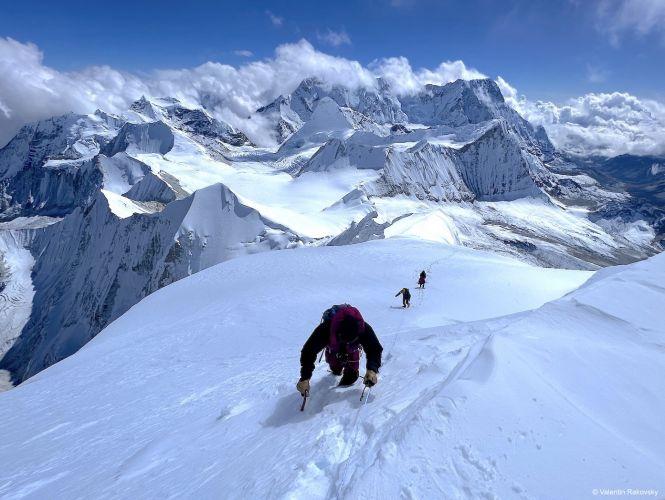
Baruntse Expedition
The Baruntse Expedition is one of Nepal’s most rewarding high-altitude mountaineering adventures. Rising to 7,129 meters (23,389 feet), Baruntse stands majestically between the towering peaks of Mount Everest, Makalu, and Lhotse in the spectacular Makalu Barun National Park. Known for its stunning alpine scenery and technically engaging climb, Baruntse has become one of the most sought-after 7,000-meter expeditions in the Himalayas.
Unlike Nepal’s 8,000-meter giants, Baruntse offers climbers the opportunity to experience a true Himalayan expedition without the extreme risks associated with higher peaks. It is an ideal objective for mountaineers preparing for Everest or seeking a challenging independent expedition.
Overview of Baruntse
Baruntse is located in eastern Nepal at the center of three magnificent glacial valleys:
- Hunku Valley
- Barun Valley
- Imja Valley
The mountain features four distinct ridges and four faces, with the South-East Ridge being the standard climbing route. This route combines glacier travel, snow climbing, fixed ropes, and a moderately steep summit ridge, making it both exciting and achievable for experienced climbers.
Baruntse Expedition Highlights
- Summit one of Nepal’s finest 7,000-meter peaks
- Spectacular views of Everest, Makalu, Lhotse, Ama Dablam, and Cho Oyu
- Trek through remote Hunku Valley
- Climb on glaciers, snow slopes, and alpine ridges
- Excellent preparation for Everest expeditions
- Less crowded than Everest and Ama Dablam
- Genuine Himalayan expedition experience
Where is Baruntse Located?
Baruntse lies within the Makalu Barun Conservation Area in eastern Nepal. It forms part of the massive Himalayan chain separating the Everest region from the Makalu region.
Nearby mountains include:
- Mount Everest (8,848.86 m)
- Makalu (8,485 m)
- Lhotse (8,516 m)
- Ama Dablam (6,812 m)
- Mera Peak (6,476 m)
Many expeditions combine Mera Peak with Baruntse for better acclimatization.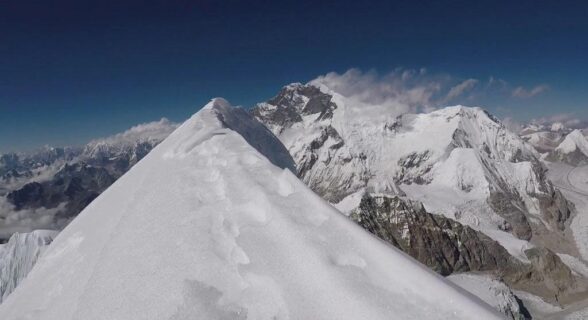
Climbing History
Baruntse was first climbed on 30 May 1954 by a New Zealand expedition led by Sir Edmund Hillary. The successful summit team consisted of:
- Colin Todd
- Geoff Harrow
Since then, Baruntse has become a respected training peak for Himalayan climbers.
Best Time to Climb Baruntse
There are two main climbing seasons.
Spring (April–May)
Spring is the most popular season because of:
- Stable weather
- Warmer temperatures
- Lower avalanche risk
- Longer daylight hours
- Excellent summit success rates
Autumn (September–November)
Autumn offers:
- Crystal-clear mountain views
- Cold but stable conditions
- Less snowfall
- Quieter climbing routes
Difficulty of the Baruntse Expedition
Baruntse is considered a moderately technical expedition.
Although it is not an 8,000-meter peak, climbers should be comfortable with:
- Ice axe techniques
- Fixed rope ascending
- Crampon travel
- Glacier navigation
- Snow climbing
- High-altitude camping
Technical Grade
Approximate climbing grade:
- Alpine Grade: PD+ to AD-
- Summit slope: 45–55°
- Fixed ropes required near the summit
Baruntse Expedition Route
Most expeditions begin with a flight to Lukla before trekking through the beautiful Hinku Valley.
Typical route:
Kathmandu → Lukla → Chutanga → Zatrwa La → Kothe → Thangnak → Khare → Mera La → Kongma Dingma → Baruntse Base Camp
The climb then follows:
- Base Camp
- Camp I
- Camp II
- Summit
- Return to Base Camp
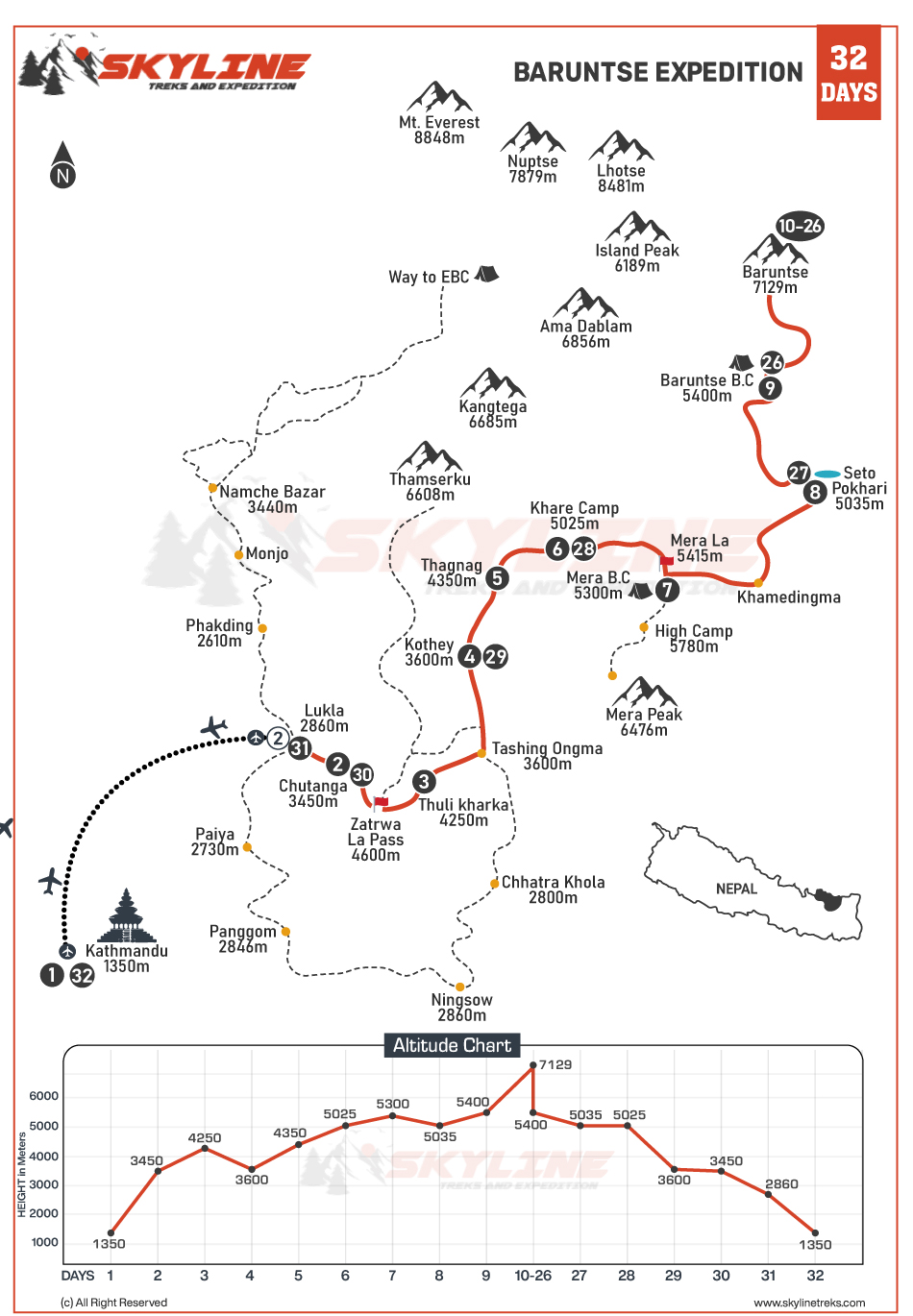
Expedition Camps
Base Camp (5,300 m)
Located beside the Baruntse Glacier.
Facilities include:
- Dining tent
- Kitchen
- Communication equipment
- Solar charging
- Medical supplies
Camp I (6,100 m)
Reached after glacier travel.
Steep snow slopes begin above Camp I.
Camp II (6,500–6,600 m)
Established beneath the summit ridge.
Final preparations occur here before summit day.
Summit Push
Summit day usually begins around midnight.
Climbers ascend:
- Fixed ropes
- Snow slopes
- Narrow summit ridge
The summit offers breathtaking panoramic views.
Views from the Summit
On a clear day climbers enjoy magnificent views of:
- Mount Everest
- Makalu
- Lhotse
- Cho Oyu
- Ama Dablam
- Chamlang
- Kangtega
- Mera Peak
Required Climbing Experience
Recommended experience includes:
- Previous 6,000-meter climbs
- Ice climbing skills
- Glacier travel
- Rope handling
- Excellent physical fitness
- Experience using crampons and an ice axe
Ideal preparation peaks include:
- Island Peak
- Lobuche East
- Mera Peak
Equipment Required
Essential gear includes:
- Double mountaineering boots
- Down suit
- Crampons
- Ice axe
- Climbing harness
- Helmet
- Ascender and descender
- Carabiners
- Sleeping bag (-30°C)
- Expedition backpack
- Headlamp
- Glacier sunglasses
- High-altitude gloves
Physical Preparation
Prepare at least six months before the expedition.
Recommended training:
- Running
- Hiking with a loaded backpack
- Stair climbing
- Strength training
- Endurance cycling
- Altitude training if available
Acclimatization
Successful acclimatization includes:
- Gradual ascent
- Rotation between camps
- Adequate hydration
- High-calorie nutrition
- Scheduled rest days
- Continuous health monitoring
Exhaustion
Exhaustion is one of the major challenges of the Baruntse Expedition. Long hours of trekking, steep ascents, rugged terrain, and high-altitude conditions can cause significant physical and mental fatigue.
Trekkers and climbers often experience exhaustion as they navigate winding mountain trails and challenging terrain. Many sections of the route consist of steep, rocky, and uneven trails, while higher sections involve glaciers, snow slopes, and crevasses that require careful navigation.
Some glacier sections may require the use of fixed ropes, ladders, crampons, and other technical climbing equipment. These challenging sections can be particularly demanding for climbers who have limited previous experience with high-altitude mountaineering.
Carrying a heavy backpack containing personal belongings, food, clothing, and climbing equipment can add considerably to the physical strain. Therefore, it is important to maintain a steady pace, take adequate rest, stay properly hydrated, and consume nutritious, high-energy food throughout the expedition.
Hiring experienced porters can significantly reduce the physical burden during the trekking sections. Porters can carry a substantial portion of your personal luggage, allowing you to conserve energy for the demanding climbs ahead.
With proper preparation, sensible pacing, adequate hydration, nutritious meals, and appropriate support from experienced guides and porters, climbers can manage fatigue more effectively and enjoy a safer and more rewarding Baruntse Expedition.
Wildlife Along the Trek
The journey through the Hunku Valley may reveal:
- Snow leopard (rare)
- Himalayan tahr
- Musk deer
- Himalayan monal
- Blue sheep
Why Choose the Baruntse Expedition?
Baruntse is often described as the perfect bridge between trekking peaks and the world’s highest mountains. It offers a genuine Himalayan expedition with glacier crossings, technical climbing, and high-altitude camping while remaining more accessible than Nepal’s 8,000-meter peaks. For climbers aspiring to tackle Everest, Lhotse, or Makalu in the future, Baruntse provides invaluable experience in expedition logistics, acclimatization, and technical mountaineering.
Whether your goal is to expand your alpine skills, test yourself on a beautiful 7,000-meter summit, or simply immerse yourself in the breathtaking wilderness of the Hunku and Barun valleys, the Baruntse Expedition promises an unforgettable adventure in one of the Himalayas’ most spectacular settings.