

Everest Base Camp Trek for Over 50s, Seniors & Children – 20 Days
Everest Base Camp Trek for Over 50s, Seniors & Children – 20 Days


Trip Overview
Itinerary
Arrive at Tribhuvan International Airport (TIA)
Arrive at Tribhuvan International Airport (TIA)
On this day, trekkers arrive at Tribhuvan International Airport (TIA) and complete simple immigration steps before collecting luggage. A friendly Skyline Treks representative waits at the exit with a placard to welcome families warmly.
The comfortable hotel transfer lets kids and seniors watch Kathmandu’s colorful streets safely. This first day gives families time to rest after long flights from home.
Parents can take children and grandparents on walks around the hotel neighborhood. This day helps all trekkers prepare for their Everest Base Camp Trek.
Rest day in Kathmandu
Rest day in Kathmandu to recover from jet lag, with a briefing about Trek.
Fly from Kathmandu to Lukla (2,860m/9,383ft) and Trek to Phakding (2,610m/8,563ft)
Fly to Lukla (2,860m/9,383 ft), trek to Phakding (2,652m). Distance: 8 km, Duration: 3 hrs.
Start your day with an early morning scenic flight from Kathmandu to Lukla, one of the world’s most spectacular mountain airports. The flight takes approximately 35 minutes and offers breathtaking aerial views of the Himalayas, including snow-capped peaks, lush valleys, and traditional Sherpa villages.
Upon arrival at Lukla, meet your trekking crew and begin your Everest Base Camp journey. After a short break, follow the well-established trail through charming villages, colorful prayer flags, mani walls, and pine forests. Cross several suspension bridges over the Dudh Koshi River before reaching the peaceful village of Phakding.
The trek is relatively easy, making it an ideal first day to begin acclimatizing to the increasing altitude while enjoying the beautiful mountain scenery and local Sherpa culture.
Trek to Namche Bazaar (3,440m/11,286 ft).
Trek to Namche Bazaar (3,440m/11,286 ft). Distance: 10-12 km/6.2-7.5 miles, Duration: 6 hrs.
After breakfast, begin your trek by following the Dudh Koshi River through beautiful pine forests and traditional Sherpa villages. The trail crosses several impressive suspension bridges decorated with colorful prayer flags before reaching the entrance of Sagarmatha National Park at Monjo, where your permits are checked.
From Monjo, continue alongside the river to Jorsalle, the last settlement before the challenging ascent to Namche Bazaar. After crossing the famous Hillary Suspension Bridge, the trail climbs steadily through a forest of pine and rhododendron. On a clear day, you may catch your first glimpse of Mount Everest, along with Lhotse and Nuptse, making the uphill climb especially rewarding.
After several hours of ascent, arrive at Namche Bazaar, the vibrant Sherpa town and commercial center of the Khumbu region. Surrounded by towering Himalayan peaks, Namche offers comfortable teahouses, cafés, bakeries, gear shops, and stunning mountain views. The remainder of the day can be spent relaxing, exploring the local market, or preparing for the next stage of your Everest adventure.
Acclimatization hike to Everest View Hotel
Acclimatization hike to Everest View Hotel (3,880m/12,729 ft). 3-4 km/2-2.5 miles, 3-4 hrs.
Today is an essential acclimatization day to help your body adjust to the higher altitude before continuing toward Everest Base Camp. Following the principle of “climb high, sleep low,” you’ll take a scenic hike to the renowned Everest View Hotel, one of the highest luxury hotels in the world.
After breakfast, ascend gradually along a well-maintained trail above Namche Bazaar. As you gain elevation, enjoy spectacular panoramic views of some of the Himalayas’ most iconic peaks, including Mount Everest (8,848.86m), Ama Dablam, Lhotse, Nuptse, Thamserku, and Kongde Ri. The trail passes through beautiful rhododendron and pine forests and offers excellent opportunities to observe local wildlife, such as Himalayan pheasants and musk deer.
Upon reaching the Everest View Hotel, relax with a cup of tea or coffee while admiring the breathtaking mountain scenery. Continue with an optional visit to the traditional Sherpa village of Khumjung, home to the historic Khumjung Monastery, before descending back to Namche Bazaar for the night.
The afternoon is free to explore Namche’s cafés, museums, local markets, or simply rest in preparation for the higher elevations ahead.
Trek to Tengboche (3,860m) and enjoy views of Everest and Amadablam
Trek to Tengboche (3,860m) and enjoy views of Everest and Amadablam. Duration: 5 hrs, 10-11 km.
After breakfast, leave Namche Bazaar and follow a scenic trail contouring the mountainside with magnificent views of Mount Everest, Lhotse, Nuptse, Ama Dablam, and Thamserku. The relatively gentle path offers some of the finest panoramic mountain scenery on the Everest Base Camp Trek.
The trail gradually descends through fragrant pine and rhododendron forests to the Dudh Koshi River at Phunki Tenga (3,250m), where you can stop for lunch beside the river. After crossing the suspension bridge, begin a steady uphill climb through a peaceful forest of rhododendron, fir, and juniper. During spring, the hillsides are covered with colorful rhododendron blossoms, while the forest is home to Himalayan wildlife such as musk deer, Himalayan monals, and pheasants.
Upon reaching Tengboche, you will be rewarded with breathtaking views of Ama Dablam, Everest, Nuptse, Lhotse, and other surrounding peaks. Tengboche is famous for its historic Tengboche Monastery, the largest and most significant Buddhist monastery in the Khumbu region. If time permits, you can attend the evening prayer ceremony, offering a memorable insight into Sherpa Buddhist culture and traditions.
Trek from Tengboche to Dingboche (4,410m),
Trek from Tengboche to Dingboche (4,410m), Duration: 5 hrs Distance: 11-12 km.
After breakfast, descend through a beautiful forest of rhododendron, birch, and conifer trees to the Imja Khola River before crossing a suspension bridge. From here, the trail gradually climbs to the traditional Sherpa village of Pangboche, the oldest permanent settlement in the Khumbu region. Pangboche is well known for its ancient monastery and spectacular views of Ama Dablam, one of the most beautiful mountains in the Himalayas.
Continuing beyond Pangboche, the landscape begins to change as dense forests give way to alpine meadows and rugged terrain. Pass through the small settlements of Shomare and Orsho while enjoying breathtaking views of Ama Dablam, Lhotse, Island Peak, Taboche, and other surrounding peaks. As you gain altitude, the air becomes thinner, making a slow and steady pace essential for proper acclimatization.
After crossing the Imja Khola and passing the village of Dughla junction, the trail leads into the wide Imja Valley before reaching Dingboche, a picturesque Sherpa village surrounded by stone-walled fields that protect crops from the cold mountain winds and grazing yaks. Dingboche is an important acclimatization stop on the Everest Base Camp Trek and offers stunning panoramic views of the surrounding Himalayan giants.
Acclimatization: Hike to Nangkartshang (5,083m), then return.
Acclimatization: Hike to Nangkartshang (5,083m), then return. Duration: 4-5 hours Distance: 4-5 km.
Today is another important acclimatization day to prepare your body for the higher elevations ahead. Following the principle of “climb high, sleep low,” you will take a rewarding hike to Nangkartshang Peak, one of the best viewpoints in the Khumbu region. This hike significantly improves acclimatization while offering some of the most spectacular mountain panoramas on the Everest Base Camp Trek.
After breakfast, begin a gradual ascent along a steep but well-defined trail above Dingboche. As you gain elevation, the views become increasingly dramatic, revealing a breathtaking panorama of some of the highest mountains in the world. From the viewpoint, enjoy close-up views of Makalu (8,485m), the world’s fifth-highest mountain, along with Lhotse (8,516m), Ama Dablam (6,812m), Island Peak (6,189m), Baruntse (7,129m), Cholatse (6,440m), Taboche (6,495m), and numerous surrounding Himalayan peaks.
Take time to rest, enjoy the scenery, and capture memorable photographs before descending at a comfortable pace back to Dingboche. The afternoon is free for relaxation, short walks around the village, or enjoying the peaceful mountain atmosphere while conserving energy for the higher sections of the trek.
Trek from Dingboche to Thukla (4,620m).
Trek from Dingboche to Thukla (4,620m). Duration: 3-4 hours Distance: 5-6 km.
After a leisurely breakfast in Dingboche, begin today’s shorter trek toward Thukla (also known as Dughla). Although the distance is relatively short, the increasing altitude makes a slow and steady pace essential for proper acclimatization.
The trail gradually ascends through the broad Khumbu Valley, following the lateral moraine of the Khumbu Glacier. Along the way, enjoy magnificent views of towering Himalayan peaks, including Ama Dablam, Cholatse, Taboche, Lobuche East, and the surrounding snow-covered mountains. The open alpine landscape, dotted with grazing yaks and seasonal pastures, offers a peaceful and unforgettable trekking experience.
After passing the small settlement of Bibre, the trail continues gently uphill alongside the glacier before reaching the quiet hamlet of Thukla. Nestled beneath the dramatic peaks of Cholatse and Taboche, Thukla is a small but important overnight stop for trekkers heading toward Everest Base Camp.
Arriving early in the afternoon allows plenty of time to rest, stay well hydrated, and continue acclimatizing before tackling the steeper climb to the Thukla Pass and the Everest Memorial the following day.
Hike from Thukla to Lobuche (4,910m).
Hike from Thukla to Lobuche (4,910m). Duration: 3-4 hours Distance: 4-5 km.
After breakfast, leave Thukla and begin the day’s trek with a steep but relatively short climb to the top of the Thukla Pass. This section is one of the most memorable on the Everest Base Camp Trek, as it leads to the Everest Memorial, a moving collection of stone monuments dedicated to climbers and Sherpas who lost their lives on Everest and neighboring peaks. The memorial offers a moment for quiet reflection while surrounded by the grandeur of the Himalayas.
From the pass, the trail becomes more gradual as it follows the lateral moraine of the Khumbu Glacier. The rugged alpine landscape, scattered with glacial rocks and surrounded by towering snow-capped peaks, creates a dramatic and unforgettable trekking experience. Along the way, enjoy magnificent views of Pumori, Nuptse, Lobuche Peak, Cholatse, and other Himalayan giants.
As you continue, the trail gently ascends toward the small settlement of Lobuche, situated beside the Khumbu Glacier. Upon arrival, settle into your teahouse and spend the remainder of the afternoon resting, hydrating, and enjoying the breathtaking mountain scenery while preparing for the journey to Everest Base Camp.
Trek to Gorakshep (5,164m), prepare for the Everest Base Camp .
After an early breakfast, leave Lobuche and continue your journey toward Gorakshep, the final settlement before Everest Base Camp. The trail follows the rugged lateral moraine of the Khumbu Glacier, winding over rocky terrain and glacial debris while offering spectacular views of the surrounding Himalayan peaks. Although today’s trek covers a relatively short distance, the high altitude and uneven terrain make it physically demanding, so a slow, steady pace with regular rest breaks is essential.
As you ascend gradually, you’ll pass the Italian Pyramid Research Station and continue across the glacier’s moraine, where the dramatic landscape of ice, rock, and towering mountains creates one of the most memorable sections of the Everest Base Camp Trek. Along the way, enjoy magnificent views of Pumori (7,161m), Nuptse (7,861m), Lobuche East (6,119m), Lingtren (6,749m), Khumbutse (6,665m), and the vast Khumbu Glacier.
Arrive at Gorakshep, a small settlement located on the edge of a former glacial lake. After checking into your teahouse, enjoy lunch and take time to rest and acclimatize while surrounded by breathtaking Himalayan scenery. Depending on your itinerary and energy level, the afternoon may be reserved for a visit to Everest Base Camp or simply for relaxation before an early morning ascent to Kala Patthar the following day.
Hike from Gorakshep (5,164m/16,942ft) to Everest Base Camp (5,364m/17,598ft) and Return to Gorakshep
Today is one of the most exciting and rewarding days of the trek as you make your way to the legendary Everest Base Camp, the starting point for climbers attempting the world’s highest mountain. After breakfast, leave Gorakshep and follow the rugged trail across the lateral moraine of the Khumbu Glacier. The path undulates over rocky terrain, with breathtaking views of the glacier, towering ice formations, and the surrounding Himalayan peaks.
Although the distance is relatively short, the high altitude makes the hike physically demanding. Walking at a slow, steady pace with regular rest breaks allows your body to adapt while you enjoy the dramatic alpine scenery. Along the route, you’ll be treated to magnificent views of Nuptse, Pumori, Lingtren, Khumbutse, and the ever-changing landscape of the Khumbu Glacier.
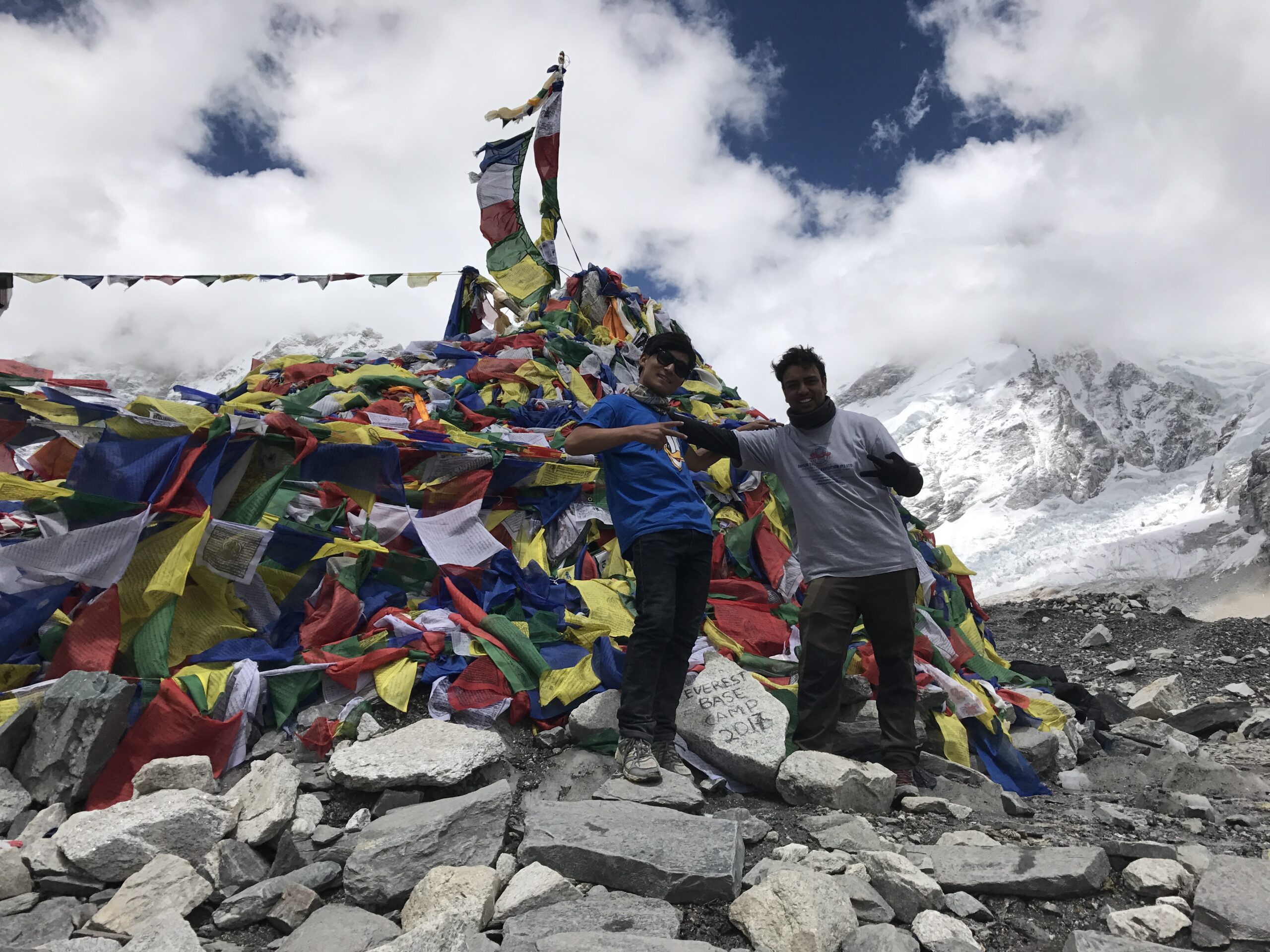
Upon reaching Everest Base Camp (5,364m/17,598ft), celebrate this remarkable achievement and take time to capture photographs beside the iconic Everest Base Camp rock. During the spring climbing season (April–May), you may also witness colorful expedition tents and mountaineering teams preparing for their summit attempts, creating a vibrant atmosphere at the base of the world’s highest peak.
After spending time exploring and enjoying the incredible surroundings, retrace your steps back to Gorakshep. The return journey offers another opportunity to appreciate the spectacular glacial scenery and Himalayan vistas. Back at the teahouse, relax, rehydrate, and enjoy a well-earned rest after reaching one of the world’s most famous trekking destinations.
Early Morning Hike to Kala Patthar (5,545m/18,192ft) and Trek to Pheriche (4,240m/13,910ft)
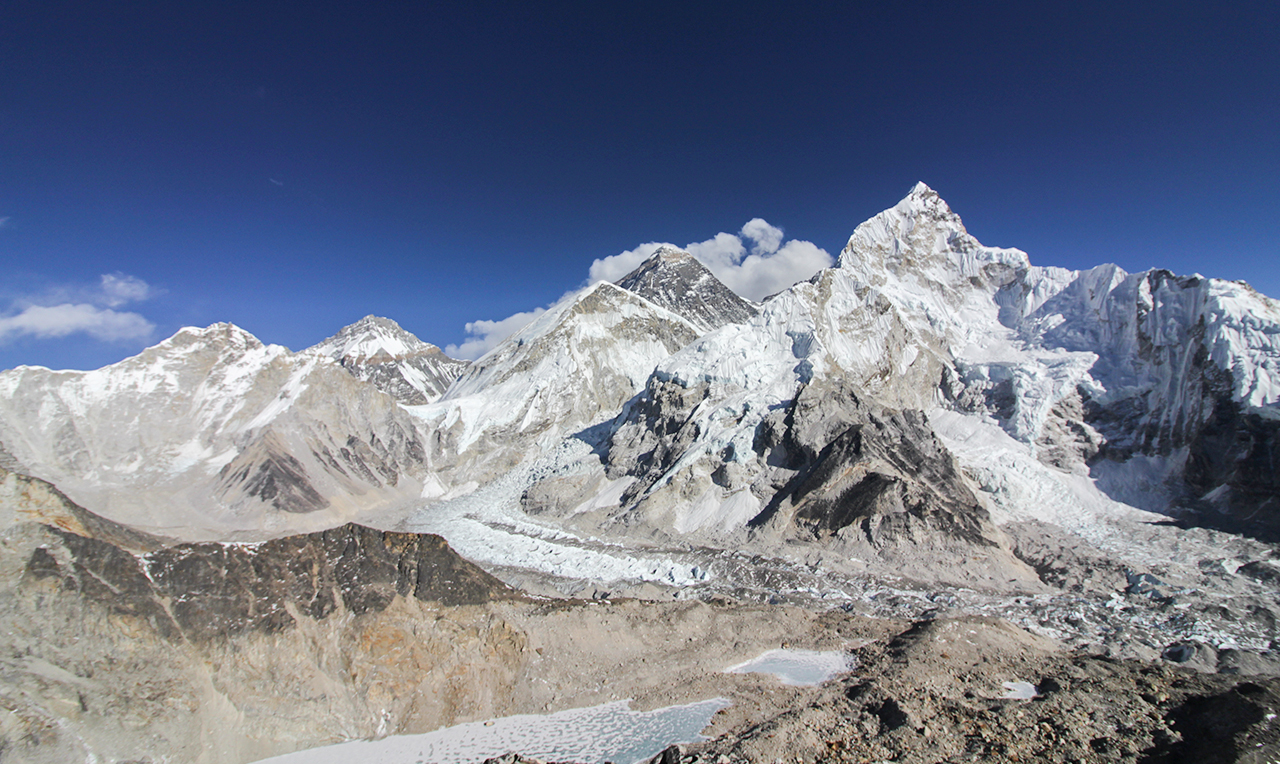
Begin the day before dawn with an early morning hike to Kala Patthar (5,545m), the highest point of the Everest Base Camp Trek and the region’s most celebrated viewpoint. The steady climb over rocky terrain is challenging due to the high altitude, but the reward is an unforgettable sunrise over the Himalayas. As the first rays of sunlight illuminate the surrounding peaks, enjoy spectacular 360-degree views of Mount Everest (8,848.86m), Nuptse, Lhotse, Pumori, Changtse, Lingtren, Khumbutse, and the magnificent Khumbu Glacier and Icefall below. Kala Patthar offers the closest and clearest panoramic view of Mount Everest available on the trekking route.
After spending time taking photographs and soaking in the breathtaking scenery, descend carefully to Gorakshep for a well-earned breakfast. Following a short rest, begin the return trek toward Pheriche. Retrace your steps through Lobuche and descend past the Everest Memorial at Thukla Pass, where stone monuments commemorate climbers and Sherpas who lost their lives in the Himalayas.
Continue downhill through the glacial valley, enjoying expansive views of Cholatse, Taboche, Ama Dablam, and the surrounding alpine landscape. As you lose elevation, the air becomes richer in oxygen, making the walk more comfortable and allowing your body to recover from the higher altitudes. By late afternoon, arrive at the peaceful village of Pheriche, where you can relax and enjoy a comfortable overnight stay.
Trek from Pheriche (4,240m/13,910ft) to Tengboche (3,867m/12,687ft), with an Option to Continue to Phunki Tenga (3,250m/10,663ft)
After breakfast, begin your descent from Pheriche through the scenic Khumbu Valley. The trail passes through alpine meadows and traditional Sherpa settlements, offering magnificent views of Ama Dablam, Taboche, Cholatse, Lhotse, and the surrounding Himalayan peaks. As you lose altitude, the air becomes richer in oxygen, making the trek more comfortable and enjoyable.
Continue through the historic village of Pangboche, the oldest permanent Sherpa settlement in the Everest region. If time permits, you may visit the ancient Pangboche Monastery, renowned for its rich Buddhist heritage and stunning mountain backdrop.
From Pangboche, the trail descends through beautiful forests of rhododendron, juniper, and pine before crossing the Imja Khola on a suspension bridge. A gentle uphill climb then leads to Tengboche, home to the famous Tengboche Monastery, the largest and most important Buddhist monastery in the Khumbu region. Surrounded by spectacular views of Mount Everest, Ama Dablam, Nuptse, and Lhotse, Tengboche is one of the most picturesque stops on the trek. If you arrive in the afternoon, you may attend the monastery’s peaceful prayer ceremony.
For trekkers seeking a shorter and easier day, there is an option to continue descending from Tengboche for approximately 45–60 minutes to Phunki Tenga (3,250m/10,663ft). Staying at the lower elevation can aid recovery, improve sleep quality, and make the following day’s trek more gradual.
Trek from Tengboche (3,867m/12,687ft) to Namche Bazaar (3,440m/11,286ft)
After breakfast, bid farewell to the peaceful surroundings of Tengboche and begin your descent through enchanting forests of rhododendron, pine, fir, and juniper. The trail offers magnificent views of Ama Dablam, Everest, Lhotse, Nuptse, Thamserku, and Kangtega, providing one last opportunity to admire the breathtaking Himalayan panorama.
Descend to the Dudh Koshi River and cross the suspension bridge at Phunki Tenga (3,250m), where you may stop for a short rest or refreshments. From here, the trail climbs steadily through a beautiful forest before joining the famous high trail leading back to Namche Bazaar. Along the way, enjoy spectacular mountain vistas and keep an eye out for Himalayan wildlife, including musk deer, Himalayan monals, and colorful pheasants.
After the gradual ascent, the trail becomes relatively level as it contours the hillside toward Namche Bazaar. Upon arrival, check into your teahouse and enjoy the comforts of the bustling Sherpa town. Spend the afternoon exploring its cafés, bakeries, local markets, souvenir shops, or simply relaxing after several days at high altitude.
Namche Bazaar offers a lively atmosphere and modern trekking amenities, making it an excellent place to celebrate the successful completion of the high-altitude section of your Everest adventure.
Trek from Namche Bazaar (3,440m/11,286ft) to Phakding (2,652m/8,701ft)
After breakfast, begin your descent from Namche Bazaar, leaving behind the vibrant Sherpa town and retracing your steps through the heart of the Khumbu region. The trail winds downhill through fragrant pine and rhododendron forests, offering final panoramic views of Everest, Lhotse, Nuptse, and Thamserku before the mountains gradually disappear behind the surrounding hills.
Descend to the famous Hillary Suspension Bridge and continue through the picturesque villages of Jorsalle and Monjo. After exiting Sagarmatha National Park, follow the Dudh Koshi River, crossing several suspension bridges adorned with colorful prayer flags. The gentle riverside trail passes through traditional Sherpa settlements, cultivated fields, water-driven prayer wheels, and peaceful woodlands, providing a relaxing walk after the higher-altitude sections of the trek.
As you continue downstream, the oxygen-rich air and lower elevation make the hike noticeably easier and more comfortable. By afternoon, arrive at the charming village of Phakding, where you can unwind at your teahouse, enjoy a hot meal, and reflect on your incredible journey through the Everest region.
Trek from Phakding (2,652m/8,701ft) to Lukla (2,860m/9,383ft)
After breakfast, embark on the final day of your Everest Base Camp Trek as you make your way back to Lukla. Following the Dudh Koshi River, the trail passes through beautiful pine forests, charming Sherpa villages, cultivated fields, and colorful Buddhist prayer wheels. Cross several suspension bridges one last time while enjoying the peaceful sounds of the rushing river and the surrounding mountain scenery.
The trail gradually ascends through the villages of Ghat and Chheplung before the final climb to Lukla. Although the ascent is moderate, it is made easier by the significantly lower altitude compared to the higher sections of the trek. Along the way, take in your last views of the Khumbu landscape and reflect on the remarkable journey to Everest Base Camp and Kala Patthar.
Upon arrival in Lukla, celebrate the successful completion of your trek with your guide and trekking crew. The remainder of the afternoon is free to relax, explore the small mountain town, browse local souvenir shops, or simply enjoy the lively atmosphere. Many trekkers gather in the evening to share stories and celebrate their achievements with the support team before departing the mountains the following day.
Fly from Lukla (2,860m/9,383ft) to Kathmandu (1,350m/4,429ft)
After an early breakfast, transfer to the Tenzing-Hillary Airport in Lukla for your scenic flight back to Kathmandu. The approximately 30-minute flight is one of the most spectacular mountain flights in the world, offering breathtaking aerial views of the snow-capped Himalayan peaks, deep river valleys, picturesque Sherpa villages, and lush green hills. As the aircraft departs the Khumbu region, enjoy a final glimpse of iconic mountains, including Mount Everest, Lhotse, Nuptse, Ama Dablam, and many other Himalayan giants, weather permitting.
Upon arrival in Kathmandu, you will be met by our representative and transferred to your hotel. The rest of the day is free to relax after your remarkable trekking adventure. You may choose to explore the vibrant streets of Thamel, shop for souvenirs, visit nearby cultural landmarks, enjoy a traditional Nepali meal, or simply unwind at your hotel.
Please note that during the peak trekking seasons (spring and autumn), flights to and from Lukla are often operated via Ramechhap (Manthali Airport) due to increased air traffic at Kathmandu Airport. In such cases, you will take a 20-minute flight between Lukla and Ramechhap, followed by a 4–5-hour drive between Ramechhap and Kathmandu.
Leisure Day in Kathmandu (1,350m/4,429ft)
After the excitement of your Everest Base Camp Trek, today is yours to enjoy at a relaxed pace. Take the opportunity to rest, recover, and reflect on your incredible Himalayan adventure, or explore the rich cultural heritage and vibrant atmosphere of Kathmandu.
You may spend the day wandering through the bustling streets of Thamel, browsing local handicraft shops, cafés, and markets for souvenirs and traditional Nepali products. Those interested in history and culture can visit UNESCO World Heritage Sites such as Kathmandu Durbar Square, Swayambhunath (the Monkey Temple), Boudhanath Stupa, or Pashupatinath Temple. Alternatively, indulge in a relaxing spa treatment, traditional Nepali massage, or yoga session to rejuvenate after your trek.
If you wish, our team can also arrange optional sightseeing tours, cultural experiences, cooking classes, mountain flight excursions, or short day trips around the Kathmandu Valley.
In the evening, enjoy a memorable farewell dinner at a traditional Nepali restaurant featuring authentic cuisine and cultural performances, celebrating the successful completion of your Everest Base Camp journey.
Final Departure to Airport
Final Departure to Airport by our private vehicle
Include/Exclude
 What's Included
 What's Included
- Accommodation In Kathmandu: Stay comfortable for four nights in a quality 3-star hotel with twin-sharing rooms and daily breakfast included before your trek begins and after you return.
- During the Trek: Best available twin sharing lodge to lodge accommodation during the trek; we provide private bathrooms with hot showers at Phakding, Namche, and Lukla
Meals
Breakfast in Kathmandu: Start each morning with a big breakfast, before exploring Nepal’s capital city.
Full Board Meals During the Trek: Get all your meals with breakfast, lunch, and dinner given to you every day during your Everest region trek.
Tea or coffee: Three hot drinks given each day (only three drinks total).
Fresh fruit snacks come after dinner to keep seniors and kids full of energy during the trek in the Everest region.
Transportation and Flights
Enjoy hassle-free airport pickups and drop-offs, plus all ground travel in comfortable private vehicles.
Complete transportation coverage handles the Kathmandu-Ramechhap route during busy trekking seasons.
Scenic round-trip flights to and from Lukla airport take you directly into the heart of the Himalayas.
Guide and Staff
Experienced English-speaking trekking guide with official government certification and years of mountain expertise.
Reliable porter assistance with one porter for every two trekkers (carrying up to 25 kg total, about 12-13 kg per person).
Full staff support covering wages, meals, accommodation, equipment, insurance, and medical coverage.
Critical safety gear, including a first-aid kit, an oxygen meter, and altitude medicine, is carried by guides for daily health monitoring.
Permits
Sagarmatha National Park entry permits for accessing the Everest region trails
Khumbu Pasang Lhamu Rural Municipality permits
Tengboche Monastery entrance passes to visit the sacred Buddhist site
Equipment and Extras
Free Skyline Treks down jacket and sleeping bag for the trek (total weight 3-4 kg; stays within airline baggage allowance)
A 70-liter trekking duffel bag provided for each senior and kid
Keepsake collection featuring a detailed EBC trail map, a company T-shirt, and a memory cap
Official certificate confirming EBC trek completion for family, kids, and seniors
Administrative and Taxes
All necessary government fees and administrative charges are included in your trek package.
What's Not Included
 What's Not Included
- Meals not specified in the ‘Meal Inclusions’ in the itinerary.’
- Travel Insurance
- International airfare
- Nepal entry visa
- Cold drinks Inc. Coke, water, Fanta, etc.
- Snacks and other personal expenses
- Hot showers during the trek except in Phakding, Namche, and Lukla
- Personal trekking equipment
- Tips and gratuities for trekking staff and drivers
Fixed Departure
Route Map / Alt.
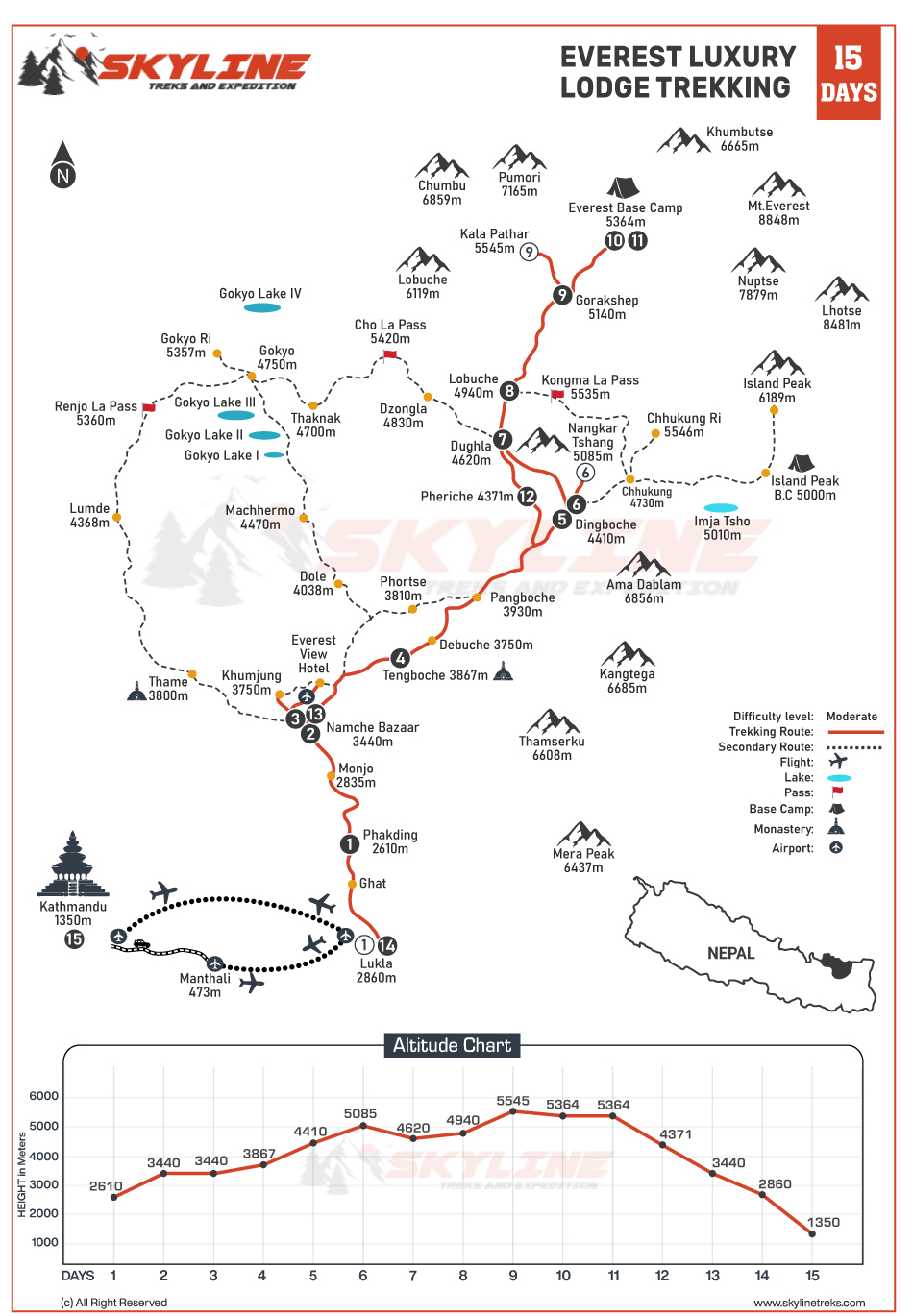 Route Map
FAQs
What is the age limit for Everest Base Camp?
There is no official minimum or maximum age limit for the Everest Base Camp (EBC) Trek. The trek is open to anyone who is physically fit, healthy, and able to cope with high altitude.
How much personal money is needed for Everest Base Camp trek?
The personal money of an Everest Base Camp (EBC) Trek For most international travelers, the you may take cost ranges from US$300 to US$500 each.
Can a normal person trek to Everest Base Camp?
Yes. A normal, reasonably healthy person can trek to Everest Base Camp (5,364 m / 17,598 ft) without any mountaineering experience. In fact, thousands of first-time trekkers from around the world complete the trek every year.
The Everest Base Camp Trek is a hiking adventure, not a mountain climb. You do not need ropes, crampons, or technical climbing skills. The biggest challenge is high altitude, not difficult terrain.
Package Customization for You
Related Packages
 $4800$3740
 ( 5 out of 29 Reviews )
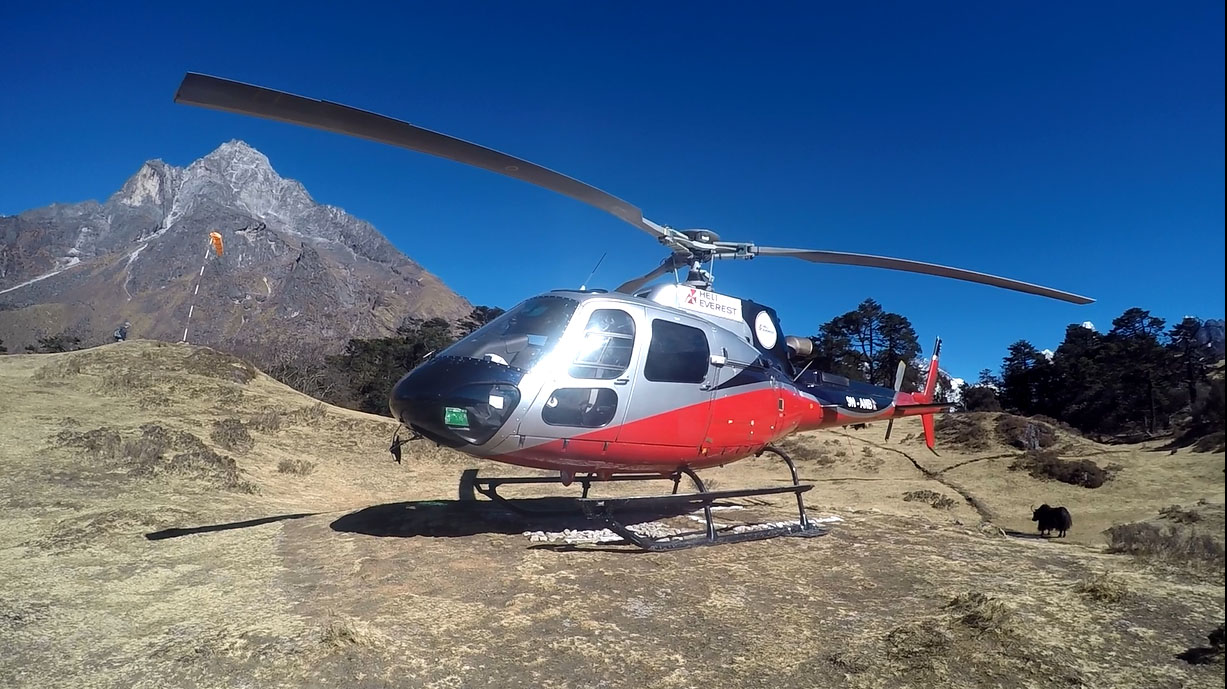
Everest Base Camp trek with helicopter return cost & Itinerary – 9 Days
9 Days | 8 Nights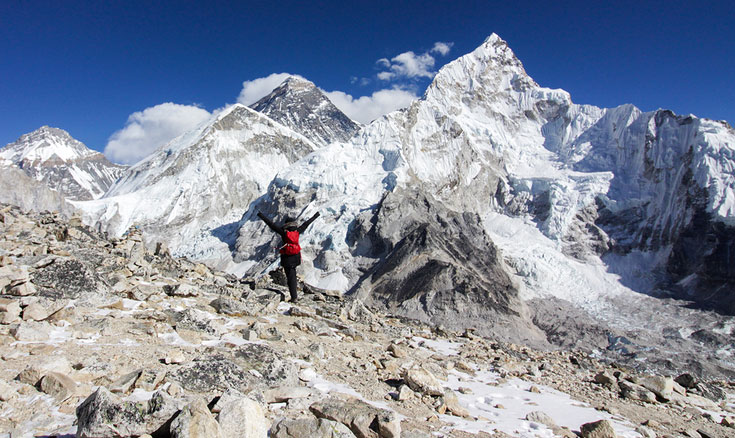 $1990$1495( 5 out of 117 Reviews )