

Is Mera Peak Hard to Climb: Complete Guide
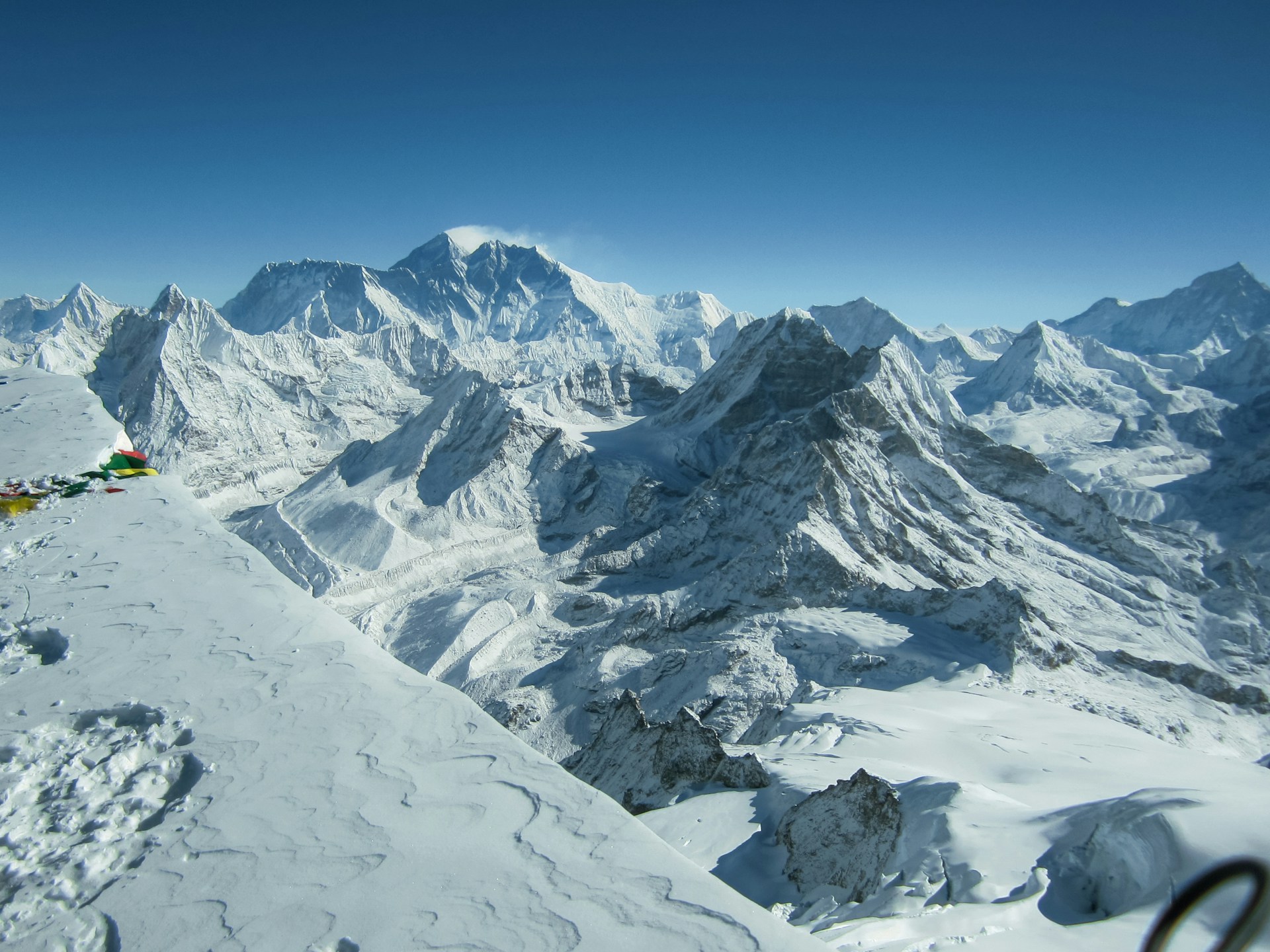
Is Mera Peak Hard to Climb?
Mera Peak (6,476 m) is considered moderately difficult, but it is still a serious high-altitude climb. It’s popular among trekkers because it can be done through a well-structured itinerary and with proper mountaineering support.
Most climbers find Mera Peak challenging mainly due to:
- Altitude (you go above 6,000 m during the summit attempt)
- Cold, wind, and long summit hours
- Snow and ice terrain near the top (crampons and ice axe skills are needed)
Who can climb Mera Peak?
You’ll likely be a good fit if you:
- Have a good fitness level and trekking endurance
- Are willing to learn basic mountaineering skills
- Follow acclimatization rules and keep a steady pace
If you’re brand new to crampons/ice-axe techniques, many operators provide training and assess readiness during the trek.
How Many Days to Climb Mera Peak?
The duration depends on the pace and acclimatization plan. Common options are with different price:
- 12–14 days: Faster itineraries with effective acclimatization
- 14–18 days: More comfortable pace and better buffer time
Most trips include trekking to the staging area (often Khare), then camp setup, acclimatization, and the summit attempt.
Is Mera Peak Mount Everest?
No. Mera Peak is not Mount Everest.
- Mount Everest: 8,848.86 m
- Mera Peak: ~6,476 m
While Mera Peak is high and demanding, it is far shorter than Everest—but it is still an advanced trekking peak in the Himalayas.
Is Mera Peak Harder Than Island Peak?
In general, Mera Peak is harder than Island Peak because:
- Mera Peak reaches higher altitude (about 6,476 m)
- You face more technical snow/ice conditions (typical mountaineering gear and skills)
- The environment is harsher in many respects due to Himalayan conditions
Island Peak (6189m) is also challenging due to altitude, but it’s typically more trekking-based with fewer technical alpine elements than Mera Peak.
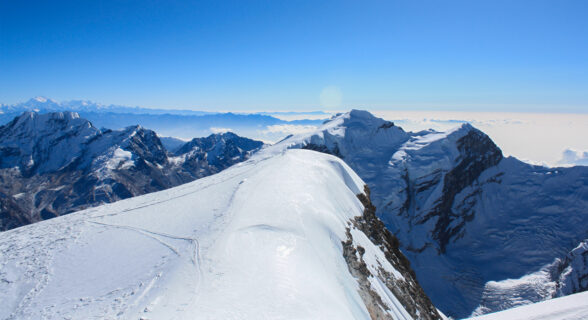
Mera Peak Difficulty (What Makes It Challenging?)
Difficulty level (overall)
- Technical level: Moderate
- Physical level: Moderate to High
- Altitude level: High (major factor)
Key challenges you should plan for
- Acclimatization days (don’t rush)
- Steep snow slopes and glacier travel near the summit
- Weather changes and visibility issues
- Cold temperatures at higher camps
Skills typically required
- Crampon walking
- Ice axe use
- Basic rope/mountaineering practices (as required by your guide)
Mera Peak Height
Mera Peak height: 6,476 meters
It’s one of Nepal’s most famous trekking peaks and a great choice for climbers who want Himalayan summit experience without Everest-level technical exposure.
Mera Peak Climbing from Khare
Most climbing routes include Khare as the key staging area before the summit push. From Khare, you gradually move upward through camps, allowing your body to acclimatize.
Typical route overview from Khare
- Khare (base staging area / acclimatization start)
- Higher camp (often Mera High Camp)
- Summit climb (early morning ascent)
- Descent back through camps to return to trekking route
Why Khare matters
Khare is where you transition from regular trekking to the high-altitude climbing phase, including camp preparation and acclimatization before the summit attempt.
Mera Peak Climbing Difficulty (In Real Terms)
During the ascent, you’ll experience:
- Thin air and fast fatigue
- Cold exposure for long periods
- Snow conditions that require careful foot placement
- Steep sections that test endurance and technique
With proper pacing, hydration, and support, many well-prepared trekkers successfully summit—yet it remains a climb where altitude and weather can affect outcomes.
Mera Peak Climbing Cost and Itinerary
Mera Peak Climbing Cost
Cost varies based on:
- Trip duration
- Group size (private vs shared)
- Guide/porter arrangement
- Permit and paperwork included
- Inclusion of trekking peaks supports and camp logistics
- Season (peak seasons can increase price)
- Whether climbing gear is rented separately
- Insurance and international travel costs
Most full-service packages include major components (guides, permits, route organization, and support). Some items are often extra (international flights, gear rental, tips, and travel insurance).
If you share your travel month, number of people, and whether you want group or private, I can help you estimate a more accurate cost range.
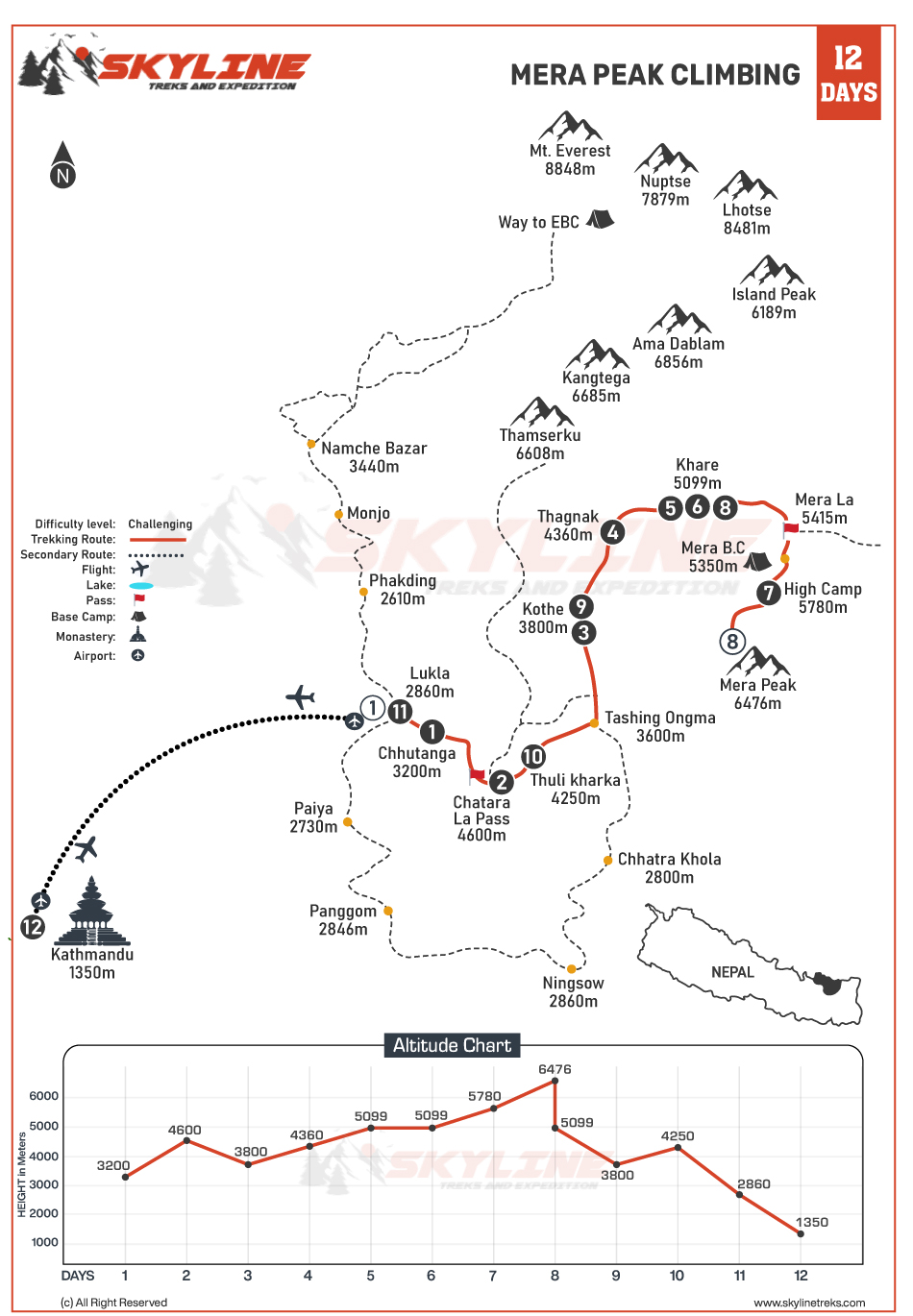
Sample Mera Peak Itinerary (Typical)
Below is a commonly used structure:
| Day | Plan |
|---|---|
| Day 1 | Arrive in Kathmandu, briefing and preparation |
| Day 2 | Fly to Lukla (or route gateway), start trekking |
| Day 3–4 | Trek through Himalayan villages and forest trails |
| Day 5 | Continue trekking toward higher camps/valleys |
| Day 6 | Reach the approach area near Khare |
| Day 7 | Arrive Khare, acclimatize |
| Day 8 | Move to higher camp and prepare for summit phase |
| Day 9 | Rest/acclimatize at higher camp (often Mera High Camp area) |
| Day 10 | Summit day and return to Base camp |
| Day 11–12 | Trek back down to the main route and return to Kathmandu |
| Day 13+ | Buffer day for weather/travel back to Kathmandu |
Mera Peak Base Camp
In trekking-peak climbs, “base camp” can mean slightly different things.
Common staging reference for Mera Peak
- Khare is often treated as the main staging area (base-like point) before the upper camps.
- The actual climbing phase typically uses higher camps (like a high camp) for acclimatization and summit departure.
So, for most climbers:
- Khare = main base/staging area
- High camp(s) = acclimatization and summit preparation points